

Maddy summaryHR 7599 creates a federal framework for extreme risk protection orders (ERPOs), allowing family members or law enforcement to petition courts to temporarily prohibit individuals from possessing firearms when they pose a risk of harm to themselves or others. The bill establishes a process for issuing ex parte orders (up to 14 days) followed by a hearing within 72 hours to determine if a longer-term order (up to 180 days) should be issued, requiring respondents to surrender firearms to U.S. Marshals or designated law enforcement. Courts must consider specific factors like recent threats, violence, substance abuse, or cruelty to animals before issuing orders, with no fees for petitioners. The law requires law enforcement training to address bias, includes annual reporting requirements, and ensures firearms are returned once the order expires and the individual is eligible to own firearms under federal law.
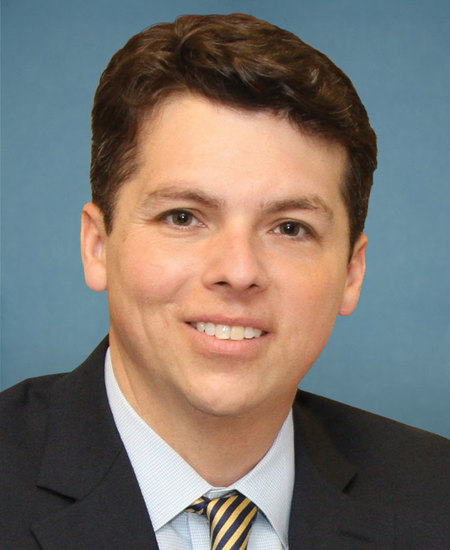
Rep. Brendan F. Boyle
Sponsored bills
Maddy summaryHRES 1061 is a symbolic resolution recognizing the cultural and historical significance of Lunar New Year in 2026. It does not create new laws or policies, but formally acknowledges Lunar New Year's origins (over 4,000 years in China), its celebration as Seollal in Korea and Tết in Vietnam, and its observance by millions of Asian Americans and others in the U.S. The resolution expresses respect for Asian Americans and extends holiday wishes for a "happy and prosperous new year" during the Year of the Horse. As a non-binding resolution, it has no legal effect or direct impact on any individuals or groups.
Maddy summaryThis bill requires most employers to provide workers with earned paid sick leave. Employees would earn 1 hour of paid sick time for every 30 hours worked, up to 56 hours per year, which can be used for their own illness, medical care, caring for family members (including children, parents, spouses, domestic partners, or other family-like relationships), or addressing domestic violence, sexual assault, or stalking situations. The bill prohibits employers from retaliating against workers who use this leave and requires employers to inform employees about their rights. It ensures that workers who leave and return to the same employer within a year can reinstate their unused sick leave. This law would not override more generous state or local paid leave policies.
Maddy summaryThis bill designates the U.S. Postal Service facility at 4431 Main Street in Philadelphia, Pennsylvania, as the "Dr. Constance 'Connie' E. Clayton Post Office." It updates all official federal references to the location to reflect this new name, honoring Dr. Constance E. Clayton's contributions. The bill affects only the postal facility's official designation and has no substantive policy changes.
Maddy summaryThis bill authorizes the U.S. Mint to produce two types of commemorative $2.50 coins for the 250th anniversary of the Declaration of Independence: a circulating coin for everyday use and a numismatic (collector) coin. Both would feature designs based on the 1926 Sesquicentennial coin - showing allegorical liberty holding the Declaration on one side and Independence Hall on the other - with "1776-2026" inscriptions. The bill requires the Mint to issue these coins by July 4, 2026, if technically and economically feasible, but does not mandate their production or affect any specific groups beyond the public who may purchase them.
Maddy summaryHRES 1059 is a resolution requesting the President to provide the House of Representatives with documents about the Department of Government Efficiency's (DOGE) access to Social Security Administration data. It specifically asks for information on DOGE's efforts to share Social Security data with organizations related to voter rolls or election results, sharing data with the Department of Homeland Security, using third-party servers like Cloudflare, and any actions potentially violating court orders. The President must submit these documents within 14 days of the resolution's adoption. This resolution is a congressional oversight measure to examine compliance with data privacy laws and court orders, not a policy change.
Department of Homeland Security Appropriations Act, 2026 This bill provides FY2026 appropriations for various agencies and offices within the Department of Homeland Security (DHS), except for U.S. Immigration and Customs Enforcement (ICE), U.S. Customs and Border Protection (CBP), and management and oversight activities of the Office of the Secretary. Specifically, the bill provides appropriations to DHS for the Federal Protective Service, the Office of Inspector General, the Transportation Security Administration, the U.S. Coast Guard, the U.S. Secret Service, the Cybersecurity and Infrastructure Security Agency, the Federal Emergency Management Agency (FEMA), U.S. Citizenship and Immigration Services, the Federal Law Enforcement Training Centers, and the Science and Technology Directorate. The bill does not provide appropriations for some agencies and activities that have been funded in prior DHS appropriations acts, including ICE, CBP, and management and oversight activities of the Office of the Secretary.
Maddy summaryHR 7460, the Airborne Act of 2026, creates a new tax credit for property owners to improve indoor air quality in commercial, public, and nonprofit buildings. It provides tax credits of $1 per square foot for air quality assessments, $5 per square foot for air cleaning system upgrades, and $50 per square foot for HVAC upgrades, with higher rates ($25/$250) if projects meet prevailing wage and 15% apprentice labor requirements. The credit applies only to properties meeting ASHRAE air quality standards (62.1-2022 or 241-2023) and requires certification by the Department of Energy. Property owners can claim the credit against federal taxes, with annual limits capping upgrade credits at 50% of related costs.
Maddy summaryThe REPAIR Act requires motor vehicle manufacturers to provide car owners and independent repair shops with full access to vehicle data and repair information, prohibiting technological or legal barriers that restrict this access. It mandates that manufacturers share vehicle-generated data, critical repair information, and tools on equal terms with dealers and authorized service providers, without requiring consumers to use specific brands of parts or tools. The law establishes an advisory committee to monitor implementation and ensure fair competition in vehicle repair, while giving the Federal Trade Commission authority to enforce these requirements as unfair or deceptive practices. This legislation directly affects car owners, independent repair facilities, aftermarket parts manufacturers, and motor vehicle manufacturers by shifting control of repair information and data from manufacturers to consumers.
Maddy summaryThis bill would impose a 100% tax on civil damages received by a former President or their family members (spouse or relatives covered under tax code rules) from lawsuits filed against the U.S. government during their presidency. It applies to all settlement, verdict, or judgment amounts received while the individual served as President, covering damages from cases filed by them against the government. The tax treats these damages as taxable income, with no exclusion from gross income calculations. The bill amends the Internal Revenue Code to add this specific tax provision for such civil action awards.