

Right to Equitable and Professional Auto Industry Repair Act or the REPAIR Act This bill requires a motor vehicle manufacturer to provide to a vehicle's owner certain direct, real-time, in-vehicle data generated by the operation of the vehicle that is related to diagnostics, repair, service, wear, and calibration or recalibration of parts and systems of the vehicle. Specifically, a vehicle manufacturer may not impair an owner's access to such vehicle-generated data or impair an aftermarket parts manufacturer from producing or offering compatible aftermarket parts. A manufacturer also must make available to the vehicle's owner, and designees, vehicle-generated data through a standardized access platform. Outside of a recall, a manufacturer may not mandate or recommend the use of a particular brand or manufacturer of parts, tools, or equipment. The National Highway Traffic Safety Administration must issue standards for access to vehicle data through the standardized access platform. The Federal Trade Commission must establish an advisory committee to assess and report on existing and emerging barriers to vehicle repair and vehicle owners' control over their vehicle-generated data. This bill provides authority for the commission to enforce these requirements.
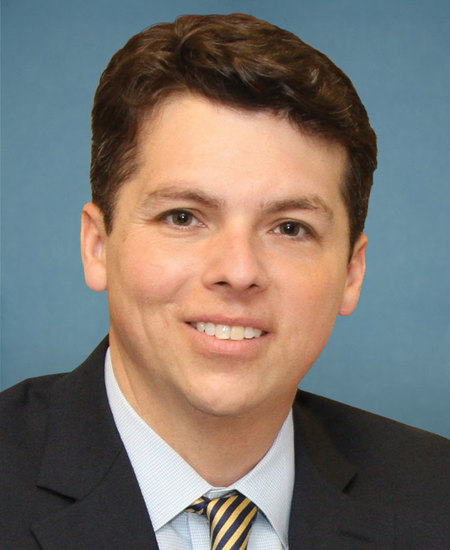
Rep. Brendan F. Boyle
Sponsored bills
Striking Workers Healthcare Protection Act This bill prohibits an employer from terminating or significantly altering the employer-provided health insurance coverage of an employee engaged in a lawful strike. An employer that violates this prohibition is subject to a maximum civil penalty of $50,000 for each violation.
This resolution expresses support for the goals and ideals of PCOS Awareness Month. Polycystic ovary syndrome (PCOS) is caused by a hormone imbalance. Symptoms can include infertility, weight gain, excess hair growth, and acne.
Refuge From Cruel Trapping Act of 2021 This bill prohibits, with specified exceptions, the use or possession of body-gripping traps in the National Wildlife Refuge System. The bill imposes on persons who possess or use such traps in the system (1) for a first offense, a civil fine of up to $500 for each body-gripping trap possessed or used; and (2) for subsequent offenses, a civil fine of up to $1,000 for each body-gripping trap possessed or used, imprisonment for up to 180 days, or both such a civil fine and imprisonment. The bill makes any body-gripping traps that are possessed or used in violation of this bill, and any wildlife captured by the use of such traps, including the pelts and raw fur, subject to civil forfeiture. Persons found to be in violation of such prohibition shall pay all associated court costs.
Climate Risk and Emergency Support In Livable Inclusive and Equitable Neighborhoods and Communities Everywhere Act or the Climate RESILIENCE Act This bill makes changes to the Robert T. Stafford Disaster Relief and Emergency Assistance Act to take into account climate change. The bill includes extreme temperature events, such as heat waves or freezes, within the scope of the act and defines resilience for purposes of disaster assistance and mitigation efforts. Federal and state preparedness and mitigation assistance may be used for reducing the impacts of extreme temperatures and improving air quality and mitigating against wildfire smoke.. The bill authorizes implementing predisaster hazard mitigation measures that will be cost-effective and equitable long-term and provide enhanced protection to the community. The Federal Emergency Management Agency (FEMA) must (1) provide technical assistance to underserved and disadvantaged communities for such measures; and (2) provide guidance to implement the latest published editions of relevant consensus-based codes, specifications, and standards that incorporate the latest hazard-resistant designs. The bill includes within the hazard mitigation program requirements the abatement of lead, mold, mildew, radon, asthma, and allergen triggers, or other pollutants and hazardous materials directly caused by a major disaster or emergency. FEMA must report to Congress regarding challenges posed by FEMA requirements for determining the cost-effectiveness of mitigation activities and how such requirements may disproportionately burden underserved or disadvantaged communities.
This resolution expresses support for the goals and ideals of Korean American Day and honors the 119th anniversary of the arrival of the first Korean immigrants to the United States.
Maddy summaryThis bill (H.J.Res. 68) is a symbolic, procedural measure that would require the President to issue an annual proclamation designating a day as "Democracy Day." It directs the President to call on state/local governments and citizens to observe the day through programs and activities, with January 6 referenced as a potential date. The bill does not create new government programs or change existing laws - it only establishes a recurring presidential proclamation. It directly affects federal, state, and local governments by encouraging them to participate in annual observances. The bill has no budgetary impact and remains focused on promoting civic engagement through a designated day.
PrEP Access and Coverage Act This bill requires private health insurance plans to cover prescription drugs that prevent HIV, including related screenings, diagnostic procedures, administrative fees, and clinical follow-ups, without any cost-sharing obligation for the plan holder. Further, insurance plans must not impose any preauthorization requirement for this coverage. These coverage requirements also apply to public health insurance programs, including Medicare, Medicaid, and the Children's Health Insurance Program. Additionally, the bill prohibits denying, limiting, or qualifying coverage or increasing premiums for disability insurance, long-term care insurance, or life insurance policies based on an individual taking medication for HIV prevention. The bill further requires the Department of Health and Human Services to award grants to states, or directly to eligible local organizations, to provide uninsured individuals and underinsured individuals access to prescription drugs and related services that prevent HIV. The Centers for Disease Control and Prevention also must develop a public awareness campaign that focuses efforts in communities with a high need for HIV prevention treatment.
Accelerating Access to Critical Therapies for ALS Act This bill establishes grant programs to address neurodegenerative diseases, such as amyotrophic lateral sclerosis (also known as ALS or Lou Gehrig's disease), and contains other related provisions. The Department of Health and Human Services (HHS) shall award grants to eligible entities for scientific research utilizing data from expanded access to investigational ALS treatments for individuals who are not otherwise eligible for clinical trials. The Food and Drug Administration (FDA) shall award grants to public and private entities to cover the costs of research and development of drugs that diagnose or treat ALS and other rare neurodegenerative diseases. HHS shall also establish the Public-Private Partnership for Neurodegenerative Diseases between the National Institutes of Health, the FDA, and at least one eligible entity (generally, an institution of higher education or a nonprofit organization). The partnership shall support the development and regulatory review of drugs that address ALS and other rare neurodegenerative diseases. The FDA shall publish on its website a five-year action plan for fostering the development of drugs that improve or extend the lives of people living with rare neurodegenerative diseases. The Government Accountability Office must report to Congress about the grants provided under this bill, including an analysis of the impact of such grants on research and development of treatments for ALS.
Wildlife Conservation and Anti-Trafficking Act of 2021 This bill sets forth provisions relating to wildlife conservation, anti-trafficking and poaching, and illegal fishing. Specifically, the bill directs the Departments of Justice, the Interior, Commerce, State, and the Treasury to develop a plan of action for awards to whistleblowers of violations of laws applicable to wildlife trafficking; directs Interior to carry out the International Wildlife Conservation Program to, among other things, address global conservation threats and combat wildlife trafficking and poaching; provides funding for the conservation of certain endangered species; authorizes Interior, in consultation with the State Department, to station not less than one U.S. Fish and Wildlife Service officer in the primary diplomatic or consular post of the United States in a focus country or country of concern (i.e., countries engaging in wildlife trafficking); and directs Commerce to make amounts available for illegal, unreported, and unregulated fishing enforcement. The bill also modifies the federal criminal code to make wildlife trafficking and illegal fishing predicates with respect to the enforcement of certain criminal offenses, including racketeering and money laundering.