

Maddy summaryHR 7127, the FAIR Act, establishes pay adjustments for federal employees in 2025. It increases base pay by 4% for most federal workers under statutory pay systems and for "prevailing rate" employees (like those in specific geographic areas), while raising locality pay rates by 3.4%. The bill directly affects all federal employees receiving pay under these systems, as it modifies their 2025 salary calculations. These changes are based on statutory formulas under Title 5 of the U.S. Code, with no new policy mechanisms beyond the specified percentage increases. The adjustments apply to pay rates in effect as of the end of fiscal year 2024.
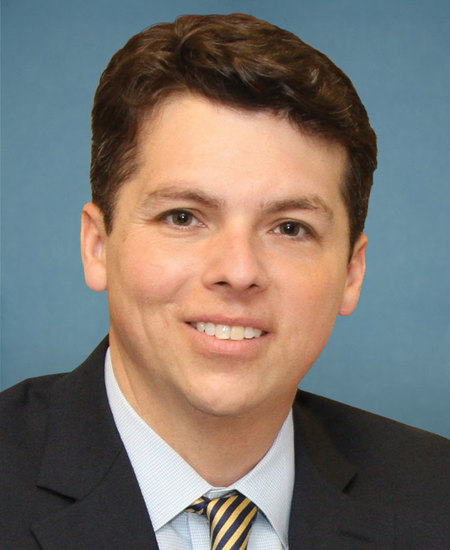
Rep. Brendan F. Boyle
Sponsored bills
Maddy summaryHR 7077 expands the types of assets blocked under U.S. sanctions that can fund relief for Ukraine harmed by Russian aggression. It allows funds from property forfeited due to sanctions against Russia, Belarus, or entities tied to aggression in Ukraine (including Crimea and Donetsk/Luhansk regions) to be used for remediation. The bill clarifies that eligible property includes assets blocked under sanctions related to Russia’s 2014 annexation of Crimea and 2022 invasion, as well as assets involved in violations of export controls. It requires the Treasury and State Departments to submit a 30-day implementation plan and semiannual reports tracking how these funds are used for Ukraine relief.
Maddy summaryHR 7056, the Access to Family Building Act, establishes federal rights for individuals to access assisted reproductive technology (ART) like IVF without unreasonable restrictions, directly affecting patients seeking fertility treatments and health care providers offering ART services. The bill prohibits states from imposing limitations on ART that are more burdensome than those for comparable medical procedures, fail to advance safety, or unduly restrict access, while allowing health and safety regulations that are necessary and least restrictive. It creates federal enforcement mechanisms, including lawsuits by the Attorney General or affected individuals to challenge violating state laws, and preempts conflicting state regulations. The bill explicitly preserves state authority over health/safety regulations and does not alter existing state insurance coverage laws for ART.
Maddy summaryThe Stronger Communities through Better Transit Act establishes a new federal grant program to improve public transportation service. It provides funding to urban areas, states, and Indian tribes to cover up to 50% of public transit operating costs (up to 80% in persistent poverty areas and 100% for Indian tribes), with requirements to report on service frequency, access to jobs, and conduct community surveys. The program mandates that a majority of funds must benefit underserved communities and areas of persistent poverty, defined as census tracts with high poverty rates or minority populations. Recipients must maintain their transit funding levels and report on improvements in access to essential services. The bill authorizes $20 billion annually for fiscal years 2024-2027.
Maddy summaryHRES 963 is a symbolic resolution honoring Korean American Day, which commemorates the January 13, 1903 arrival of the first large wave of Korean immigrants to the U.S. It recognizes Korean Americans' contributions to U.S. society, including their economic, cultural, and military impacts, and marks the 121st anniversary of this historic migration. The resolution urges all Americans to observe Korean American Day to appreciate these contributions. As a commemorative measure, it does not create new policies or affect specific groups beyond this ceremonial recognition.
Maddy summaryThe Affordable Connectivity Program Extension Act of 2024 allocates $7 billion in funding for the Affordable Connectivity Program (ACP) during fiscal year 2024. The ACP provides subsidies to low-income households to help cover the cost of internet service and connected devices like laptops or tablets. This funding ensures the program can continue supporting eligible households throughout the year, with the money remaining available until fully spent. The bill extends existing program funding without changing eligibility criteria or service requirements.
Maddy summaryThe PFAS Action Act of 2023 establishes federal regulations to address PFAS contamination across multiple environmental and health domains. It requires the EPA to designate specific PFAS (like PFOA and PFOS) as hazardous substances, set drinking water standards for PFAS, and mandate testing and reporting by manufacturers. The bill provides $500 million for community water systems to install PFAS treatment systems, $100 million for school water testing and filtration, and creates a website to help homeowners test well water. It also establishes labeling requirements for PFAS-free products and mandates better public communication about PFAS risks.
Maddy summaryThis bill improves the administration of the Public Service Loan Forgiveness (PSLF) program, directly affecting borrowers with federal student loans who work in qualifying public service jobs (e.g., government, nonprofit roles) and their employers. It requires the Department of Education to create a public database of eligible employers, establish an online portal for borrowers to track eligibility and submit forms, and enable data sharing with agencies like the IRS to reduce paperwork. The bill also mandates annual notifications to employers about PSLF requirements, clarifies eligibility for the Temporary Expanded PSLF program, and requires annual reports on program outcomes. These changes aim to simplify the process for borrowers seeking loan forgiveness after 120 qualifying payments.
Maddy summaryHR 6416, the "Russian War Crimes in Ukraine Tax Act," imposes a 100% tax on interest and dividends earned from frozen Russian and Belarusian sovereign assets held abroad. This tax revenue is directed into a new Ukraine Reconstruction Trust Fund, which must be used for Ukraine's reconstruction, humanitarian aid, economic development, and transparent governance. The bill requires U.S. financial institutions to withhold this tax from qualifying income and overrides international treaty obligations to ensure implementation. It also mandates annual reports on fund usage to Congress, specifying that all revenues from the tax must support Ukraine's recovery efforts as defined in the legislation.
Maddy summaryHRES 907 is a non-binding House resolution condemning rising antisemitism in the U.S., citing increased hate crimes (25% rise in 2022 per FBI data) and campus incidents (41% increase from 2021-2022 per ADL). It calls on all Americans, including campus leaders and government agencies, to combat antisemitism and urges implementation of the U.S. National Strategy to Counter Antisemitism. The resolution specifically requests increased funding for the Nonprofit Security Grant Program to strengthen safety protections for Jewish communities. It directly affects Jewish Americans, campus communities, and government agencies responsible for hate crime prevention and community safety.