

Maddy summaryThis bill prohibits the U.S. military from discriminating against service members or applicants based on gender identity. It bans policies that would deny service, involuntarily separate members, deny medically necessary healthcare, or require service in a gender different from one's identity. The law defines "gender identity" broadly to include a person's internal sense of gender, appearance, and mannerisms, regardless of sex assigned at birth. It directly affects transgender and gender-diverse individuals currently serving or seeking to serve in the Armed Forces.
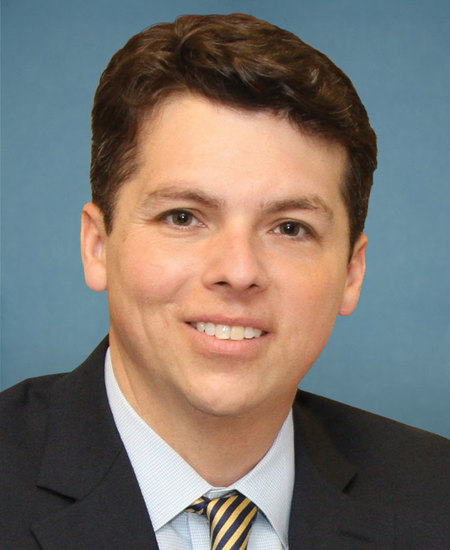
Rep. Brendan F. Boyle
Sponsored bills
Stronger Communities through Better Transit Act This bill requires the Department of Transportation (DOT) to establish a grant program to support operating projects for public transportation and related service improvements, particularly in underserved communities and areas of persistent poverty. Specifically, the bill requires DOT to allocate funding under the program for urbanized areas, states, and Indian tribes that are recipients of funds under either the Federal Transit Administration's (FTA's) Urbanized Area Formula Funding program or Formula Grants for Rural Areas program. Eligible recipients may use funding for operating costs associated with projects that improve public transportation service for transit-dependent populations and support increased transit ridership (e.g., service expansion, information technology enhancements, and workforce development). DOT must apportion the funding so that recipients receive funds that are proportional to their share of operating costs. The bill also provides for an increased federal cost share for operating assistance for projects or programs carried out in areas of persistent poverty or underserved communities. DOT must set up a multimodal access measurement interface for public agencies to aid transit agencies in determining and reporting on access to jobs and essential services. A grant recipient must (1) report specific information to the FTA for inclusion in the National Transit Database, and (2) survey transit riders and non-riding residents regarding transit service improvements. Further, the bill expands the purposes of the public transportation programs to include supporting public transportation's role in combating climate change through growing/retaining transit ridership.
Maddy summaryHR 3368, the "Born in the USA Act of 2025," prohibits federal funding for Executive Order 14160 (which aimed to restrict birthright citizenship for children born in the U.S.). The bill directly affects federal agencies that might implement the executive order by blocking their use of funds for that purpose. Its key provision is a funding ban targeting the executive order and any similar future policies, without changing citizenship law. The bill does not alter birthright citizenship rights but prevents federal resources from being used to enforce the controversial executive order. It is a procedural measure focused on funding, not a substantive policy change to citizenship rules.
Maddy summaryHR 3376 creates the Water Affordability, Transparency, Equity, and Reliability Trust Fund, funded by increasing the corporate tax rate from 21% to 24.5% starting in 2025, with annual funding capped at $35 billion or 1/20th of 20-year infrastructure needs. The bill allocates funds to clean water programs (42%), safe drinking water programs (42.5%), household water well systems (1%), colonias assistance (0.5%), and Indian health services (3%), requiring specific prioritization of low-income and minority communities for many programs. It mandates an EPA study on water affordability, discriminatory practices, and civil rights violations in water service, including data collection on service disconnections affecting vulnerable populations. The bill also includes provisions for lead service line replacement, PFAS contamination response, and job training grants for water system operators with specific requirements to prioritize low-income communities.
Maddy summaryThis bill would increase the Social Security tax wage base to $400,000, meaning income above this threshold would no longer be subject to Social Security tax. It would also impose a new 1.2% tax on wages exceeding $400,000 (with $500,000 for joint returns and $250,000 for married filing separately), and modify the net investment income tax to include a 13.6% additional tax on income above these thresholds. The bill would direct 71.3% of these new taxes to the Old-Age and Survivors Insurance Trust Fund, 10.3% to the Disability Insurance Trust Fund, and 28.7% to the Hospital Insurance Trust Fund. These changes would apply to taxable years beginning after December 31, 2025.
Maddy summaryHR 3243, the Therapeutic Fraud Prevention Act of 2025, bans the provision of paid conversion therapy aimed at changing a person's sexual orientation or gender identity, and prohibits advertising such therapy as effective, safe, or without risk. It directly affects LGBTQ+ individuals and their families who might be targeted by these practices, as professionals have determined conversion therapy is ineffective and harmful. The law treats violations as deceptive acts under consumer protection laws, empowering the Federal Trade Commission and state attorneys general to enforce it through civil actions. It explicitly excludes legitimate gender transition support and non-discriminatory counseling from the ban.
Maddy summaryThis bill clarifies liability for payroll tax errors when third-party payroll services (like professional employer organizations) rely on employer certifications. It allows these services to depend on employer-provided information unless they knew or should have known of an error. If an error is discovered, the employer bears full liability unless the third party had "constructive knowledge" of the error, in which case liability is shared based on the portion of the error the third party knew about. The bill also prevents the IRS from delaying payroll tax credits or auditing employers solely because a third party relied on an erroneous certification from that employer. It directly affects third-party payroll services and the businesses that use their services for tax filings.
Maddy summaryHR 3199, the Captive Primate Safety Act of 2025, bans the import, export, sale, breeding, and possession of certain nonhuman primates (including chimpanzees, gorillas, and lemurs) in interstate or foreign commerce. It directly affects pet owners, breeders, zoos, and wildlife facilities that currently handle these primates. The bill allows limited exceptions for existing owners who register their primates with the U.S. Fish and Wildlife Service within 180 days, agree to stop breeding/selling, and prevent public contact. It amends the Lacey Act to implement these restrictions, with enforcement beginning immediately regardless of regulatory timelines.
Maddy summary# Summary of the SHIPS for America Act This comprehensive legislation focuses on strengthening the U.S. maritime industry, shipbuilding capacity, and maritime workforce to enhance national security and economic competitiveness. ## Key Areas of Focus 1. **Shipbuilding & Maritime Infrastructure** - Establishes a United States Center for Maritime Innovation to accelerate adoption of commercial technologies - Creates a National Shipbuilding Research Program - Requires an annual survey of anticipated commercial vessel construction - Includes provisions for streamlined environmental reviews of maritime infrastructure 2. **Workforce Development** - Establishes the United States Merchant Marine Career Retention Program to maintain mariner qualifications - Creates Centers of Excellence for Domestic Maritime Workforce Training and Education - Implements military-to-maritime transition programs - Establishes a Maritime Career and Technical Education Advisory Committee 3. **Education & Training** - Expands educational assistance for merchant mariners - Creates eligibility for Naval Postgraduate School for merchant mariners - Establishes maritime education programs from K-12 through higher education - Provides for international exchanges for mariners and naval architects 4. **National Security & Strategic Readiness** - Requires reports on National Defense Reserve Fleet utilization - Includes measures to de-risk the maritime sector from Chinese influence - Enhances shipbuilding capacity for national security needs - Establishes programs to ensure sufficient mariner workforce for national defense 5. **Funding Mechanisms** - Authorizes appropriations from the Maritime Security Trust Fund - Includes funding for workforce programs, education, and shipbuilding initiatives - Establishes specific funding levels for various programs over multiple fiscal years The legislation aims to create a sustainable domestic maritime industrial base that supports both commercial shipping and national defense requirements, with a particular emphasis on developing and retaining a skilled U.S. maritime workforce.
Maddy summaryHRES 366 is a non-binding resolution recognizing the 50th anniversary of the Fall of Saigon on April 30, 1975, known as Black April in Vietnamese history. It honors the Vietnamese American community - now over 2.3 million strong - who resettled in the U.S. after 1975 and have contributed to American society through diverse fields like public service and business. The resolution commemorates the service of U.S. and South Vietnamese military personnel during the Vietnam War and reaffirms U.S. support for democracy and human rights in Vietnam. As a symbolic gesture, it does not create new laws but encourages public observance of this historical event and the community's resilience.