Childhood Cancer Survivorship, Treatment, Access, and Research Reauthorization Act of 2022 or the Childhood Cancer STAR Reauthorization Act This bill reauthorizes through FY2028 and modifies pediatric cancer research and related programs, including to expand collection of and access to relevant biospecimens and to support the transition of pediatric cancer survivors to primary care.
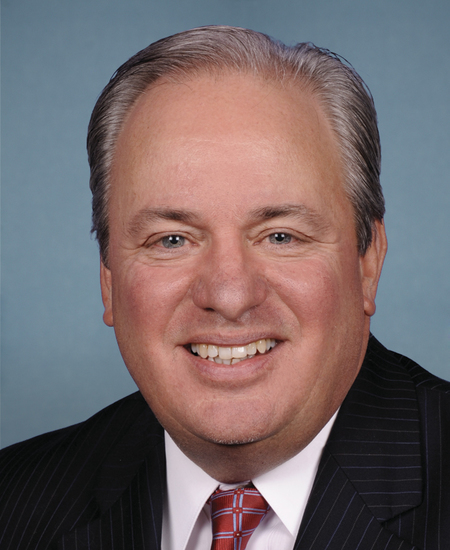
Rep. Michael F. Doyle
Sponsored bills
Robocall Trace Back Enhancement Act This bill provides liability protection for specified information-sharing activities undertaken to trace the origins of unlawful robocalls. Specifically, the bill protects a designated consortium that conducts private-led efforts to trace unlawful robocalls from liability for receiving, sharing, or publishing information about illegal calls, including their origin or source. The bill also applies liability protection to a voice service provider (i.e., a provider of any service that enables real-time, two-way voice communications) or other entity or person that shares information with the consortium.
Prescription Information Modernization Act of 2022 This bill allows health care providers to receive prescribing information for drugs electronically rather than in paper form from manufacturers.
This resolution recognizes that Black women are experiencing high, disproportionate rates of maternal mortality and morbidity in the United States and that Black Maternal Health Week is an opportunity to deepen the national conversation about Black maternal health.
Targeting Resources for Equitable Access to Treatment for Long COVID Act or the TREAT Long COVID Act This bill requires the Department of Health and Human Services to award competitive grants to create or expand the capacity of clinics that treat patients with persistent, long-term symptoms following recovery from acute COVID-19 (i.e., Long COVID). Eligible recipients include federally qualified health centers, rural health clinics, urban Indian health centers, and state and local health departments.
Ensuring Lasting Smiles Act This bill requires private health insurance plans to cover diagnosis and treatment of congenital anomalies and birth defects, such as reconstructive services and items. Coverage must include services and items that functionally improve, repair, or restore any body part that is medically necessary for normal bodily functions or appearance, as determined by the treating physician. Coverage limits and cost-sharing requirements for such services and items may not be more restrictive than those applicable to all medical and surgical benefits under the plan.
Supply Chain Disruptions Relief Act This bill modifies the treatment of liquidations of new motor vehicle inventory as qualified LIFO (last in first out accounting method) inventory. It allows new motor vehicle dealers to elect to wait until the end of 2025 to replace their inventory for purposes of determining income attributable to the sale of such inventory during 2020 and 2021.
Fission for the Future Act of 2022 This bill supports the commercial deployment of advanced nuclear reactors. Specifically, the Department of Energy (DOE) must establish a program that provides financial assistance for the commercial planning, licensing, development, and construction of (1) advanced nuclear reactors, or (2) supply chain infrastructure associated with such reactors or related technologies. In addition, the bill reauthorizes through FY2027 and revises a DOE program designed to strengthen university research and training in nuclear science and engineering.
Marijuana Opportunity Reinvestment and Expungement Act or the MORE Act This bill decriminalizes marijuana. Specifically, it removes marijuana from the list of scheduled substances under the Controlled Substances Act and eliminates criminal penalties for an individual who manufactures, distributes, or possesses marijuana. The bill also makes other changes, including the following: replaces statutory references to marijuana and marihuana with cannabis , requires the Bureau of Labor Statistics to regularly publish demographic data on cannabis business owners and employees, establishes a trust fund to support various programs and services for individuals and businesses in communities impacted by the war on drugs, imposes an excise tax on cannabis products produced in or imported into the United States and an occupational tax on cannabis production facilities and export warehouses, makes Small Business Administration loans and services available to entities that are cannabis-related legitimate businesses or service providers, prohibits the denial of federal public benefits to a person on the basis of certain cannabis-related conduct or convictions, prohibits the denial of benefits and protections under immigration laws on the basis of a cannabis-related event (e.g., conduct or a conviction), establishes a process to expunge convictions and conduct sentencing review hearings related to federal cannabis offenses, directs the Government Accountability Office to study the societal impact of state legalization of recreational cannabis, directs the National Highway Traffic Safety Administration to study methods for determining whether a driver is impaired by marijuana, directs the National Institute for Occupational Safety and Health to study the impact of state legalization of recreational cannabis on the workplace, and directs the Department of Education to study the impact of state legalization of recreational cannabis on schools and school-aged children.

Emmett Till Antilynching Act This bill makes lynching a federal hate crime offense. Specifically, the bill imposes criminal penalties—a fine, a prison term of up to 30 years, or both—on an individual who conspires to commit a hate crime offense that results in death or serious bodily injury or that includes kidnapping or an attempt to kidnap, aggravated sexual abuse or an attempt to commit aggravated sexual abuse, or an attempt to kill.