

Repatriate Our Patriots Act This bill protects certain veterans of the Armed Forces from removal from the United States and provides such veterans with an expedited procedure for naturalization. The bill applies to special veterans , defined as persons who served in the active Armed Forces who were (1) honorably discharged or released; (2) not convicted of various crimes, including voluntary manslaughter, murder, rape, or terrorism; and (3) not a child abuser or pedophile. Special veterans shall not be removed from the United States, and the Department of Homeland Security (DHS) shall cancel any pending removal proceedings or orders against any such veterans. DHS shall establish a program to permit such veterans who were already removed from the United States to return to as an alien with permanent residence status. Special veterans shall be naturalized upon filing an application, paying the relevant fees, and taking an oath of allegiance. DHS shall take steps to ensure such naturalization applications are pending for no longer than 90 days.
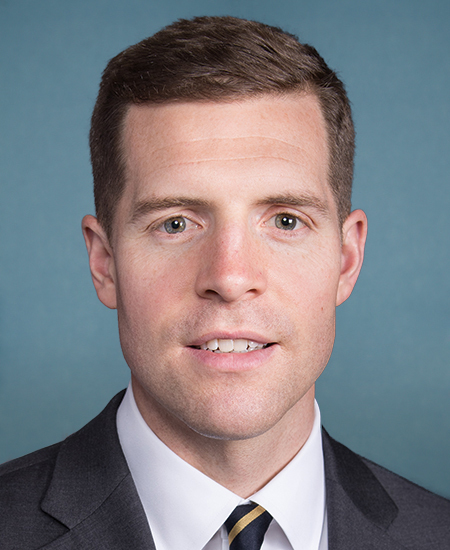
Rep. Conor Lamb
Sponsored bills
Fully Informed Veteran Act of 2021 This bill requires the Department of Veterans Affairs to authorize physicians and other health care providers of the Veterans Health Administration to provide veterans with information about participating in state-approved marijuana programs if their state has such a program available. Under the bill, the term state includes the District of Columbia, federally recognized tribes, and U.S. territories and possessions.
Never Again International Outbreak Prevention Act This bill establishes measures related to international accountability for outbreaks of novel viruses and diseases. The Department of State must establish lists of countries based on the procedures and standards each country has implemented to (1) identify outbreaks and monitor diseases, and (2) ensure that novel viruses and diseases are timely reported. The President must take specified action with respect to countries that are deemed capable of implementing such procedures and standards but have not done so. The President may also sanction government officials of such countries. Foreign state sovereign immunity is waived in any case seeking damages against a foreign state for (1) injury or death in the United States caused by a state's failure to abide by such procedures and standards, or (2) intentionally misleading the international community or the World Health Organization (WHO) regarding the outbreak or spread of a health concern that leads to a pandemic. The President must facilitate (1) an international investigation and report on the response to COVID-19 (i.e., coronavirus disease 2019), and (2) an international audit of the WHO relating to its actions in response to COVID-19. The U.S. Representative to the United Nations (U.N.) must request that the U.N. (1) review the WHO's response to COVID-19, and (2) recommend actions to improve future responses and ensure WHO accountability for identified failures. The Representative shall seek a global ban on wet markets (markets where animals of uncertified origin and health are sold in unhygienic conditions, dead or alive, for human consumption).
Afghan Allies Protection Act of 2021 This bill provides for 4,000 additional special immigrant visas to qualified nationals of Afghanistan who were employed by or on behalf of the United States or the International Security Assistance Force after October 6, 2001. The visa allotment, in addition to any unused allocations of such special immigrant visas since FY2015, shall be available beginning FY2021, and unused visas shall carry over to subsequent fiscal years until exhausted.
Extreme Risk Protection Order Act of 2021 This bill establishes grants to support the implementation of extreme risk protection order laws at the state and local levels, extends federal firearms restrictions to individuals who are subject to extreme risk protection orders, and expands related data collection. Extreme risk protection order laws, or red flag laws, generally allow certain individuals (e.g., law enforcement officers or family members) to petition a court for a temporary order that prohibits an at-risk individual from purchasing and possessing firearms. Among its provisions, the bill directs the Office of Community Oriented Policing Services within the Department of Justice to establish a grant program to help states, local governments, Indian tribes, and other entities implement extreme risk protection order laws; extends federal restrictions on the receipt, possession, shipment, and transportation of firearms and ammunition to individuals who are subject to extreme risk protection orders; and requires the Federal Bureau of Investigation to compile (and later destroy) records from federal, tribal, and state courts and other agencies that identify individuals who are subject to extreme risk protection orders.
Major Richard Star Act This bill provides that combat-disabled uniformed services retirees with fewer than 20 years of creditable service may concurrently receive, without reduction, veterans' disability compensation and retired pay or combat-related special compensation.
Global Malnutrition Prevention and Treatment Act of 2021 This act sets out programs and otherwise directs the U.S. Agency for International Development (USAID) to carry out activities to prevent and treat malnutrition globally. Specifically, USAID may leverage resources to address malnutrition through the Global Nutrition Coordination Plan (an interagency effort to strengthen the impact of U.S. investments in nutrition) and its role on the board of directors of the U.S. International Development Finance Corporation. USAID must also select countries based on specified malnutrition-related indicators for purposes of targeting malnutrition prevention and treatment programs and update the selection within five years. Additionally, USAID may establish the Nutrition Leadership Council to coordinate federal government activities to prevent and treat malnutrition; and target resources and nutrition interventions to the populations most susceptible to severe malnutrition and otherwise support efforts to prevent and treat malnutrition globally. The act also requires USAID to provide to Congress an implementation plan and annual reports concerning its programs for treating and preventing malnutrition. The act's provisions terminate seven years after its enactment.
This resolution recognizes the accomplishments of Roberto Clemente, the first Puerto Rican to be elected to the National Baseball Hall of Fame, and urges Major League Baseball to retire the number 21 in honor of his life and legacy.
Abandoned Well Remediation Research and Development Act This bill requires the Department of Energy to establish a research, development, and demonstration program with respect to (1) data collection on the location of abandoned oil or gas wells; (2) the plugging, remediation, reclamation, and repurposing of the wells; and (3) mitigating potential environmental impacts of documented and undocumented abandoned wells.
This bill designates the facility of the United States Postal Service located at 3900 Crown Road Southwest in Atlanta, Georgia, as the John R. Lewis Post Office Building.