

National Apprenticeship Act of 2021 This bill provides statutory authority for the registered apprenticeship program within the Department of Labor and for related grant programs. The bill provides statutory authority for the Office of Apprenticeship (OA) within Labor. The OA's responsibilities include (1) supporting the development of apprenticeship models; (2) recognizing qualified state apprenticeship agencies, and operating apprenticeship offices in states without a recognized agency; (3) providing technical assistance to state agencies; (4) periodically updating requirements for each occupation in the apprenticeship program and determining whether to approve new occupations for the program; (5) promoting greater diversity in the national apprenticeship system; and (6) awarding grants provided by this bill. The bill also establishes in statute the responsibilities of state apprenticeship agencies and offices, including (1) providing technical assistance to stakeholders, (2) resolving complaints, (3) establishing state performance goals, and (4) including in its written plan a description of how its apprenticeship programs align with the skills needs of the state's employers. The OA shall enter into an agreement with the Department of Education to promote the integration and alignment of apprenticeship programs with secondary, postsecondary, and adult education. The OA shall award grants, contracts, or cooperative agreements to eligible entities to (1) expand national apprenticeship system programs, including by expanding pre-apprenticeship and youth apprenticeship programs; (2) encourage employer participation; and (3) strengthen alignment between the apprenticeship system and education providers. The bill provides statutory authority for criteria for various programs, including (1) quality standards for apprenticeships, (2) requirements for apprenticeship agreements between a program sponsor and an apprentice, and (3) acceptable uses for grant funds awarded by this bill. The bill also provides statutory authority for the National Advisory Committee on Apprenticeships. The committee's duties shall include advising the OA on matters relating to this bill and providing recommendations on topics such as increasing the participation of populations not traditionally involved in the national apprenticeship system. Labor shall engage an independent entity to conduct research on ways to improve the management and effectiveness of national apprenticeship system programs.
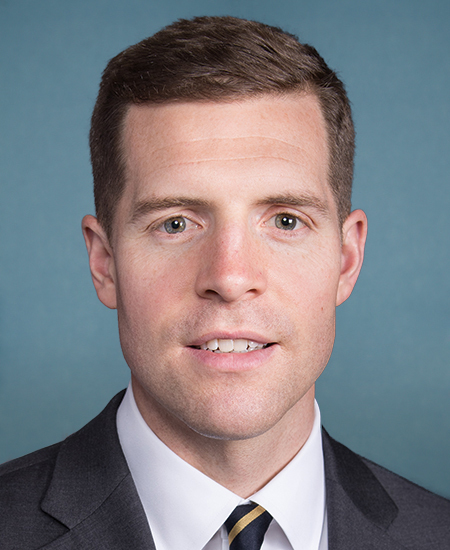
Rep. Conor Lamb
Sponsored bills
Living Donor Protection Act of 2021 This bill prohibits certain insurance carriers from discriminating against, and provides other protections for, living organ donors. Specifically, carriers may not deny, cancel, or otherwise impose conditions on policies for life insurance, disability insurance, or long-term care insurance based on an individual's status as a living organ donor. The bill also expressly specifies that recovery from organ-donation surgery constitutes a serious health condition that entitles eligible employees to job-protected medical leave. In addition, the Department of Health and Human Services must update educational materials on live organ donation to include information about the benefits of live organ donation and about access to insurance for living organ donors.
ABLE Age Adjustment Act This bill increases from 26 to 46 the age threshold for tax-favored ABLE (Achieving a Better Life Experience) accounts. (ABLE accounts are designed to enable individuals with disabilities to save for and pay for disability-related expenses. To establish an account, an individual must have a qualifying impairment that began before the individual attained the age threshold.)
Next Generation Entrepreneurship Corps Act This bill establishes the Next Generation Entrepreneurship Corps Program to promote entrepreneurship in the most distressed regions of the United States, including those regions affected by COVID-19 (i.e., coronavirus disease 2019), by awarding participating fellows a two-year stipend to start and grow a new small business. Fellows will receive (1) a $120,000, two-year stipend for living and basic startup expenses; (2) health care; and (3) interest-free federal student loan deferral for two years. Further, fellows shall receive mentorship from the Service Corps of Retired Executives and be matched with a full range of lenders, investors, and insurers. The bill also establishes a fund in the Department of the Treasury from which the SBA may provide loans for qualified investors to support a small business owned and operated under the program by a fellow.
Food Allergy Safety, Treatment, Education, and Research Act of 2021 or the FASTER Act of 2021 This bill expands the definition of major food allergen for purposes of certain food-labeling requirements to specifically include sesame. In addition, the Department of Health and Human Services must report on certain information related to food allergy research and data collection activities.
This resolution supports the designation of Public Schools Week.
Iran Hostages Congressional Gold Medal Act This bill requires the Speaker of the House of Representatives and the President pro tempore of the Senate to arrange for the award of a Congressional Gold Medal commemorating the bravery and endurance of the 53 hostages of the Iran Hostage Crisis. Following its award, the medal shall be given to the National Museum of American History of the Smithsonian Institution for display and research. The Department of the Treasury must strike duplicate medals in silver for presentation to a hostage (or the personal representative of a deceased hostage), and Treasury may also strike and sell duplicate medals in bronze.
This resolution impeaches President Donald John Trump for high crimes and misdemeanors. Specifically, the resolution sets forth an article of impeachment stating that President Trump incited an insurrection against the government of the United States. The article states that prior to the joint session of Congress held on January 6, 2021, to count the votes of the electoral college, President Trump repeatedly issued false statements asserting that the presidential election results were fraudulent and should not be accepted by the American people or certified by state or federal officials; shortly before the joint session commenced, President Trump reiterated false claims to a crowd near the White House and willfully made statements to the crowd that encouraged and foreseeably resulted in lawless action at the Capitol; members of the crowd, incited by President Trump, unlawfully breached and vandalized the Capitol and engaged in other violent, destructive, and seditious acts, including the killing of a law enforcement officer; President Trump's conduct on January 6, 2021, followed his prior efforts to subvert and obstruct the certification of the presidential election, which included a threatening phone call to the Secretary of State of Georgia on January 2, 2021; President Trump gravely endangered the security of the United States and its institutions of government, threatened the integrity of the democratic system, interfered with the peaceful transition of power, and imperiled a coequal branch of government; and by such conduct, President Trump warrants impeachment and trial, removal from office, and disqualification to hold U.S. office.
This resolution urges the U.S. Postal Service to take steps to ensure the continuation of its six-day mail delivery service.
This resolution expresses the sense of the House of Representatives that the U.S. Postal Service should restore mail delivery service standards to those of July 1, 2012.