

Fire Fighters and EMS Employer-Employee Cooperation Act This bill requires the Federal Labor Relations Authority to determine whether a state substantially provides fire and emergency medical services (EMS) personnel the right to form and join a labor organization; recognition by fire and EMS employers of the employees' labor organization, agreement to bargain with the organization, and reduction of any agreements to writing in a contract or memorandum of understanding; the right to bargain over hours, wages, and terms and conditions of employment; and arbitration or other mechanisms to resolve an impasse in collective bargaining negotiations. The bill makes the authority responsible for (1) determining the appropriateness of units for labor representation; (2) supervising elections; (3) conducting hearings and resolving complaints of unfair labor practices; and (4) protecting the right of employees to form, join, or assist any labor organization, or to refrain from doing so. An employer, fire and EMS personnel, or labor organization may not engage in a lockout, sickout, work slowdown, strike, or any other organized job action that will measurably disrupt the delivery of emergency services and is designed to compel an employer, fire and EMS personnel, or labor organization to agree to the terms of a proposed contract.
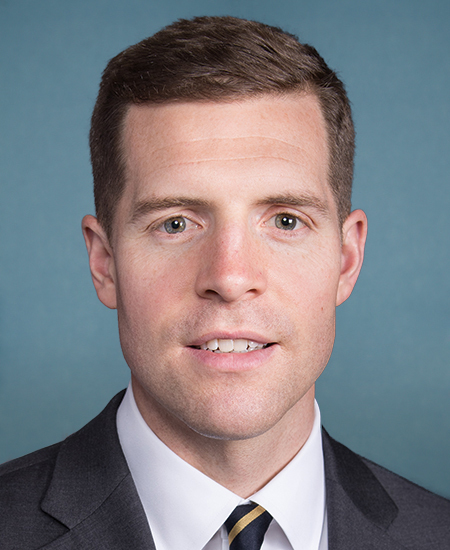
Rep. Conor Lamb
Sponsored bills
Tax Fairness for Workers Act This bill allows an above-the-line tax deduction for union dues and expenses. (An above-the-line deduction is subtracted from gross income and is available whether or not a taxpayer itemizes other deductions.) The bill also reinstates the miscellaneous itemized tax deduction for unreimbursed expenses attributable to the performance of services as an employee (Under current law, all miscellaneous itemized deductions are suspended through 2025).
Affordable Housing Credit Improvement Act of 2021 This bill revises provisions of the low-income housing tax credit and renames it as the affordable housing credit . The bill increases the per capita dollar amount of the credit and its minimum ceiling amount beginning in 2021 and extends the inflation adjustment for such amounts. The bill modifies tenant income eligibility requirements and the average income formula for determining such income. It also revises rules for student occupancy of rental units and tenant voucher payments, and prohibits any refusal to rent to victims of domestic abuse. The bill further modifies the credit to increase state allocations of the credit; repeal the qualified census tract population cap; prohibit local approval and contribution requirements; increase the credit for certain projects designated to serve extremely low-income households; increase the credit for certain bond-financed projects designated by state agencies; eliminate the basis reduction for properties that receive certain energy-related tax benefits; and increase the population cap for difficult development areas (i.e., areas with high construction, land, and utility costs relative to area median gross income). The bill also includes Indian and rural areas as difficult development areas and modifies other requirements relating to casualty losses, acquisition credits, and foreclosures.
Healthy Families Act This bill provides for paid and unpaid sick leave for employees to meet their own medical needs and those of their families. It requires employers with 15 or more employees to provide their employees with at least one hour of earned paid sick leave for every 30 hours worked, up to a maximum of 56 hours of paid sick leave in a year. An employer with fewer than 15 employees may also provide the same amount of paid sick leave, but may opt out of such requirement, in which case such employer must provide its employees at least 56 hours of unpaid leave in a year. An employee may use sick leave for absences (1) resulting from a physical or mental illness, injury or medical condition; (2) resulting from obtaining professional medical diagnosis or care, or preventive medical care; (3) to care for a child, parent, spouse, a domestic partner, or other blood or close relative; and (4) resulting from domestic violence, sexual assault, or stalking. The bill makes it unlawful for any employer to interfere with, restrain, or deny the exercise of an employee's right to accrue sick leave as provided by this bill. An employee may take legal action to enforce the right to sick leave granted by this bill and the Department of Labor must investigate complaints of violations of the requirements of this bill. Labor is authorized to conduct a public awareness campaign to educate and inform the public of the requirements for paid sick leave provided by this bill.
This resolution expresses support for the designation of Welcome Home Vietnam Veterans Day. It also honors and recognizes the contributions of veterans who served in Vietnam.
Gluten in Medicine Disclosure Act of 2021 This bill prohibits the sale of any drug intended for human use that contains an ingredient derived from a gluten-containing grain unless the drug's label (1)states that the drug contains such an ingredient, and (2)identifies the type of grain from which the ingredient is derived.
Providing Responsible Emergency Plans for Animals at Risk of E merging Disasters Act or the PREPARED Act This bill establishes requirements governing the care of animals by entities, such as zoos, in emergencies or disasters. Specifically, the bill requires each research facility, dealer, exhibitor, intermediate handler, and carrier to develop and follow a contingency plan to provide for the humane handling, treatment, transportation, housing, and care of their animals in the event of an emergency or disaster.
Flood Level Observation, Operations, and Decision Support Act or the FLOODS Act This bill addresses forecasting and the communication of flood, tornado, and hurricane events by the National Oceanic and Atmospheric Administration (NOAA). Among other provisions, the bill directs NOAA to establish a National Integrated Flood Information System to better inform and provide for more timely decision-making to reduce flood-related effects and costs; establishes partnerships with institutions of higher education and federal agencies to improve total water predictions; designates a service coordination hydrologist at each National Weather Service River Forecast Center to increase impact-based decision support services at the state and local level; requires NOAA to evaluate and improve flood watches and warnings and communication of information to support preparation and responses to floods; ensures that the tornado warning improvement and extension program periodically examines the value of incorporating innovative observations, such as acoustic or infrasonic measurements, observations from phased array radars, and observations from mesonets; requires NOAA to estimate and communicate the frequency of precipitation; establishes an Interagency Coordinating Committee on Water Management to ensure that federal agencies that engage in water-related matters, including water storage and supplies, water quality and restoration activities, water infrastructure, transportation on rivers and inland waterways, and water forecasting, work together where such agencies have joint or overlapping responsibilities; and directs NOAA to conduct an analysis of gaps in the availability of snow-related data to assess and predict floods and flood impacts.
Meeting IMD Needs with Direction Act or the MIND Act This bill temporarily allows states to receive federal Medicaid payment for services provided in institutions for mental diseases (IMDs) during the public health emergency relating to COVID-19 (i.e., coronavirus disease 2019) and for 180 days after the emergency ends. Current law generally prohibits federal payment under Medicaid for services provided in IMDs for individuals under the age of 65 (although states may receive payment through certain mechanisms, such as through a Medicaid demonstration waiver).
This resolution urges the Department of State to take action on unpaid Peruvian agrarian reform bonds by encouraging Peru to negotiate in good faith with U.S. bondholders regarding payment of these bonds.