

Disaster Relief Medicaid Act This bill establishes a series of programs and requirements relating to Medicaid coverage of individuals affected by a federally declared major disaster. In particular, the bill provides for specific disaster relief coverage under Medicaid for individuals who meet specified income eligibility standards and, during the seven-day period preceding the disaster, were either residents of the impacted area or were employed in the impacted area (and subsequently lost employment). Coverage is effective for two years after the date of the disaster declaration. State Medicaid programs must provide disaster relief coverage that is at least as comprehensive as the state's Medicaid coverage and the Medicaid coverage of the individual's home state, as applicable. The bill applies a 100% Federal Medical Assistance Percentage (i.e., federal matching rate) to such coverage and related administrative expenses.
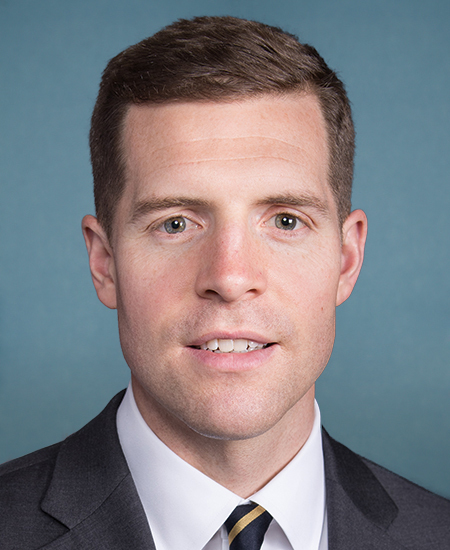
Rep. Conor Lamb
Sponsored bills
Children's Mental Health Infrastructure Act of 2021 This bill provides funding through FY2026 to the Health Resources and Services Administration for grants to improve the capacity of children's hospitals to provide pediatric behavioral health services, including by modernizing sites of care and enhancing telehealth capabilities.
This bill requires airports to broadcast in terminals automated announcements about the penalty for interfering with cabin or flight crews.
This resolution condemns the Chinese Communist Party and its violation of the human rights of the people of China.
Clean Hydrogen Energy Act This bill sets forth provisions to advance the research, development, demonstration, and deployment of hydrogen gas that is produced in compliance with greenhouse gas emission standards established by this bill. Specifically, the bill expands an existing hydrogen research and development program of the Department of Energy (DOE) established under the Energy Policy Act of 2005. For example, the bill establishes a new program goal to demonstrate a standard of clean hydrogen production in the transportation (i.e., vehicles, locomotives, airplanes, and maritime vessels), utility, industrial, commercial, and residential sectors by 2040. The bill also requires DOE to establish a program that supports the development of regional clean hydrogen hubs. In carrying out those programs, DOE must award grants for research, development, and demonstration projects to advance new clean hydrogen production, processing, delivery, storage, and use equipment manufacturing technologies and techniques. DOE must also develop a technologically and economically feasible national strategy and road map to facilitate wide scale production, processing, delivery, storage, and use of clean hydrogen. In addition, DOE must establish a research, development, demonstration, commercialization, and deployment program to improve the efficiency, increase the durability, and reduce the cost of producing hydrogen using electrolyzers. Electrolyzers are systems that produce hydrogen using electrolysis, a process that uses electricity to split water into hydrogen and oxygen. In carrying out the program, DOE must award grants for projects that reduce the cost of hydrogen produced using electrolyzers as specified by the bill.
Protecting the Information of our Vulnerable Children and Youth Act or the Kids PRIVCY Act This bill expands the requirements for digital services when handling the personal information of children. Specifically, the bill (1) requires digital services to obtain express, affirmative consent that is specific, informed, and unambiguous before processing the personal information of a child or teenager under the age of 18; (2) prohibits certain targeted advertising; and (3) allows individuals to access, correct, or delete their personal information. The bill increases the civil penalty for violations of the children's online privacy protections and provides for enforcement by the Federal Trade Commission and a private right of action.
Nuclear Power Purchase Agreements Act This bill requires the Department of Energy to develop and carry out a program under which it will enter into one or more long-term (i.e., 10 to 40 years) nuclear power purchase agreements with nuclear reactors that received initial licenses after January 1, 2020.
Alexander Lofgren Veterans in Parks (VIP) Act This bill makes the America the Beautiful-National Parks and Federal Recreational Lands Pass available, without charge, to members of the Armed Forces, veterans, and Gold Star Families. The pass covers the entrance fee and standard amenity recreation fee for all federal recreational lands and waters.
Captive Primate Safety Act This bill limits the trade and possession of nonhuman primates. For example, the bill prohibits most individuals from owning a nonhuman primate as a pet.
Steel Industry Preservation Act This bill extends and modifies the production tax credit for steel industry fuel. (Under current law, steel industry fuel is a fuel that is (1) produced through a process of liquefying coal waste sludge and distributing it on coal, and (2) used as a feedstock for the manufacture of coke.) Specifically, the bill modifies the tax credit to (1) extend the credit period and the placed-in-service date for steel industry fuel producing facilities, (2) revise the definition of steel industry fuel to allow blends of coal and petroleum coke or other coke feedstock in the fuel, and (3) specify requirements for treating an owner as producing and selling steel industry fuel. The bill also allows a taxpayer that produces steel industry fuel to elect to accept an increased tax credit in lieu of certain deductions for expenses in connection with the production of steel industry fuel.