Protecting VA Employees Act This bill repeals certain provisions related to procedures for the removal, demotion, or suspension of employees of the Department of Veterans Affairs based on performance or misconduct. The bill also restores certain provisions regarding disciplinary and grievance procedures.
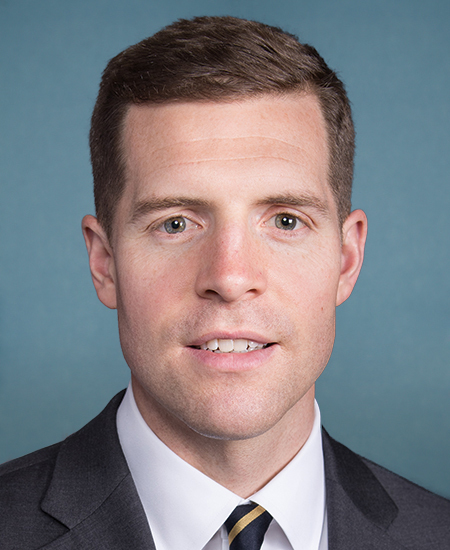
Rep. Conor Lamb
Sponsored bills
Keeping School Meals Flexible Act This bill extends authority through June 30, 2023, for the Department of Agriculture (USDA) to waive certain requirements for the school meal programs to address COVID-19. The bill extends the authority for USDA to issue a single waiver of child nutrition program requirements to all states under the National School Lunch Program for purposes of providing meals and snacks with appropriate safety measures with respect to COVID-19; grant waivers of requirements to allow non-congregate feeding in the Child and Adult Care Food Program for purposes of providing meals and snacks with appropriate safety measures with respect to COVID-19; and grant waivers related to the nutritional content of meals served in child nutrition programs if it determines the waiver is necessary to provide meals and snacks, and there is a food supply chain disruption due to COVID-19.
Striking Workers Healthcare Protection Act This bill prohibits an employer from terminating or significantly altering the employer-provided health insurance coverage of an employee engaged in a lawful strike. An employer that violates this prohibition is subject to a maximum civil penalty of $50,000 for each violation.
This resolution recognizes the cultural and historical significance of the Lunar New Year. The resolution expresses, in observance of this Lunar New Year, the Year of the Tiger, the deepest respect of the House of Representatives for Asian Americans and all individuals throughout the world who celebrate this significant occasion. The resolution wishes Asian Americans and all individuals who observe this holiday a happy and prosperous new year.
Maddy summaryHR 6525, the Lunar New Year Day Act, would designate the Lunar New Year as an official federal holiday. The bill amends Section 6103(a) of Title 5 of the U.S. Code to add "Lunar New Year Day" to the list of holidays observed by federal employees. This holiday would be observed on the actual date of the Lunar New Year, which varies annually based on the lunar calendar. As a result, federal employees would receive a paid day off, and federal agencies would adjust operations to accommodate the new holiday.
Steel Upgrading Partnerships and Emissions Reduction Act or the SUPER Act of 2021 This bill requires the Department of Energy (DOE) to establish programs to reduce greenhouse gas emissions from the production of iron, steel, and steel mill products. Specifically, DOE must establish a program of research, development, demonstration, and commercial application of advanced tools, technologies, and methods for low-emissions steel manufacturing. DOE, in collaboration with industry partners, institutions of higher education, and DOE's national laboratories, must also support an initiative for the demonstration of low-emissions steel manufacturing.
Federal Adjustment of Income Rates Act or the FAIR Act This bill modifies pay rates for federal employees in 2023. Specifically, the bill increases rates under the statutory pay systems and for prevailing rate employees by 4.1% and increases locality pay by 1%.
Guard and Reserve GI Bill Parity Act of 2021 This bill expands eligibility for Post-9/11 GI Bill educational assistance and addresses other Department of Veterans Affairs (VA) programs and benefits. Specifically, the bill expands the type of duty that is eligible for such educational assistance. Beginning on August 1, 2025, types of duty eligible for educational assistance benefits include (1) active duty for training performed by a member of the Armed Forces on or after this date, and (2) active duty for training occurring before this date only if the individual is a member on or after this date. Furthermore, beginning on August 1, 2032, duty eligible for these benefits includes active or inactive duty training performed by a member of the Armed Forces before, on, or after August 1, 2032. Educational assistance eligibility for individuals who performed qualifying types of duty as provided in the bill before August 1, 2025, expires on the latter of (1) August 1, 2040, or (2) the end of the 15-year period after their discharge or release from the Armed Forces. For individuals who performed such duty on or after August 1, 2025, educational assistance eligibility does not expire. Furthermore, the bill provides for the expiration of eligibility applicable to individuals subject to two different periods of eligible duty. The bill also makes adjustments to certain loan fees under the VA home loan program, including the fee for an interest rate reduction refinancing loan. Additionally, the VA must provide information to new veterans that includes a description of the medical care, services, and other benefits they are entitled to through the VA.

Survivor Benefits Fairness Act This bill adjusts the effective date of a reduction or discontinuance of compensation, dependency and indemnity compensation, or pension payments to the last day of the month during which a marriage, remarriage, or death of a payee occurs.
Cures 2.0 Act This bill addresses pandemic preparedness and public health issues, caregiver and patient engagement, drug development, insurance coverage, and biomedical research. The Department of Health and Human Services (HHS) must undertake research and other activities concerning COVID-19 and develop a strategy for future pandemics and declared emergencies. Additionally, the bill specifies actions to combat antimicrobial resistance. HHS may award grants for caregiver training. The bill also addresses diversity in clinical trials, collecting patient experience data during clinical trials, and coverage for care related to participation in specified clinical trials. The bill modifies the timeframe and requires additional guidance relating to expedited approval of certain breakthrough drugs, devices, or products. It also establishes two intercenter institutes within the Food and Drug Administration (FDA) focused on particular diseases that meet specified criteria. The bill also addresses (1) coverage in Medicare, Medicaid, and the Children's Health Insurance Program for telehealth, genetic and genomic testing, and other services; (2) electronic prescribing standards for Medicare drug benefits; and (3) access to Medicare and Medicaid claims data by certain registries. Furthermore, the bill prohibits the use of geographic tracking or biometrics in Medicaid electronic visit verification systems. The bill establishes the Advanced Research Projects Agency for Health (ARPA-H) within the National Institutes of Health to accelerate biomedical research and innovation through grants, contracts, cash prizes, and other means. The FDA may work with ARPA-H to expedite the development of medical products through specified activities.