

Maddy summaryHR 4304, the FAIR Bet Act, amends the tax code to allow gamblers to deduct 100% of their wagering losses instead of the current 90% limit. This change directly affects individuals who report gambling losses on their federal income tax returns. The key provision modifies Section 165(d) of the Internal Revenue Code to remove the 90% restriction on deducting gambling losses. The bill does not alter how gambling winnings are taxed, only the deduction available for losses.
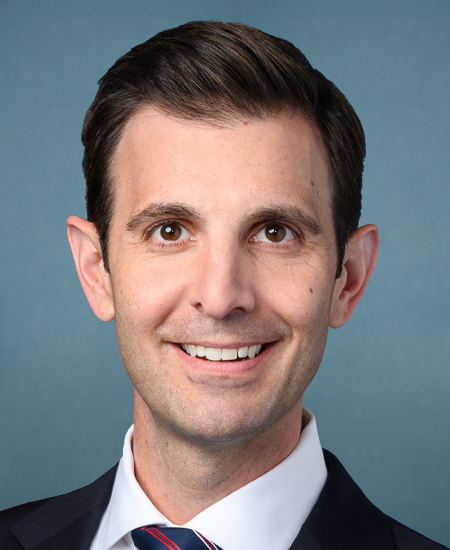
Rep. Christopher R. Deluzio
Sponsored bills
Department of Homeland Security Appropriations Act, 2026 This bill provides FY2026 appropriations for various agencies and offices within the Department of Homeland Security (DHS), except for U.S. Immigration and Customs Enforcement (ICE), U.S. Customs and Border Protection (CBP), and management and oversight activities of the Office of the Secretary. Specifically, the bill provides appropriations to DHS for the Federal Protective Service, the Office of Inspector General, the Transportation Security Administration, the U.S. Coast Guard, the U.S. Secret Service, the Cybersecurity and Infrastructure Security Agency, the Federal Emergency Management Agency (FEMA), U.S. Citizenship and Immigration Services, the Federal Law Enforcement Training Centers, and the Science and Technology Directorate. The bill does not provide appropriations for some agencies and activities that have been funded in prior DHS appropriations acts, including ICE, CBP, and management and oversight activities of the Office of the Secretary.
Maddy summaryThis bill requires the military to approve leave for abortion and fertility care without commanders needing to know the specific procedure. It mandates reimbursement for travel, lodging, meals, and transportation costs when care isn't available nearby, and prohibits punishment for using this leave. It directly affects active-duty service members and their dependents who face barriers to reproductive care due to military restrictions or location. The policy change removes command discretion in approving leave for time-sensitive reproductive health services.
Maddy summaryThis bill requires U.S. Immigration and Customs Enforcement (ICE) and Customs and Border Protection (CBP) to visibly display license plates on all vehicles used for civil immigration enforcement activities, funded by federal money. It directly affects ICE and CBP operations by mandating that these vehicles show license plates at all times, making their presence more transparent to the public. The key provision ties federal funding for such vehicles to this transparency requirement, ensuring compliance with the rule. The bill aims to increase public awareness of enforcement vehicle locations during civil immigration activities.
Maddy summaryThe PART Act requires new vehicles to have catalytic converters marked with a unique identification number that links directly to the vehicle's identification number, stored in a law enforcement-accessible database. It establishes a $7 million grant program to help repair shops, dealers, law enforcement, and fleet owners purchase equipment for marking converters with visible, durable identifiers (using die or pin stamping and high-visibility paint). The bill also mandates that businesses buying catalytic converters keep detailed seller records (including vehicle information) for two years and use traceable payments, banning cash or cryptocurrency transactions. Additionally, it creates new federal criminal penalties for stealing or trafficking in catalytic converters, with potential sentences of up to five years in prison.
Maddy summaryThe REPAIR Act requires motor vehicle manufacturers to provide car owners and independent repair shops with full access to vehicle data and repair information, prohibiting technological or legal barriers that restrict this access. It mandates that manufacturers share vehicle-generated data, critical repair information, and tools on equal terms with dealers and authorized service providers, without requiring consumers to use specific brands of parts or tools. The law establishes an advisory committee to monitor implementation and ensure fair competition in vehicle repair, while giving the Federal Trade Commission authority to enforce these requirements as unfair or deceptive practices. This legislation directly affects car owners, independent repair facilities, aftermarket parts manufacturers, and motor vehicle manufacturers by shifting control of repair information and data from manufacturers to consumers.
Maddy summaryHR 7371 (No Flight, No Fight Act of 2026) bans air carriers from transporting adult roosters as cargo, except for shipments originating from or destined to qualifying commercial farms. The bill requires shippers to provide USDA-certified documentation proving the farm meets the $350,000 annual gross income threshold for commercial operations. It defines "adult rooster" as a male chicken over 6 months old and specifies that exemptions apply only to legitimate agricultural purposes, not to prevent illegal activities like cockfighting. The Department of Transportation will enforce this rule, with violations subject to civil penalties, effective 180 days after enactment.
Maddy summaryHR 7375, the End Prison Gerrymandering Act, changes how incarcerated individuals are counted in the U.S. Census starting with the 2030 census. It requires the Census Bureau to count people in prison at their last known residence before incarceration, rather than at the prison location. This directly affects incarcerated individuals and their home communities, ensuring these communities are accurately represented in congressional redistricting. States must then use this home address data when drawing congressional districts, preventing prison populations from artificially inflating representation in rural areas where prisons are often located.
Maddy summaryThe Rebuild America's Schools Act of 2026 authorizes $20 billion annually from 2027 to 2031 to improve public school facilities nationwide. The bill provides grants to states to fund school construction, renovation, and modernization projects that focus on safety, energy efficiency, and accessibility, with priority given to schools serving high percentages of students eligible for free or reduced-price lunch. Funds cannot be used for routine maintenance, athletic facilities, or vehicles, and must meet specific environmental, safety, and energy efficiency standards. The bill also includes specific provisions for repairing school foundations affected by pyrrhotite, a mineral that causes concrete deterioration, and requires use of American-made materials for construction projects.
Maddy summaryHR 7265, the Vote by Mail Tracking Act, requires all government entities sending mail-in ballots for federal elections to use a standardized Postal Service barcode on ballot envelopes. This barcode enables tracking of each individual ballot, while also mandating specific envelope designs and machineability standards set by the Postal Service. The bill applies to all mail-in ballots for federal office elections starting in 2026, but excludes Federal write-in absentee ballots under the Uniformed and Overseas Citizens Absentee Voting Act. The Postmaster General must provide compliance guidance to government entities by June each year to implement the tracking system.