

Steel Industry Preservation Act This bill extends and modifies the production tax credit for steel industry fuel. (Under current law, steel industry fuel is a fuel that is (1) produced through a process of liquefying coal waste sludge and distributing it on coal, and (2) used as a feedstock for the manufacture of coke.) Specifically, the bill modifies the tax credit to (1) extend the credit period and the placed-in-service date for steel industry fuel producing facilities, (2) revise the definition of steel industry fuel to allow blends of coal and petroleum coke or other coke feedstock in the fuel, and (3) specify requirements for treating an owner as producing and selling steel industry fuel. The bill also allows a taxpayer that produces steel industry fuel to elect to accept an increased tax credit in lieu of certain deductions for expenses in connection with the production of steel industry fuel.
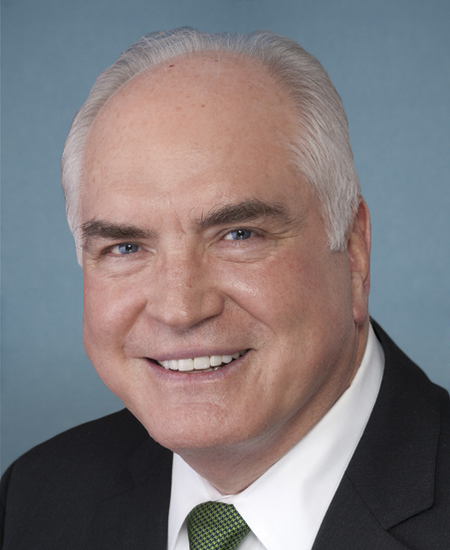
Rep. Mike Kelly
Sponsored bills
This resolution denounces socialism and opposes the implementation of socialist policies in the United States.
Protecting Life on College Campus Act of 2021 This bill prohibits the award of federal funds to an institution of higher education (IHE) that hosts or is affiliated with a school-based service site that provides abortion drugs or abortions to its students or to employees of the IHE or the site. An IHE that hosts or is affiliated with a site must, in order to remain eligible for federal funds, annually certify that the site does not provide abortion drugs or abortions to students or employees.
Entrepreneurs Need Timely Replenishment (for) Eating Establishments Act or the ENTRÉE Act This bill provides FY2021 supplemental appropriations for the Restaurant Revitalization Fund and modifies requirements related to administration of the fund. The fund was established in response to COVID-19 to make grants to eligible food and beverage purveyors for covering specified costs such as payroll, operational expenses, and paid sick leave. The bill correspondingly rescinds unobligated amounts previously made available for the Economic Injury Disaster Loan Program and coronavirus state and local fiscal recovery funds. Further, the bill requires the Small Business Administration (SBA) to (1) review and process grant applications in the order in which they are received; (2) impose requirements on applicants that reduce waste, fraud, and abuse; and (3) submit and report monthly on an oversight and audit plan outlining the SBA's policies, procedures, and activities with respect to these grants.
Jobs and Opportunity with Benefits and Services for Success Act This bill renames the Temporary Assistance for Needy Families (TANF) program as the Jobs and Opportunity with Benefits and Services (JOBS) program, reauthorizes the program through FY2027, and makes changes relating to work requirements for beneficiaries. States providing aid under the program shall create an individual opportunity plan for each beneficiary. States shall impose work requirements on all work-eligible beneficiaries and shall reduce benefits for noncompliance. (Currently, individual plans are optional under TANF, and states have discretion as to whether to reduce benefits for noncompliant individuals.) States providing aid shall meet annual performance targets related to the number of beneficiaries who exit the program and find unsubsidized employment. The Department of Health and Human Services (HHS) shall reduce grants to states that fail to meet such targets. States shall provide data related to beneficiary employment and wages to HHS, which shall be publicly available. The bill modifies certain limitations that restrict the use of funds for case management and other purposes and requires states to spend at least 25% of funds from various grants on core activities. Certain existing laws relating to monitoring and recovering improper benefits payments shall apply to the JOBS program. The bill eliminates programs providing (1) supplemental grants for population increases, (2) bonuses for high performance states, (3) welfare-to-work grants, and (4) contingency funds for state welfare programs.
Accelerating Individuals into the Workforce Act This bill requires the Administration for Children and Families (ACF) to make grants to states for demonstration projects that provide wage subsidies to enable low-income individuals to enter and retain employment. States may use grant funds to subsidize an individual's wages for up to 12 months. The subsidy may be up to 50% of an individual's wages. Individuals are eligible for subsidized wages if they (1) are recipients of Temporary Assistance for Needy Families or similar state assistance or a noncustodial parent of a child receiving such assistance, and (2) are unemployed when the subsidy begins or have an income below 200% of the poverty line. States must ensure that participants in subsidized job programs do not displace current workers. The ACF must reserve funding to carry out this bill from amounts in the Contingency Fund for State Welfare Programs.
IRS Customer Service Improvement Act This bill prohibits the use of official time for specified union activities by employees of the Internal Revenue Service during the period each year beginning on February 12 and ending on April 15.
This resolution recognizes and expresses support for the efforts of democracy and human rights activists in Cuba.
Holding SSA Employees Accountable Act This bill prohibits employees of the Social Security Administration who are convicted of certain offenses related to their official duties from further participating in federal annuity programs.
Broadband for Rural America Act This bill modifies and consolidates Department of Agriculture (USDA) programs for expanding broadband internet in rural areas. Specifically, the bill modifies a program that provides grants, loans, and loan guarantees to support broadband expansion in rural areas. Modifications include revising the criteria used to prioritize applications and projects and changing the name of the program to the ReConnect Rural Broadband Program. Additionally, the bill terminates on June 30, 2022, a Department of Agriculture (USDA) COVID-19 response program that supports broadband expansion in rural areas for distance learning and telemedicine. Any remaining program funds available after the termination date shall be used for the ReConnect Rural Broadband Program. The bill also expands coordination requirements that apply to the Department of Commerce, USDA, the Federal Communications Commission (FCC), and the National Telecommunications and Information Administration. This includes requiring the use of specified FCC maps when assessing a community's access to broadband.