This concurrent resolution declares that Congress should not impose any new performance fee, tax, royalty, or other charge relating to the public performance of sound recordings on a local radio station for broadcasting sound recordings over the air, or on any business for such public performance of sound recordings.
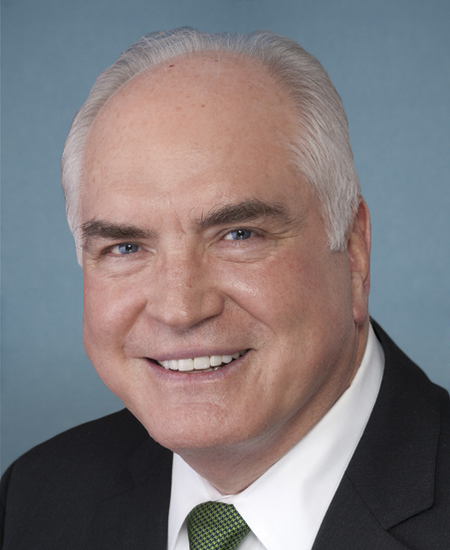
Rep. Mike Kelly
Sponsored bills
Maddy summaryHRES 386 is a symbolic resolution introduced in the U.S. House of Representatives that expresses support for recognizing "National Police Week" each year. The resolution acknowledges law enforcement officers' sacrifices, particularly during the pandemic, and encourages the public to honor their service. As a non-binding statement, this resolution does not create new law or change policy but serves as a formal expression of support for law enforcement officers across the United States.
David Dorn Back the Blue Act This bill directs the Department of Justice (DOJ) to provide programs to support the hiring and retention of law enforcement personnel and to increase their salaries. Further, DOJ may make grants to state and local law enforcement agencies for this purpose.
Protect and Serve Act of 2021 This bill establishes a new criminal offense for knowingly assaulting a law enforcement officer and causing serious bodily injury (or attempting to do so) in circumstances that affect interstate commerce. It imposes criminal penalties—a prison term, a fine, or both—on a violator.
Stop Vaccine Mandates Act This bill rescinds the executive order titled Ensuring Adequate COVID Safety Protocols for Federal Contractors and the executive order titled Requiring Coronavirus Disease 2019 Vaccination for Federal Employees , both published on September 9, 2021. The bill provides that these executive orders shall have no force or effect.
Fiscal State of the Nation Resolution This concurrent resolution requires the congressional budget committees to conduct an annual joint hearing to receive a presentation from the Comptroller General regarding (1) the Government Accountability Office's audit of the financial statement of the executive branch, and (2) the financial position and condition of the federal government.
Saving Workers by Eliminating Economic Tampering and Ensuring Reliability Act or the SWEETER Act This bill eliminates certain Department of Agriculture (USDA) sugar subsidy programs. Specifically, the bill eliminates (1) the price support loan program available to processors of domestically grown sugarcane and sugar beets; (2) the sugar marketing allotments and tariff-rate quotas that limit the quantities of domestically produced sugar that processors may sell and the sugar that may be imported under lower tariff rates; and (3) the feedstock flexibility program for bioenergy producers, which operates to avoid loan forfeitures to the USDA's Commodity Credit Corporation by requiring USDA to purchase surplus sugar from domestic processors for resale to bioenergy producers.
Expanding Access to Diabetes Self-Management Training Act of 2021 This bill expands Medicare coverage of diabetes outpatient self-management training. It also requires the Center for Medicare and Medicaid Innovation to test a model in which such training is provided virtually.
State, Local, Tribal, and Territorial Fiscal Recovery, Infrastructure, and Disaster Relief Flexibility Act This bill allows states, tribes, territories, and localities to use certain COVID-19 relief funds for new categories of spending, including for natural disasters and infrastructure projects. It also makes changes to expenditure deadlines and other aspects of this funding. Specifically, recipients may use funds for emergency relief from natural disasters and associated negative economic impacts of natural disasters. In addition, recipients may use a portion of their COVID-19 relief funds for designated infrastructure projects, such as nationally significant freight and highway projects. Furthermore, the bill allows recipients to expend COVID-19 relief funds on these types of infrastructure projects until September 30, 2026. Under current law, recipients must expend the funds by December 31, 2024. Other changes in the bill include (1) modifying eligibility and allocation requirements for funding set aside for counties and Indian tribes that are near public lands, (2) allowing Indian tribes an additional year to expend their COVID-19 relief funds, and (3) establishing a process for government entities to decline COVID-19 relief funds and requiring any declined funds to be used to reduce the federal deficit.

This resolution recognizes the dedication and courage of veterans, veterans' organizations, and private citizens who have worked and continue to work to evacuate U.S. persons and vulnerable Afghans from Afghanistan. The resolution also encourages the Department of State and Department of Defense to work with veterans' service organizations and their networks to evacuate those who remain in Afghanistan.