

Maddy summaryThis bill modifies Medicaid and CHIP rules to let eligible out-of-state healthcare providers enroll without extra state screening. It applies to providers already in Medicare or their home state program, with low fraud risk, serving children under 21 with complex medical conditions. Providers would receive 5 years of enrollment under this streamlined process, eliminating state-level barriers. The change directly affects children seeking specialized care across state lines and the providers who serve them.
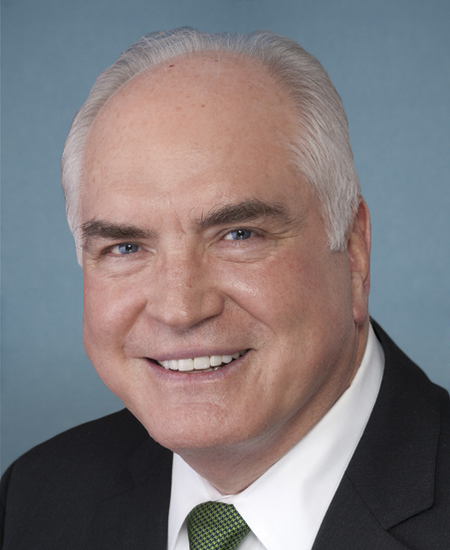
Rep. Mike Kelly
Sponsored bills
Maddy summaryThis bill amends the tax code to exclude certain electric vehicles from federal clean vehicle tax credits. Specifically, it blocks credits for vehicles using drive battery components (or materials processed in the battery) sourced from entities tied to "covered nations" like China, or for vehicles involving licensing agreements exceeding $5 million with such entities. It directly affects EV buyers seeking tax credits and automakers who rely on supply chains meeting these criteria. The change applies to vehicles placed in service after the bill's enactment date, altering eligibility for existing tax incentives.
Maddy summaryHR 705, the Veterans 2nd Amendment Protection Act, prohibits the Department of Veterans Affairs (VA) from automatically sending veterans' personal information to the national background check system solely because a fiduciary (like a guardian) manages their benefits. It specifically blocks the VA from sharing this data with the Justice Department without a court order finding the veteran a danger to themselves or others. This directly affects veterans who have a fiduciary appointed due to incapacity but are not deemed dangerous, preventing automatic barriers to firearm purchases based only on their fiduciary status. The bill amends 38 U.S.C. § 5501B to require judicial authorization before such data can be transmitted.
Maddy summaryThis bill increases the tax credit for railroad track maintenance from $3,500 to $6,100 per mile of track. It adds an inflation adjustment starting in 2026, linking future credit amounts to the cost-of-living index. The bill also extends the qualifying period for maintenance expenditures from January 1, 2015, to January 1, 2024. These changes apply to tax years beginning after December 31, 2024, directly affecting railroad companies that maintain tracks.
Maddy summaryHRES 1056 is a non-binding House resolution recognizing recent trilateral cooperation among the United States, Japan, and South Korea. It formally acknowledges specific collaborative efforts, including resumed summitry, joint military exercises, shared missile warning systems, economic partnerships, and coordinated responses to regional challenges like North Korea and crises in Sudan and Israel. The resolution does not create new policies or funding but expresses congressional support for strengthening this alliance framework. It highlights the importance of continued cooperation across diplomatic, security, and economic domains to promote stability in the Western Pacific. The resolution was introduced by multiple House members and referred to the Foreign Affairs Committee.
This resolution supports the designation of National FFA Week. It also (1) recognizes the important role of the National FFA Organization (Future Farmers of America) in developing the next generation of globally conscious leaders who will change the world; and (2) celebrates the 10th anniversary of the Give the Gift of Blue program, which has donated more than 17,000 FFA blue jackets to FFA members in need.
Maddy summaryThis resolution aims to block a rule issued by the National Highway Traffic Safety Administration (NHTSA) that sets new fuel efficiency standards for passenger cars, light trucks (starting in 2027), and heavy-duty pickup trucks/vans (starting in 2030). If passed, it would prevent this specific rule from taking effect by disapproving it under a congressional review process. The rule directly affects vehicle manufacturers by requiring them to meet these updated fuel economy targets for future model years. This is a procedural resolution, not a new law, focused solely on halting the implementation of the existing NHTSA rule.
Maddy summaryHR 9263 creates a new 30% federal tax credit for businesses investing in qualifying agricultural technology projects focused on specialty crops. It directly affects farmers and agribusinesses adopting precision agriculture (like GPS-guided equipment or soil sensors) or controlled environment agriculture (such as indoor vertical farms with climate control systems). The credit applies to qualified property like equipment, software, and infrastructure placed in service before 2035, with specific definitions for eligible technologies. Businesses cannot double-benefit by claiming this credit alongside certain existing grant programs for similar projects. The credit is available for investments completed after January 1, 2023, and integrates into the existing tax code via amendments to sections 48F and 6417.
Maddy summaryHRES 1371 is a House resolution condemning the Biden Administration and Vice President Kamala Harris for failing to secure the U.S. border. It cites statistics including over 9.7 million illegal immigration encounters since 2021 and the end of the Remain in Mexico program as evidence. As a symbolic resolution with no policy changes, it publicly expresses the House's disapproval of current border policies without altering any laws or enforcement actions.
Maddy summaryThis resolution establishes a House task force to investigate the July 13, 2024, attempted assassination of Donald J. Trump in Butler, Pennsylvania. The task force, composed of up to 11 members appointed by the Speaker (with minority leader input), will examine actions by federal, state, local, and private entities related to the incident and must issue a final report with recommendations by December 13, 2024. It has standing committee authority to hold hearings, issue subpoenas, and access relevant records, and will terminate 10 days after submitting its report. The task force directly affects the House of Representatives and the entities under investigation.