

This resolution supports the designation of a National FFA Week. It also (1) recognizes the important role of the National FFA Organization (Future Farmers of America) in developing the next generation of leaders who will change the world, and (2) celebrates 70 years of the National FFA Organization's membership magazine.
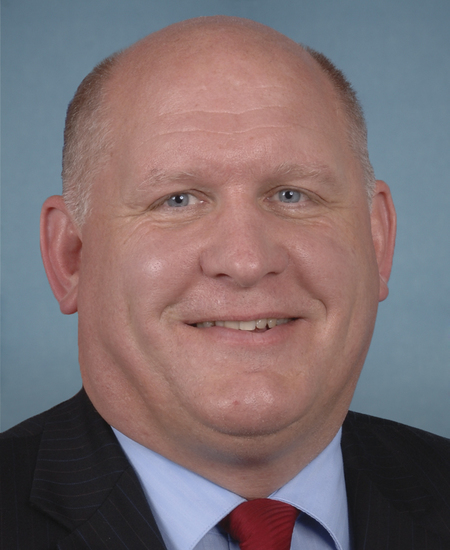
Rep. Glenn Thompson
Sponsored bills
Maddy summaryHRES 939 is a symbolic House resolution expressing support for designating February 21-25, 2022, as "Public Schools Week." It does not create new policies, allocate funding, or impose requirements on schools or students. The resolution uses supportive language to acknowledge public education's role in democracy but has no legal effect. It was introduced by multiple representatives as a non-binding gesture of appreciation for public schools.
This resolution recognizes the importance of the alliance between the United States and Germany and the strong ties between the populations and governments.
This resolution supports reopening the U.S. Capitol Building and House Office Buildings to visitors under the public visitation policies that were in place before the COVID-19 pandemic.
Internal Revenue Service Processing Returns Instead Of Removing Innocent Taxpayers' Income Every Season Act of 2022 or the IRS PRIORITIES Act of 2022 This bill prohibits the Internal Revenue Service from hiring new enforcement personnel (i.e., special agents in the criminal investigation division, revenue officers, or revenue agents) until all individual tax returns for 2019 and 2020 are processed.
This resolution supports the designation of Career and Technical Education Month to celebrate career and technical education across the United States.
Health Care for Burn Pit Veterans Act This bill updates policies and procedures related to Department of Veterans Affairs (VA) health care and benefits for veterans who have been exposed to toxic substances. Specifically, the bill extends the eligibility period for VA hospital care, medical services, and nursing home care for combat veterans who served after September 11, 2001, and were exposed to toxic substances, radiation, or other conditions, including those who did not enroll to receive VA care during the eligibility period. The VA must incorporate into its existing health care screening a screening to help determine potential exposures to toxic substances during military service. Among other requirements, the VA must also provide annual training to health care and benefits personnel with respect to veterans who were exposed to toxic substances; analyze total and respiratory disease mortality in veterans who served in specified locations on specified dates; conduct an epidemiological study on the health trends of veterans who served in the Armed Forces after September 11, 2001; conduct a study to determine trends in the rates of the incidence of cancer in veterans; publish a list of VA resources for veterans who were exposed to toxic substances, families and caregivers of such veterans, and survivors of such veterans who are receiving death benefits; and report on the data quality of the Individual Longitudinal Exposure Record and its usefulness in supporting veterans in receiving VA health care and benefits.
Protecting Family and Small Business Tax Cuts Act of 2022 This bill makes permanent provisions affecting individual and business taxpayers that were enacted in 2017 by the Tax Cuts and Jobs Act and are scheduled to expire at the end of 2025. The bill makes permanent provisions that reduce individual and capital gain tax rates. The bill increases the standard tax deduction for individual taxpayers. It also increases and modifies the child tax credit and raises the contribution base for the tax deduction of charitable contributions. The bill allows additional contributions to ABLE accounts (tax-exempt accounts designed to enable individuals with disabilities to save and pay for disability-related expenses). It exempts from taxation combat zone benefits of members of the Armed Forces serving in the Sinai Peninsula of Egypt and the moving expenses of servicemembers. Additionally, the bill lowers to $750,000 the amount of mortgage debt eligible for an interest expense tax deduction; excludes from the gross income of student borrowers income attributable to the discharge after 2025 of loan debt due to death or disability; makes permanent the limitation on the tax deduction for state and local taxes and denies a deduction for foreign real property taxes; makes permanent the tax deduction of the income of certain pass-through business entities; repeals the tax deduction for personal tax exemptions and the exclusion of employer-provided bicycle commuter fringe benefits; terminates certain miscellaneous itemized tax deductions; doubles the estate and gift tax exemption amount; and makes permanent the increase of the alternative minimum tax exemption amount for individual taxpayers.
Denying Regulatory Interference with Landowners and Legislatures Now Act or the DRILL Now Act This bill bars the Susquehanna River Basin Commission, the Delaware River Basin Commission, and the Interstate Commission on the Potomac River Basin from finalizing, implementing, or enforcing any regulation relating to hydraulic fracturing unless it is issued by the state in which the regulation is to be implemented or enforced.
DMEPOS Relief Act of 2022 or the DRA of 2022 This bill increases payment adjustments for certain items that were included in Round 2021 of the Medicare Durable Medical Equipment, Prosthetics, Orthotics, and Supplies (DMEPOS) Competitive Bidding Program but for which contracts were not executed. The bill applies to items that are furnished between January 1, 2022, and December 31, 2023, and that were not subject to the unadjusted fee schedule amount as of January 1, 2021. Under the DMEPOS Competitive Bidding Program, the Centers for Medicare & Medicaid Services (CMS) sets payment for certain durable medical equipment under Medicare based on a competitive bidding process with suppliers, rather than the fee schedule amount. The CMS included 16 product categories in Round 2021 of the program but ultimately did not award contracts for 13 of these categories (that were also in previous rounds) as the resulting payment amounts did not achieve expected savings.