

Maddy summaryThe ALIGN Act (HR 2406) permanently allows businesses to deduct the full cost of qualified equipment and machinery in the year of purchase, rather than spreading the deduction over multiple years. This applies to property placed in service after September 27, 2017, directly affecting businesses that make capital investments in eligible assets like manufacturing equipment or commercial facilities. The bill eliminates the previous requirement to depreciate these costs over time, reducing taxable income in the purchase year. It makes a temporary 2017 tax provision permanent, impacting businesses across various industries that purchase qualifying property.
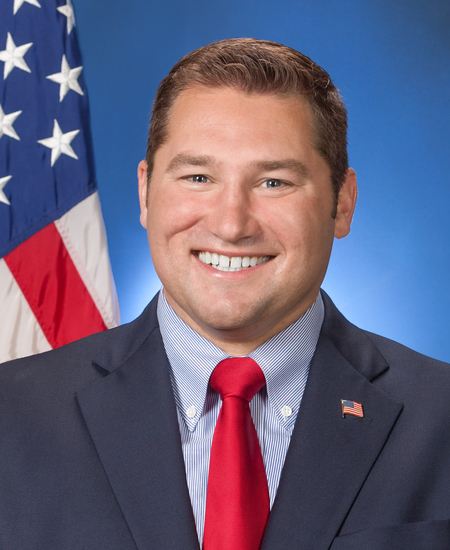
Rep. Guy Reschenthaler
Sponsored bills
Maddy summaryHR 2427, the Hmong Congressional Gold Medal Act, authorizes Congress to award a gold medal to honor Hmong veterans who served with U.S. forces during the Vietnam War. The bill directs the Treasury Secretary to strike the medal and present it to the Smithsonian Institution for display, recognizing their combat service, heavy casualties, and displacement after the war. Duplicate bronze medals may be sold to cover costs. This procedural bill commemorates the Hmong people's military contributions and their refugee resettlement in the U.S., affecting the Hmong community as a whole.
Maddy summaryThis bill requires the Veterans Affairs Secretary to expand or modify an existing national cemetery (under National Cemetery Administration control) before Arlington National Cemetery reaches capacity, ensuring it provides full military honors using the same standards and eligibility criteria that applied to Arlington as of March 31, 2023. It directly affects veterans and their families seeking burial with full military honors at national cemeteries nationwide. The bill also mandates a joint report within one year to Congress on expanding cemetery capacity and assessing whether interment criteria should recognize exceptional service, including impacts on women, non-combat veterans, and other groups. The key mechanism is preserving current military honors standards at alternative cemeteries to prevent Arlington's capacity limits from disrupting existing burial practices.
Maddy summaryHRES 260 is a procedural resolution establishing rules for debating and amending H.R. 1, a bill aimed at lowering energy costs through increased domestic energy production, exports, infrastructure, and critical minerals processing. It sets a 7-hour debate limit with specific time allocations for committee chairs, waives points of order against the bill, and outlines a structured amendment process. The resolution does not change policy but governs how H.R. 1 will be considered in the House of Representatives.
Maddy summaryHR 1818, the Aviation Workforce Development Act, expands tax-advantaged savings plans (529 plans) to cover costs for specific aviation training programs. It allows funds from these plans to pay for tuition, fees, and required materials at FAA-certified aviation maintenance technician schools (Part 147) or commercial pilot training programs (Part 61 or 141). This directly affects students pursuing careers as aircraft maintenance technicians or commercial pilots by making these training costs more affordable through existing tax-advantaged savings. The bill amends the tax code to include these programs under "qualified higher education expenses" for 529 plan distributions.
Maddy summaryHR 1831 would award Billie Jean King a Congressional Gold Medal to honor her lifelong advocacy for equal rights in sports and society. The bill directs the Secretary of the Treasury to strike the medal and have it presented by congressional leaders, recognizing her pivotal role in advancing women's equality through tennis (including founding the Women’s Tennis Association and securing equal prize money) and her broader impact on society through initiatives like Title IX advocacy.
Maddy summaryHR 1154, the Stop Forced Organ Harvesting Act of 2023, targets international trafficking in organs through coercion or abuse of power. It requires annual U.S. reports assessing forced organ harvesting and trafficking in foreign countries, mandates passport denial for convicted traffickers, and authorizes sanctions including asset freezes and visa bans against foreign individuals or entities involved in these activities. The bill specifically defines "forced organ harvesting" as organ removal via coercion, abduction, deception, fraud, or abuse of power, and "trafficking in persons for organ removal" as recruiting or transporting people for that purpose. These sanctions apply to foreign actors (including non-state groups) and cover both financial transactions and entry into the U.S., with limited exceptions for humanitarian aid. The law directly affects foreign governments, entities, and individuals implicated in organ trafficking, while requiring U.S. diplomatic and enforcement mechanisms to address the issue.
Maddy summaryHR 314, the FORCE Act, prohibits the President or Secretary of State from removing Cuba from the U.S. list of state sponsors of terrorism. It requires the President to first make a specific determination under the 1996 LIBERTAD Act before Cuba can be removed. The bill directly affects Cuba (by maintaining its current designation) and the executive branch (by restricting their authority to remove the designation). This is a procedural bill focused on preserving Cuba's current status on the terrorism list until the specified conditions are met.
Maddy summaryHR 5, the Parents Bill of Rights Act, would require public schools receiving federal funding to provide parents with greater access to educational information. The bill mandates that schools post curricula online or widely distribute it to parents, include school budgets in report cards, and provide specific information about school activities including violent incidents and plans to eliminate gifted programs. It also guarantees parents the right to meet with teachers twice a year, review library materials, and address school boards. These requirements would apply to all local educational agencies and schools covered by the Elementary and Secondary Education Act. The bill amends existing education laws to strengthen parental transparency and involvement in their children's education.
Maddy summaryHR 1777 establishes a $50 million annual fund (2024-2028) for collaborative defense research between the U.S. and Israel in emerging technologies like artificial intelligence, cybersecurity, directed energy, and automation. The bill directly supports U.S. and Israeli military forces by enabling joint development of new warfare capabilities to address current and future defense challenges. Key provisions include authorizing $50 million per year for collaborative projects, building on existing U.S.-Israel defense partnerships like counter-tunnel and counter-drone systems. This funding aims to strengthen bilateral defense innovation without altering existing military aid structures.