

Maddy summaryThis bill amends a section of law governing Department of Veterans Affairs (VA) employee compensation to clarify that disputes over whether an employee received the correct pay amount under existing rules are not considered "adjustment of compensation" under the statute. It specifically excludes grievances challenging pay accuracy from the definition of "establishment, determination, or adjustment of employee compensation." The change directly affects VA employees covered under Section 7421(b) who might file such pay-related grievances. The bill makes a technical clarification to streamline how these disputes are categorized within VA's compensation process.
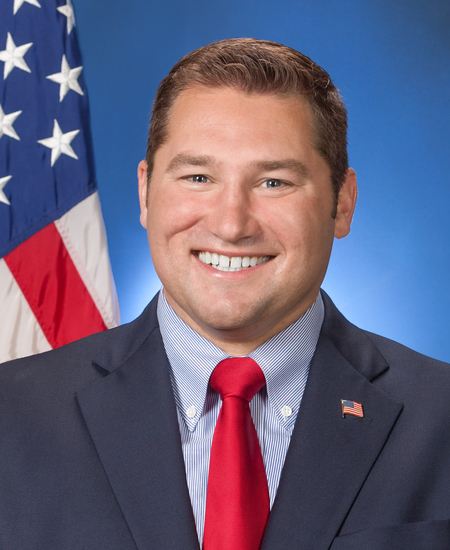
Rep. Guy Reschenthaler
Sponsored bills
Maddy summaryThis bill amends two key laws to extend protections to U.S. citizens serving in the Israeli Defense Forces (IDF). Under the Uniformed Services Employment and Reemployment Rights Act (USERRA), it treats IDF service "in the same manner as uniformed services" for veterans' benefits, requiring the Secretary to issue implementing regulations. For the Servicemembers Civil Relief Act (SCRA), it adds that U.S. citizens serving in the IDF qualify for civil protections if their service is "similar to military service," with benefits ending upon discharge. The changes apply to service starting on or after the bill's enactment date.
Maddy summaryHJRES 164 is a congressional resolution seeking to block a rule issued by the Department of Commerce regarding firearms license requirements. It directly targets the rule published in the Federal Register (89 Fed. Reg. 34680), which would have revised licensing procedures for firearms dealers. If passed, the resolution would prevent this rule from taking effect by invoking the congressional disapproval process under federal law. The bill does not create new regulations but aims to halt an existing rule affecting gun license applicants and dealers.
Maddy summaryHRES 1323 is a House resolution rejecting a United Nations report that listed the Israel Defense Forces (IDF) as failing to protect children in conflict. It condemns the UN for what the resolution describes as "longstanding bias against Israel" and reaffirms U.S. support for Israel's right to defend itself. The resolution does not alter any laws or policies but expresses congressional opposition to the UN's decision. This procedural resolution has no binding effect and focuses solely on symbolic congressional stance.
Maddy summaryHRES 1355 is a non-binding resolution supporting the designation of July 10 as Journeyman Lineworkers Recognition Day. It honors lineworkers who maintain electrical infrastructure under hazardous conditions, including during disasters, and commemorates Henry Miller, the first president of the International Brotherhood of Electrical Workers, who died on July 10, 1896, while troubleshooting an electrical outage. The resolution encourages public recognition of these workers' contributions but does not create new laws or policies.
Maddy summaryThe TAKE IT DOWN Act (HR 8989) creates new federal criminal penalties for publishing nonconsensual intimate images or deepfakes without consent, directly affecting platforms hosting user-generated content and individuals who share such material. It defines "deepfake" as AI-generated intimate content falsely depicting someone, and prohibits publishing these without consent - especially when the victim expected privacy - imposing fines or up to 3 years in prison for offenses involving minors. The bill also requires "covered platforms" (like social media sites) to establish a 48-hour removal process for reported nonconsensual content and shields platforms from liability when removing content in good faith. The Federal Trade Commission enforces these provisions as unfair or deceptive practices.
Maddy summaryThe Dennis and Lois Krisfalusy Act expands eligibility for Department of Veterans Affairs headstones, markers, and burial receptacles by removing a requirement that veterans must have died on or after November 11, 1998. This change allows veterans who died before that date to qualify for these burial items, directly affecting veterans who previously fell outside the eligibility window. The bill also extends a related administrative deadline from October 1, 2024, to October 1, 2034, providing more time for implementation. These provisions aim to broaden access to VA burial benefits for a wider group of veterans and their families.
Maddy summaryThis bill designates the U.S. Postal Service facility at 521 Thorn Street in Sewickley, Pennsylvania, as the "Mary Elizabeth 'Bettie' Cole Post Office Building." It updates all official references in federal documents, maps, and records to use this new name, with no changes to postal services or operations. The bill is purely procedural and honors Mary Elizabeth "Bettie" Cole through a naming convention.
Maddy summaryThis bill amends the Northern Border Security Review Act to establish a new annual deadline for threat analysis (September 2, 2025, and each year after) and requires the Department of Homeland Security to update its northern border strategy within 90 days of each analysis. It mandates that the Secretary provide a classified briefing to congressional committees within 30 days of each threat analysis and develop performance measures for U.S. Customs and Border Protection's Air and Marine Operations to secure the northern border in air and maritime areas within six months of enactment. The bill directly affects the Department of Homeland Security and congressional committees by imposing specific reporting deadlines and review requirements. These changes focus on improving the frequency and structure of security assessments without altering existing border security operations.
Maddy summaryHR 537 authorizes a Congressional Gold Medal to honor 60 diplomats who saved Jewish lives during the Holocaust by issuing visas and passports against their governments' orders, risking expulsion and personal danger. The medal will be presented to the next of kin of these diplomats, alongside representatives from their home countries, and permanently displayed at the United States Holocaust Memorial Museum. The bill also permits the sale of bronze duplicates to cover production costs, with proceeds going to the U.S. Mint. This legislation recognizes the diplomats' humanitarian actions without creating new government programs or altering existing laws.