

Maddy summaryHR 407, the "Protect the UNBORN Act," prohibits federal agencies from implementing or enforcing two specific executive orders issued by President Biden in 2022 (Executive Orders 14076 and 14079), which aimed to protect access to reproductive healthcare services. The bill bans the use of federal funds, including those from the 2022 Consolidated Appropriations Act, to carry out, administer, or enforce these executive orders. It directly affects federal agencies and programs that would otherwise comply with the Biden administration's policies on reproductive healthcare access. The bill does not create new healthcare rules but blocks the implementation of existing executive actions.
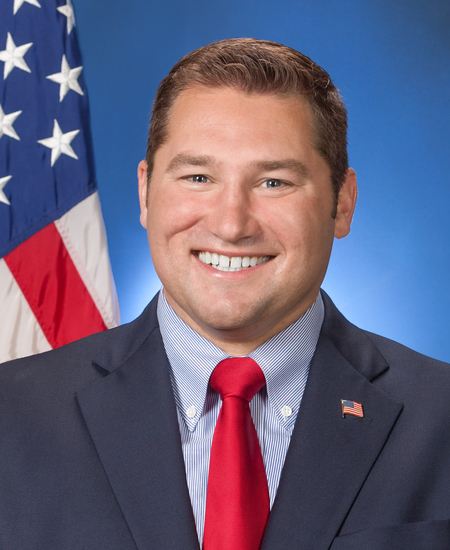
Rep. Guy Reschenthaler
Sponsored bills
Maddy summaryThis bill bans federal funding for abortions in most cases, prohibiting the use of taxpayer money for abortion services or health insurance plans covering abortion. Exceptions allow funding for abortions resulting from rape, incest, or when a pregnancy endangers a woman's life. It requires health insurance plans sold through the Affordable Care Act (ACA) marketplaces to clearly disclose any separate costs for abortion coverage and prohibits ACA subsidies from being used for plans that cover abortion (except in the specified exceptions). The law directly affects federal programs like Medicaid, ACA marketplace plans, and insurers offering health coverage to individuals using federal subsidies.
Maddy summaryHR 152, titled the "Hearing Protection Act," actually addresses firearm silencers (suppressors), not hearing protection. The bill removes federal registration requirements for silencers by directing the Attorney General to destroy all existing silencer records within 365 days. It also preempts state laws that tax, register, or impose recordkeeping requirements on silencers, making such state rules unenforceable. Additionally, the bill updates tax codes to include silencers as taxable items and clarifies their definition in firearm laws.
Maddy summaryHJRES 142 is a congressional disapproval resolution targeting a Department of Labor rule issued on April 25, 2024. It seeks to block the "Retirement Security Rule: Definition of an Investment Advice Fiduciary" (89 Fed. Reg. 32122), which defined standards for financial advisors handling retirement accounts. If passed, this resolution would make the Labor Department's rule ineffective, directly affecting retirement plan advisors and financial institutions subject to the regulation. The bill uses a specific procedural mechanism under Title 5, U.S. Code, to nullify the rule without creating new law.
Maddy summaryThe Mining Schools Act of 2024 establishes a federal grant program to strengthen domestic mining education by funding eligible schools. It defines eligible "mining schools" as accredited mining/engineering programs at higher education institutions or specific geology/engineering departments at 4-year public universities in states with significant mining-related economic activity. The Department of Energy will award up to 10 competitive annual grants for recruiting students and enhancing programs focused on critical minerals, environmental reclamation, sustainable extraction, and domestic mineral production. An advisory board of industry and academic experts will help select grantees and ensure funds are used as intended. The program is authorized to receive $10 million yearly from 2024 through 2031.
Maddy summaryHR 7438 directs the U.S. Treasury to mint commemorative coins for the 2026 FIFA World Cup, including 100,000 $5 gold coins, 500,000 $1 silver coins, and 750,000 half-dollar coins. The coins will be sold to the public at face value plus surcharges ($35, $10, and $5 per coin, respectively), with all surcharge revenue paid to FWC2026 US, Inc. for U.S. soccer programs. These funds must support soccer initiatives, particularly in underserved communities and youth development, as specified in the bill. The coins are legal tender but will only be issued during 2026, with no net cost to the U.S. government.
Maddy summaryThis bill extends funding for the existing Public Health Service Act program focused on raising public awareness about Alzheimer's disease and related dementias. It authorizes $33 million annually for fiscal years 2025 through 2029 to support public health education and outreach initiatives. The program directly affects public health organizations and community groups that develop and distribute educational materials about Alzheimer's prevention, diagnosis, and care. The key provision is the multi-year funding extension, ensuring continued support for nationwide awareness efforts without altering the program's core structure.
Maddy summaryHR 6751 authorizes the U.S. Mint to produce commemorative coins honoring Roberto Clemente, a Hall of Fame baseball player and humanitarian, including 50,000 $5 gold coins, 400,000 $1 silver coins, and 750,000 half-dollar coins. The coins must feature Clemente's image and inscriptions like "Roberto Clemente" and "2027," with all sales including a surcharge ($5-$35 per coin) paid to the Roberto Clemente Foundation. The foundation, which supports youth sports, education, and disaster relief programs, will use these funds for its mission, while the U.S. Treasury must recover all production costs. The coins will be sold exclusively in 2027, with no net cost to the government.
Maddy summaryHR 758 aims to improve financial access in communities affected by bank branch closures, primarily targeting rural and underserved urban areas. It establishes a 3-year phase-in period for new financial institutions to meet federal capital requirements and reduces the leverage ratio for qualifying rural community banks (under $10 billion in assets) to 8% during this period. The bill also allows banks to request temporary deviations from approved business plans and expands agricultural loan authority for savings associations. Additionally, it mandates a federal study on barriers to new bank formation in underserved areas, with a report due to Congress within one year. The law directly affects community banks, their regulators, and residents in counties identified as "deeply affected" by branch closures.
Maddy summaryHR 1505, the "No Stolen Trademarks Honored in America Act of 2023," modifies a law to prevent U.S. courts from recognizing trademark, trade name, or commercial name rights tied to business assets that were confiscated. It specifically affects individuals or entities claiming such rights who knew or should have known the mark was connected to confiscated assets, unless the original owner or successor gave consent. The bill requires courts to deny recognition of these claims unless the claimant had no knowledge of the confiscation at the time of acquisition. This change applies to all U.S. courts and executive branch entities handling such cases.