

Maddy summaryThis bill amends Section 756(f) of the Public Health Service Act to extend the funding period for mental health education and training grants from fiscal years 2023-2027 to 2024-2028. It directly affects state and local health agencies receiving these federal grants, which support mental and behavioral health workforce development. The key change is simply adjusting the grant program's authorization timeline by one year, with no new funding or policy requirements added. This is a procedural update to existing grant provisions.
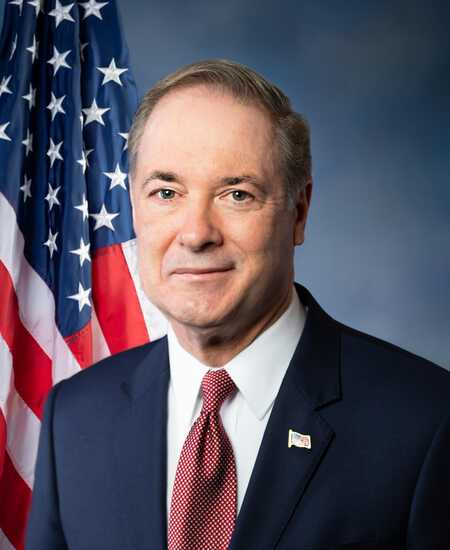
Rep. John Joyce
Sponsored bills
Maddy summaryHR 1640, the Save Our Gas Stoves Act, prevents the Department of Energy from implementing energy efficiency standards for gas stoves that would make them unavailable in the U.S. market. It amends federal law to require that any new standard for gas stoves must not result in the unavailability of gas stove types, directly affecting gas stove manufacturers and consumers who rely on these appliances. The bill specifically blocks the implementation of the 2023 proposed rule (Energy Conservation Program: Energy Conservation Standards for Consumer Conventional Cooking Products) and any similar rule. This is a policy change focused on maintaining the availability of gas stoves by altering the criteria for energy standard approval.
Maddy summaryHR 4035, the Protecting Small Business Information Act of 2023, requires the Treasury Secretary to coordinate the effective dates of all rules under the Corporate Transparency Act. It mandates that all final rules related to beneficial ownership reporting must take effect on the same date, delaying implementation until the Secretary certifies to Congress that all rules are issued and will align on a single effective date. This directly affects small businesses required to report beneficial ownership information under the Corporate Transparency Act. The bill’s key mechanism is creating a unified implementation timeline, preventing staggered rule deadlines that could complicate compliance for small entities. It does not change reporting requirements but ensures a synchronized rollout of the regulations.
Maddy summaryThe HALT Fentanyl Act expands the definition of fentanyl-related substances in the Controlled Substances Act to include many structurally similar compounds, making it easier to regulate new fentanyl analogs without individual listing. It defines these substances based on specific chemical modifications to fentanyl, with limited exceptions for substances already controlled or listed elsewhere. The bill also streamlines research procedures for schedule I substances by creating expedited registration processes and allowing multiple studies under one registration, while requiring the Attorney General to publish a list of substances meeting the new definition.
Stop Our Scourge Act of 2023 or the SOS Act of 2023 This bill directs the Department of Homeland Security to designate illicit fentanyl as a weapon of mass destruction and requires the Office of National Drug Control Policy to conduct an assessment regarding that substance. Specifically, the office must assess foreign manufacturing of illicit fentanyl, the tools and capabilities across federal agencies to address trafficking of that substance, the capabilities of the Mexican military to conduct counterdrug missions with respect to that substance, the capacities and willingness of China to take specified actions with respect to that substance, and illicit fentanyl being trafficked into the United States from Mexico.
Maddy summaryThis bill exempts certain broadband infrastructure projects from federal environmental (NEPA) and historic preservation (NHPA) review requirements. It specifically applies to telecom companies adding equipment to existing utility poles, towers, or similar infrastructure already approved for use. The exemption removes the need for environmental assessments when placing new equipment on "eligible support infrastructure" (like utility poles) without new construction. This directly affects telecom providers seeking faster deployment of broadband services on existing structures.
Maddy summaryThe Higher Education Mental Health Act of 2023 establishes an Advisory Commission to study mental health challenges faced by students in higher education. The Commission, composed of 20 members including students with mental health disabilities, campus leaders, advocates, and government representatives, will analyze current services, policies, and data over a two-year period. It will develop recommendations to improve mental health support, retention, and graduation rates for students with mental health disabilities. The bill directly affects all institutions of higher education by requiring them to consider the Commission’s findings and recommendations.
Maddy summaryHRES 365 is a non-binding House resolution supporting efforts to reduce childhood sunburns and skin cancer risk. It encourages schools and childcare facilities to allow students to carry and use sunscreen without physician authorization (addressing current restrictions where sunscreen is treated as a prescription drug), and promotes policies for easy access to sunscreen and sun-protective clothing. The resolution also urges healthcare providers to educate parents and children about sun-safe practices during routine check-ups. It directly affects schools, camps, and childcare programs by advocating for practical changes to improve sun protection for minors.
Maddy summaryHR 3256, the Preventing Executive Climate Overreach Act, would eliminate the legal effect of Executive Order 14096. This order, issued by the President to advance environmental justice in federal programs, would no longer be enforceable. The bill's key provision directly states that the executive order "shall have no force or effect." As a result, the administration would be unable to implement environmental justice policies based on that order.
Maddy summaryHR 3238, the Affordable Housing Credit Improvement Act of 2023, updates the Low-Income Housing Tax Credit (LIHTC) program to increase the availability of affordable housing across the United States. The bill makes several key changes including increasing state funding formulas, modifying tenant eligibility rules to better serve vulnerable populations (such as domestic violence victims and students), and expanding credit eligibility for projects in rural and Native American communities. Specific provisions raise the credit for properties serving extremely low-income households, clarify rules around tenant income increases, and require housing providers to protect victims of domestic violence. The bill also updates terminology from "low-income" to "affordable" throughout the tax code and enhances program transparency through data sharing requirements. These changes aim to make the LIHTC program more effective at creating and preserving affordable housing units for low-income households nationwide.