Stopping Traffickers and Their Accomplices Act of 2022 This bill requires an abortion provider to notify the National Human Trafficking Hotline if the provider has a reasonable suspicion that the patient is a victim of trafficking. It also requires each abortion provider to complete annual training on how to identify and respond appropriately to individuals who are at risk of or who have experienced trafficking. The bill establishes penalties for violations.
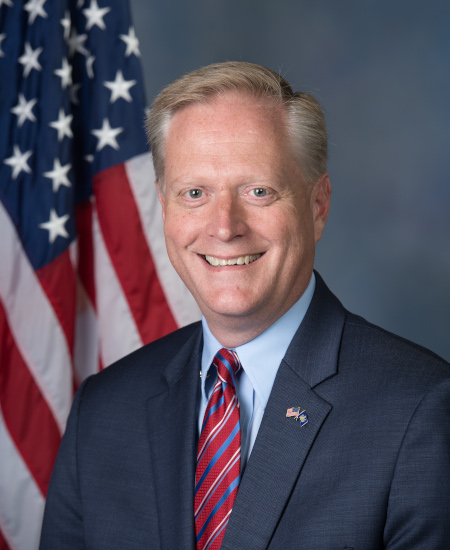
Rep. Fred Keller
Sponsored bills
Prenatal Nondiscrimination Act of 2022 or the PRENDA Act of 2022 This bill creates new federal crimes related to the performance of sex-selection abortions (i.e., abortions based on the sex or gender of an unborn child). It subjects a violator to criminal penalties—a fine, a prison term of up to five years, or both. It also authorizes civil remedies, including damages and injunctive relief. A woman who undergoes a sex-selection abortion may not be prosecuted or held civilly liable.
Putin Accountability Act This bill imposes sanctions pertaining to Russia and addresses related issues. The President must impose sanctions, with some exceptions, on individuals and entities that knowingly and directly provide specialized financial messaging services to Russia's central bank (or enables access to such services); entities responsible for constructing, financing, or operating Nord Stream 2 (a pipeline constructed to increase Russian natural gas exports) and the corporate officers and controlling shareholders of such entities; individuals and entities in Russia involved in kleptocracy, Russian government activities to subvert U.S. democratic institutions and interests, or Russian government disinformation campaigns against the United States; and entities that are Russian state development corporations, as well as any officials of such an entity. The President must impose property-blocking sanctions on such individuals and entities and also visa-blocking sanctions on the individuals. The President must also (1) issue regulations to prohibit U.S. individuals and entities from dealing in Russian sovereign debt; and (2) issue a determination as to whether certain specified Russian individuals meet the criteria to be subject to sanctions under various authorities, including this bill. The Department of State must (1) designate Russia a state sponsor of terrorism, and (2) report to Congress a determination of whether Russia-affiliated armed entities in the Donbas region of Ukraine meet the criteria to be designated as foreign terrorist organizations. The bill prohibits expending funds to engage with Russia's government on cyber issues or arms control negotiations until certain conditions have been met.

Federal Prisons Accountability Act of 2022 This bill modifies the appointment procedures and term of service for the Director of the Bureau of Prisons. Currently, the director is appointed by the Attorney General. This bill requires the director to be appointed by the President and confirmed by the Senate. The bill also limits the director to a single term of 10 years.
Upholding the Law at Our Border Act This bill requires the Office of Inspector General of the Department of Homeland Security (DHS) to periodically investigate and report on certain issues until there have been fewer than 35,000 apprehensions at the southwest border for three consecutive months. When required, the reports must address certain issues, including (1) the vetting procedures applicable to aliens seeking entry into the United States who were apprehended along the southwest border, (2) the total number of individuals not lawfully present who have been processed and released into the United States, (3) the number of such individuals who have received parole, and (4) an audit of the parole applications. The office must submit such reports (and provide briefings on the reports) to the President, Congress, DHS, and the Department of Justice.
Halt All Lethal Trafficking of Fentanyl Act or the HALT Fentanyl Act This bill places fentanyl-related substances as a class into schedule I of the Controlled Substances Act. A schedule I controlled substance is a drug, substance, or chemical that has a high potential for abuse; has no currently accepted medical value; and is subject to regulatory controls and administrative, civil, and criminal penalties under the Controlled Substances Act. Additionally, the bill establishes a new, alternative registration process for schedule I research that is funded by the Department of Health and Human Services or the Department of Veterans Affairs or that is conducted under an investigative new drug exemption from the Food and Drug Administration. The bill also makes several other changes to registration requirements for conducting research with controlled substances, including permitting a single registration for related research sites in certain circumstances, waiving the requirement for a new inspection in certain situations, and allowing a registered researcher to perform certain manufacturing activities with small quantities of a substance without obtaining a manufacturing registration.
Removing Waste and Protecting Medicare Act This bill makes several budgetary changes, including (1) prohibiting sequestration orders in 2022, (2) rescinding certain COVID-19 state and local relief funds, and (3) extending certain adjustments under Medicare with respect to sequestration and payments under the physician fee schedule. It also modifies requirements relating to federal programs and benefits, such as permanently requiring taxpayers to include Social Security numbers on their tax returns in order to qualify for the child tax credit.
Prison Camera Reform Act of 2021 This bill establishes various requirements to ensure that the security camera, radio, and public address systems used by the Bureau of Prisons (BOP) have the capabilities necessary to (1) ensure the health and safety of staff and inmates; and (2) ensure the documentation and accessibility of video evidence pertaining to misconduct, maltreatment, or criminal activity within correctional facilities. Among the requirements, the BOP must evaluate the systems currently in use at its facilities and implement a plan that addresses deficiencies in and makes upgrades to the systems.
Stop Settlement Slush Funds Act of 2021 This bill prohibits the federal government from entering into or enforcing a settlement agreement on behalf of the United States that provides for a payment to any person or entity other than the United States. The bill provides exceptions to allow payments that (1) remedy actual harm (including to the environment) caused by the party making the payment, or (2) constitute a payment for services rendered in connection with the case. Government officials or agents who violate this prohibition may be removed from office or required to forfeit to the government any money they hold for such purposes to which they may otherwise be entitled. Agencies must report annually for seven years to the Congressional Budget Office about the parties, funding sources, and distribution of funds for their settlement agreements permitted by the exceptions in this bill. The Office of Inspector General for each agency must also report annually on any settlement agreements that violate the bill's requirements.
Fentanyl Penalties Parity Act This bill modifies the drug quantity thresholds that trigger a mandatory minimum prison term for a defendant who manufactures, distributes, imports, exports, or possesses with intent to distribute fentanyl. Specifically, the bill reduces from 400 to 20 grams the fentanyl quantity and from 100 to 5 grams the fentanyl analogue quantity that trigger a mandatory minimum prison term for high-level first-time or repeat offenders. It also reduces from 40 to 2 grams the fentanyl quantity and from 10 to 0.5 grams the fentanyl analogue quantity that trigger a mandatory minimum prison term for low-level first-time or repeat offenders.