

Energy Poverty Prevention and Accountability Act This bill addresses energy poverty (i.e., insufficient access to affordable energy) in at-risk communities. An at-risk community is a community that is low-income, minority, rural, elderly, or Native American. The Department of the Interior must report on (1) barriers to the ability of at-risk communities that live on or near federal land or tribal land to access reliable and affordable energy, including how the presence of adequate energy transmission infrastructure affects such access; and (2) actions that it and the Forest Service may take to reduce such barriers. In addition, certain executive actions may not be carried out until Interior conducts energy poverty studies for such actions. The Congressional Budget Office must report on how a bill or resolution will affect the cost of energy for at-risk communities. The Government Accountability Office must (1) analyze federal energy and environmental laws and regulations, and state renewable portfolio standards, to determine how such laws, regulations, and standards affected electricity prices, home heating prices, gasoline prices, motor vehicle prices, natural gas prices, and household appliance prices in at-risk communities; and (2) develop criteria to determine whether an at-risk community is experiencing energy poverty. The Office of Management and Budget must review and publish each applicable energy regulation to determine if any regulation imposes, relative to the general population, disproportionate costs on at-risk communities.
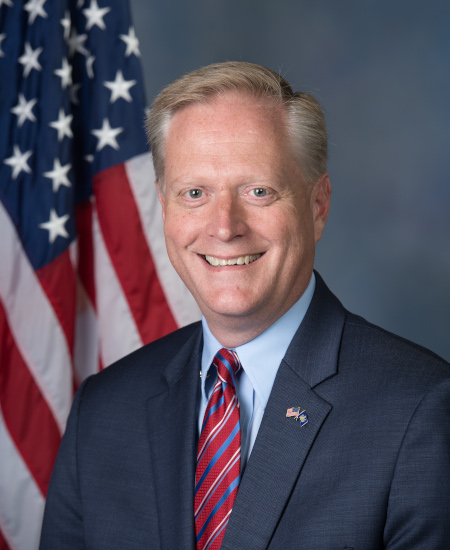
Rep. Fred Keller
Sponsored bills
Requiring Education Providers to Observe Requirements or Trigger Fines Act or the REPORT Fines Act This bill modifies the disclosure threshold regarding gifts or contracts from a foreign source that institutions of higher education (IHEs) must report to the Department of Education (ED). The bill also establishes new penalties for failure to report. Under current law, an IHE is required to disclose to ED a gift or contract that is from a foreign source and is valued at $250,000 or more, considered alone or in combination with all other gifts from or contracts with that foreign source within a calendar year. The bill instead requires the IHE to disclose such a gift or contract that is valued at $50,000 or more within a calendar year. In addition, the bill establishes new penalties for IHEs that fail to report to ED. These penalties include written warnings, civil penalties, and ineligibility for federal research funds. Further, the bill establishes accelerated penalties for IHEs that receive funding from certain countries (e.g., China or Russia).
Restore the Rights of Property Owners under the Eviction Moratorium Issued by the CDC Act of 2021 This bill nullifies beginning on July 1, 2021, the emergency order (and any extensions of the order) issued by the Centers for Disease Control and Prevention on September 4, 2020, that restricted residential evictions during the COVID-19 emergency. It also prohibits the order from being reissued unless specifically authorized by law.
Finish the ADHS Act This bill sets aside funding from the Highway Trust Fund for the Appalachian development highway system (a network of highways linking the region to national interstates) and prescribes a method to allocate the funding.
Promotion and Expansion of Private Employee Ownership Act of 2021 This bill expands tax incentives and federal assistance for employee stock ownership plans (ESOPs) that are sponsored by S corporations. The bill provides additional tax incentives for ESOPs by (1) extending to all domestic corporations, including S corporations, provisions allowing deferral of tax on gain from the sale of employer securities to an ESOP; and (2) allowing a tax deduction for 50% of the interest received by a bank on loans to S corporation-sponsored ESOPs for the purchase of employer securities. The Department of the Treasury must establish the S Corporation Employee Ownership Assistance Office to foster increased employee ownership of S corporations. The bill defines an ESOP business concern for purposes of the Small Business Act as a business concern that was eligible for a loan, preference, or other program under such Act before more than 49% of the business concern was acquired by an ESOP.
Minor League Baseball Relief Act This bill establishes a program for the relief of certain minor league baseball clubs and independent professional baseball clubs that experienced large business losses. The bill provides funding for the Small Business Administration to make grants to such clubs that experienced decreases in gross revenue in 2020 of at least 75%, as measured against revenues in 2019 (or, if revenues were negatively affected by a natural disaster or weather disruption in 2019, by the average of revenues over the prior three-year period). The source of funding for the grants shall be funds appropriated under enacted COVID-19 relief legislation that have not been obligated and are no longer being used to carry out activities authorized under those laws. Grant amounts provided to any club may not exceed $10 million.
Resident Education Deferred Interest Act or the REDI Act This bill allows borrowers in medical or dental internships or residency programs to defer student loan payments until the completion of their programs.
This resolution requires an analytical statement to be included in committee reports on whether, and the extent to which, the increased budget authority, outlays, or revenue produced by the enactment of a bill or joint resolution may have an inflationary impact on prices and costs in the operation of the national economy and the purchasing power of low- and middle-income families.
Foreign Gain-of-Function Research Prevention Act of 2021 This bill prohibits the use of federal funds to conduct or support gain-of-function research involving potential pandemic pathogens by China, Russia, Iran, North Korea, or other foreign adversaries. Gain-of-function research is any research that is anticipated to confer an attribute on a pathogen to enhance its pathogenicity or transmissibility in mammals. If the Department of State finds that an entity has used funds for prohibited research, the entity may not receive any federal funding for a period of five years.
Traditional Cigar Manufacturing and Small Business Jobs Preservation Act of 2021 This bill exempts traditional large and premium cigars from Food and Drug Administration (FDA) regulation and FDA-assessed user fees.