

Maddy summaryThe REDUCE Act simplifies administrative requirements for physical and occupational therapists. It eliminates redundant paperwork by allowing therapists to submit a care plan to the ordering physician within 30 days after an initial evaluation, instead of requiring separate certifications. Physicians can then amend the care plan within 10 business days. This directly affects therapists, physicians, and Medicare patients receiving outpatient therapy services, reducing bureaucratic delays without requiring new physician orders. The bill aims to streamline care coordination under Medicare Part B.
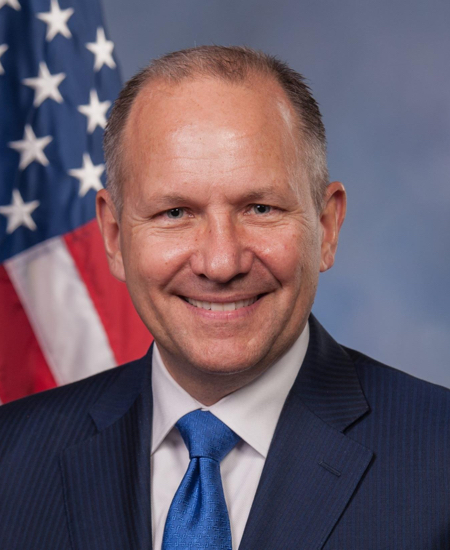
Rep. Lloyd Smucker
Sponsored bills
Maddy summaryThis bill amends Medicare eligibility rules to explicitly include occupational therapy as a qualifying service for home health care. It changes the Social Security Act to state that beneficiaries need "occupational, or speech therapy" (instead of only "speech therapy") to qualify for home health services. This change directly affects Medicare beneficiaries requiring occupational therapy at home, expanding access to this specific care. The policy takes effect for services provided on or after January 1, 2025.
Maddy summaryThe Preserving Seniors’ Access to Physicians Act of 2023 increases the Medicare payment adjustment rate for physicians from 1.25% to 4.62%, directly affecting doctors who treat Medicare patients (primarily seniors). It also reduces the funding for the Medicaid improvement fund from $5,796,117,810 to $3,973,117,810. These changes impact Medicare providers and Medicaid programs, with the Medicare adjustment aimed at supporting physicians adjusting to payment changes. The bill does not specify how the Medicaid funding reduction relates to its stated goal of preserving seniors' access to physicians.
Maddy summaryThis bill protects religious child welfare providers from losing government contracts or funding if they refuse to provide services conflicting with their sincerely held religious beliefs (e.g., certain foster care or adoption placements). It prohibits states and federal agencies from denying contracts, licenses, or renewals for this reason, and allows providers to sue for violations with recovery of damages and legal fees. States violating the law risk losing 15% of federal child welfare funding. The law applies to all federally funded child welfare services, including foster care, adoption support, and family preservation programs.
Maddy summaryThe Maximum Pressure Act (HR 6114) is a legislative proposal that would maintain and expand U.S. sanctions against Iran. The bill would codify existing sanctions, require Iran to meet 12 specific conditions before sanctions could be lifted (including ending support for terrorism, releasing hostages, and ending nuclear enrichment), and expand sanctions on Iran's Revolutionary Guard Corps and missile programs. It also establishes new reporting requirements for the U.S. government to monitor Iran's activities and the impact of sanctions. The legislation would require congressional review before any sanctions could be lifted or modified, preventing the executive branch from unilaterally easing restrictions.
Maddy summaryThis bill, titled "Freezing HAMAS Act" (though it concerns Iran sanctions, not Hamas), reinstates U.S. sanctions on Iran that were previously waived or suspended under agreements with Iran. It specifically targets sanctions from the 2012 Iran Freedom and Counter-Proliferation Act and the 2012 National Defense Authorization Act, including a September 2023 waiver related to fund transfers. The bill prohibits the U.S. government from releasing funds or assets to Iran or granting further waivers related to these sanctions. It directly affects U.S. government actions regarding Iran financial transactions and enforcement of existing sanctions.
Maddy summaryThe ORPHAN Cures Act amends the Drug Price Negotiation Program under the Social Security Act to clarify how orphan drugs (medications for rare diseases affecting fewer than 200,000 people in the U.S.) are treated. It ensures that periods when a drug was designated as an orphan drug are excluded from the time calculation used to determine when the drug can no longer be excluded from price negotiations. The bill also updates the definition to allow a single drug to be designated for multiple rare diseases, rather than just one. This change provides clearer rules for manufacturers and the government regarding orphan drug exclusions in the program.
Maddy summaryThe Maintaining Investments in New Innovation Act (HR 5547) extends the exclusivity period for certain advanced drugs from 7 to 11 years. It defines an "advanced drug product" as a drug using genetically targeted technology to change how genes work, such as drugs that suppress or activate gene function. The bill amends the Social Security Act to update the definition of "qualifying single source drug" to include these advanced therapies with the longer exclusivity period. This change directly affects drug manufacturers developing such advanced therapies and influences Medicare's drug coverage rules by delaying generic competition for these specific treatments.
Maddy summaryThe In Good Standing Adoption Agencies Act of 2023 requires states to annually submit to the federal government a list of child placement agencies that are licensed, in good standing with the state, and federally tax-exempt (under Section 501(c)(3)). The federal government will compile and maintain a public list of these agencies and report to Congress on any licensed agency not included, along with any state disciplinary actions taken against them. States that fail to submit the required list for a fiscal year will lose eligibility for federal adoption and legal guardianship incentive payments. This bill directly affects state child welfare agencies and the adoption agencies they regulate, with no change to existing agency licensing standards.
Maddy summaryThis bill allows employees to directly transfer funds from a health flexible spending account (FSA) or health reimbursement arrangement (HRA) to a health savings account (HSA) when switching to a high-deductible health plan after a gap in coverage. It sets a dollar limit on these transfers based on annual HSA contribution rules and requires the transfer to occur after a significant period without coverage. Employers must report these transfers on employees' W-2 forms. The changes apply to distributions made after December 31, 2023.