

Expanding Private Airport Security Screening Act This bill makes various changes to a program that permits private companies to screen passengers and property at airports. Current law requires airport operators to submit an application to the Transportation Security Administration (TSA) in order to use a qualified private screening company. Additionally, under current law, the TSA (rather than airport operators) must enter into the contracts for screening services with such companies. Under this bill, the TSA must maintain a publicly available list of qualified private screening companies, and airport operators may directly enter into contracts for screening services with any company on the list. The bill also requires reporting related to the screening program. The TSA must annually report to Congress about the relative performance and costs of screening services carried out by private companies versus by federal government personnel. Additionally, the TSA must provide on a quarterly basis a comparison of the cost of providing services using the private company versus federal government personnel to airports that contract with private screening companies.
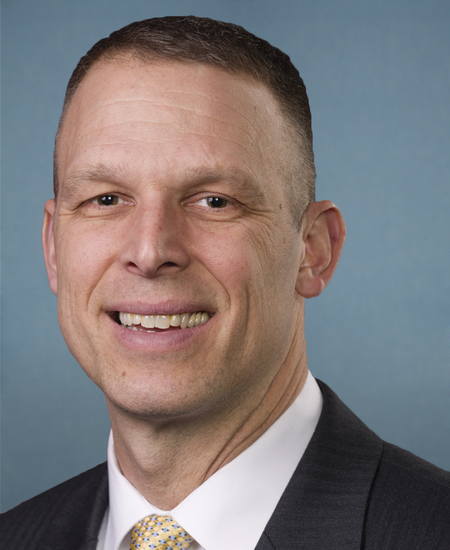
Rep. Scott Perry
Sponsored bills
COVID-19 Origin Act of 2021 This bill requires the Office of the Director of National Intelligence (ODNI) to declassify all information relating to potential links between the Wuhan Institute of Virology and the origin of COVID-19. The ODNI shall submit to Congress an unclassified report containing such information, with redactions only as necessary to protect sources and methods.
Save Local Business Act This bill provides that a person may be considered a joint employer in relation to an employee under federal labor law only if such person directly, actually, and immediately (and not in a limited and routine manner) exercises significant control over the essential terms and conditions of employment. Such control may by demonstrated by hiring and discharging employees, determining individual employee rates of pay and benefits, day-to-day supervision of employees, assigning individual work schedules, positions, and tasks, and administering employee discipline.
Stop CRT Act This bill grants Executive Order 13950 the force and effect of law. That order prohibits federal agencies and contractors from advancing specified policies or training related to race or sex.
Freedom to Work Act This bill requires federal agencies to review and reduce occupational licensing requirements. Specifically, each executive agency must review relevant laws, policies, and regulations that institute occupational licensing requirements for agency positions, or that cause a state, local, or tribal government to adopt licensing requirements for positions within their jurisdictions, and identify possible changes to eliminate such requirements or to provide alternatives that are the least restrictive while also maintaining consumer protection. Agencies must implement changes to the extent permissible under law. The bill also requires states to describe their plans to reduce occupational licensing barriers as part of their unified state plans for programs under the Workforce Innovation and Opportunity Act. Several executive orders have required similar review of occupational licensing requirements. For example, the executive order titled Increasing Economic and Geographic Mobility, which was issued on December 14, 2020, outlined certain principles for occupational licensing requirements, including that such requirements should be the least restrictive to competition while also maintaining consumer protection; the order directed executive agencies to review and identify changes to their regulations, guidance, and policies in accordance with these principles. Additionally, the executive order titled Promoting Competition in the American Economy , which was issued on July 9, 2021, directs the Federal Trade Commission to consider addressing practices that inhibit competition, including unfair occupational licensing restrictions, through regulations.
Combating Racist Teaching in Schools Act or the CRT Act This bill prohibits federal funds from being awarded to elementary or secondary schools or institutions of higher education that promote certain race-based theories or compel teachers or students to affirm belief in such theories in a manner that discriminates on the basis of race, color, or national origin.
Combatting Racist Training in the Military Act of 2021 This bill prohibits the Armed Forces and academic institutions of the Department of Defense from promoting specified anti-American and racist theories (e.g., that any race is inherently superior or inferior to any other race). Specifically, the bill prohibits including anti-American and racist theories or materials in curricula, reading lists, seminars, workshops, trainings, or other educational or professional settings in a manner that could appear as sponsorship, approval, or endorsement; contracting with, hiring, or otherwise engaging speakers, consultants, diversity trainers, and other persons for the purpose of advocating anti-American and racist theories; compelling members of the Armed Forces to affirm or profess belief in anti-American and racist theories; and segregating members of the Armed Forces by race in any setting, including educational and training sessions.
One Federal Decision Act of 202 1 This bill provides statutory authority for the policy that requires federal agencies to coordinate environmental reviews and authorization decisions for major infrastructure projects. It also sets a goal for completing environmental reviews within two years. The Department of Transportation (DOT) must review existing practices, procedures, programmatic agreements, and applicable laws to identify potential changes that would facilitate an efficient environmental review process for projects. All authorization decisions for construction of a major project must be completed within 90 days of the issuance of a record of decision for the project, although the lead agency could extend the deadline in some cases. The lead agency must develop an environmental review schedule with the project sponsor that is consistent with an agency average of not more than two years for the completion of the environmental review process for major projects. DOT must also (1) establish a performance accountability system to track each major project, and (2) provide other relevant federal agencies with a list of categorical exclusions under the National Environmental Policy Act that are applicable to highway projects and that would accelerate project delivery. The bill also eliminates the two-year limitation on filing claims seeking judicial review of permits, licenses, or approvals issued by a federal agency for railroad projects.
This resolution calls for the International Olympic Committee to rebid the 2022 Winter Olympics if China fails to demonstrate significant progress in securing fundamental human rights. The resolution also expresses support for the well-being of Olympic athletes and the integrity of sport.
Get Americans Back To Work Act This bill makes an individual ineligible for federal pandemic unemployment compensation (FPUC) after June 30, 2021. It also reduces the amount of FPUC to $150.00 for weeks of unemployment ending after May 31, 2021, and ending on or before June 30, 2021. Under current law, an individual is eligible for FPUC for weeks of employment ending on or before September 6, 2021 in the amount of $300.