

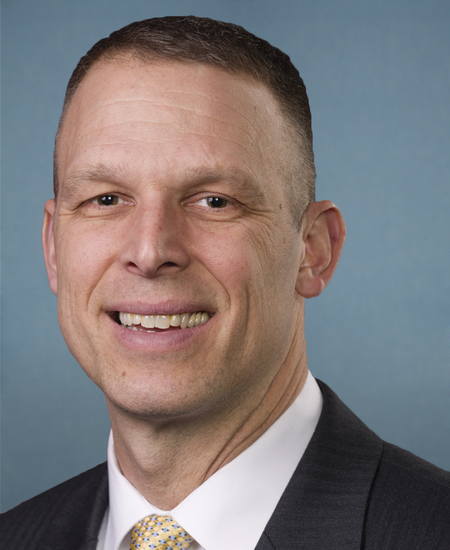
Photo of Scott Perry
R United States House · District 10 · Pennsylvania On the 2026 ballot

Rep. Scott Perry

Compare
Total votes
2,837
all sessions
Attendance
98%
68 missed
Near the chamber average
With party
82%
of cast votes
Lower than 97% of chamber peers
Bipartisan score
9%
crosses aisle rarely
Higher than 95% of chamber peers
Sponsored
947
bills & resolutions
Near the chamber average
Committees
12
assignments
947 bills and resolutions

Sponsored bills

Total
947
Primary
165
Co-sponsor
782
This page
947
matching current filters
Co-sponsor HR 260
In committee · United States House · Co-sponsor
Nickel Plan Act

Maddy summaryHR 260, the Nickel Plan Act, establishes annual federal spending limits to control budget growth. It sets a cap of $5.95 trillion (less 5% for interest) for fiscal year 2024, decreasing by 5% each year through 2027, then tying future spending to 17.5% of GDP starting in 2028. If spending exceeds these limits, the Office of Management and Budget triggers automatic spending cuts (sequestration) by October 31 each year. The bill also prevents Congress from passing legislation that would breach these caps without a two-thirds vote in both chambers, enforcing the limits through procedural rules.

In committee Jan 10, 2023 1 co-sponsor
Co-sponsor HJRES 8
In committee · United States House · Co-sponsor
Proposing an amendment to the Constitution of the United States to require that the Supreme Court of the United States be composed of nine justices.

Maddy summaryHJRES 8 proposes a constitutional amendment to permanently set the Supreme Court's size at nine justices. The bill would require any future changes to the Court's composition to follow this specific number, locking in the current structure. It does not alter the existing Court size (which has been nine since 1869) but aims to prevent future adjustments through legislative action. The amendment must be ratified by three-fourths of state legislatures within seven years to take effect. This is a procedural proposal focused on constitutional structure, not a direct policy affecting citizens or programs.

In committee Jan 9, 2023 1 co-sponsor
Co-sponsor HR 83
In committee · United States House · Co-sponsor
To repeal the National Voter Registration Act of 1993.

This bill repeals the National Voter Registration Act of 1993. The act established certain voter registration requirements for federal elections, such as the requirement for states to allow individuals to register to vote when they apply for a driver's license.

In committee Jan 9, 2023 1 co-sponsor
Co-sponsor HR 69
In committee · United States House · Co-sponsor
NOSHA Act

Maddy summaryThe NOSHA Act (HR 69) would repeal the Occupational Safety and Health Act of 1970 and abolish the Occupational Safety and Health Administration (OSHA). This bill would eliminate the federal law requiring employers to maintain safe workplaces and remove the agency responsible for enforcing those safety standards. It directly affects all private-sector employers and workers across the United States, as it would end the current federal system for workplace safety regulation. The key provision is the complete removal of both the 1970 law and OSHA, with no replacement framework specified in the bill text.

In committee Jan 9, 2023 1 co-sponsor
Co-sponsor HR 24
In committee · United States House · Co-sponsor
Federal Reserve Transparency Act of 2023

Maddy summaryHR 24, the Federal Reserve Transparency Act of 2023, requires a comprehensive audit of the Federal Reserve System's Board of Governors and Federal Reserve banks within 12 months of the bill's enactment. The Congressional auditor (Comptroller General) must then submit a detailed report to Congress within 90 days, including findings, conclusions, and recommendations for improving transparency. This bill directly affects the Federal Reserve System by mandating greater oversight of its operations and financial activities. The key provision repeals a prior limitation that prevented audits of certain Fed programs, aiming to clarify which activities are subject to audit under existing law.

In committee Jan 9, 2023 1 co-sponsor
Co-sponsor HR 100
In committee · United States House · Co-sponsor
No SmartPay for Anti-2A Companies Act

Maddy summaryHR 100, the No SmartPay for Anti-2A Companies Act, prohibits the federal government from awarding new contracts under the SmartPay Program for payment systems that use payment processors with a merchant category code designated for gun retailers. This means government agencies cannot contract with payment processors that categorize gun stores as a business type for processing transactions. The bill only applies to new contracts; existing agreements remain unaffected. It directly impacts payment processing companies that use such codes and federal agencies utilizing the SmartPay Program for future procurement.

In committee Jan 9, 2023 1 co-sponsor
Co-sponsor HR 79
In committee · United States House · Co-sponsor
WHO Withdrawal Act

WHO Withdrawal Act This bill requires the President to immediately withdraw the United States from the World Health Organization (WHO) and prohibits using any federal funds to provide for U.S. participation in the WHO. The bill also repeals the 1948 act authorizing the United States to join the WHO.

In committee Jan 9, 2023 1 co-sponsor
Co-sponsor HR 211
In committee · United States House · Co-sponsor
COI Elimination Act

COI Elimination Act This bill limits U.S. contributions to the United Nations pertaining to the U.N. Independent International Commission of Inquiry on the Occupied Palestinian Territory, including East Jerusalem, and Israel. Current law imposes a cap on the annual U.S. contribution to the U.N. budget. The bill lowers that cap by 25% of the amount budgeted for the commission. The bill also states that it shall be U.S. policy to seek the abolition of the commission and combat systemic anti-Israel bias in international bodies.

In committee Jan 9, 2023 1 co-sponsor
Co-sponsor HR 25
In committee · United States House · Co-sponsor
FairTax Act of 2023

FairTax Act of 2023 This bill imposes a national sales tax on the use or consumption in the United States of taxable property or services in lieu of the current income taxes, payroll taxes, and estate and gift taxes. The rate of the sales tax will be 23% in 2025, with adjustments to the rate in subsequent years. There are exemptions from the tax for used and intangible property; for property or services purchased for business, export, or investment purposes; and for state government functions. Under the bill, family members who are lawful U.S. residents receive a monthly sales tax rebate (Family Consumption Allowance) based upon criteria related to family size and poverty guidelines. The states have the responsibility for administering, collecting, and remitting the sales tax to the Treasury. Tax revenues are to be allocated among (1) the general revenue, (2) the old-age and survivors insurance trust fund, (3) the disability insurance trust fund, (4) the hospital insurance trust fund, and (5) the federal supplementary medical insurance trust fund. No funding is authorized for the operations of the Internal Revenue Service after FY2027. Finally, the bill terminates the national sales tax if the Sixteenth Amendment to the Constitution (authorizing an income tax) is not repealed within seven years after the enactment of this bill.

In committee Jan 9, 2023 1 co-sponsor
Co-sponsor HR 151
In committee · United States House · Co-sponsor
NFA SBS Act

No Frivolous Application for Short-Barreled Shotguns Act or the NFA SBS Act This bill removes certain short-barreled shotguns from the definition of firearms for purposes of the National Firearms Act. It also eliminates the prohibition on the sale or transportation of such shotguns in interstate commerce and treats persons who acquire or possess a short-barreled shotgun as meeting the registration or licensing requirements for such shotguns where such requirements are determined by reference to the National Firearms Act. The bill preempts state or local laws that impose a tax or recordkeeping requirements on short-barreled shotguns. The Department of Justice must destroy records relating to the registration of shotguns described by this bill within one year after the enactment of this bill.

In committee Jan 9, 2023 1 co-sponsor
Showing 491 to 500 of 947 bills
Previous 1 … 49 50 51 … 95 Next