

Maddy summaryThis bill amends U.S. immigration law to add new grounds for inadmissibility and deportability related to sex offenses and domestic violence. It makes non-citizens inadmissible if convicted of, or admitting to, sex offenses (as defined in the Adam Walsh Act) or domestic violence crimes (as defined under the Violent Crime Control Act). It also expands deportability to include these offenses, specifying that domestic violence crimes are deportable regardless of whether the jurisdiction received federal grant funding. The changes apply to non-citizens with prior convictions or admissions for these specific offenses, modifying their immigration status under existing law.
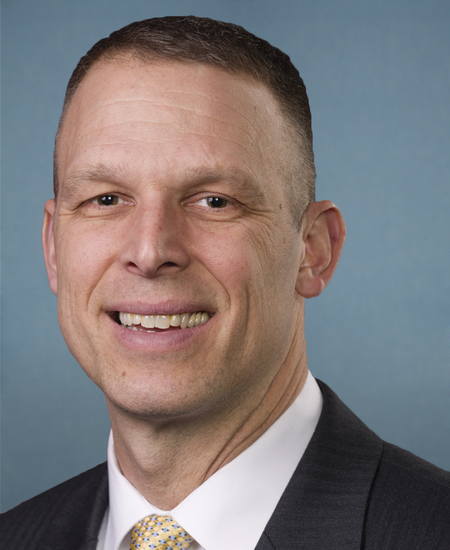
Rep. Scott Perry
Sponsored bills
Maddy summaryThis bill (HJRES 163) is a congressional disapproval resolution targeting an Environmental Protection Agency (EPA) rule finalized on May 9, 2024. The EPA rule established new emissions standards for greenhouse gases from fossil fuel power plants (both new and existing) and repealed a previous rule called the Affordable Clean Energy Rule. The resolution would block this EPA rule from taking effect by invoking the Congressional Review Act (Chapter 8 of Title 5, U.S. Code). If passed, it would prevent the EPA rule from being enforced, directly affecting fossil fuel power plant operators and the EPA’s regulatory authority over emissions.
Maddy summaryHJRES 133 is a congressional resolution seeking to block an Environmental Protection Agency (EPA) rule titled "Greenhouse Gas Emissions Standards for Heavy-Duty Vehicles-Phase 3." This rule, published in the Federal Register on April 22, 2024, established new emissions requirements for large trucks and commercial vehicles. The resolution, if passed, would prevent the EPA rule from taking effect by formally disapproving it under standard congressional review procedures. The measure directly affects the EPA’s regulatory authority and vehicle manufacturers who would have been required to comply with the proposed standards.
Maddy summaryH.J. Res. 117 is a joint resolution that would disapprove an Environmental Protection Agency (EPA) rule concerning the reconsideration of National Ambient Air Quality Standards for particulate matter. The EPA rule, published on March 6, 2024, was part of the agency’s process to review these standards, which set limits for harmful air pollutants. This resolution invokes a congressional disapproval procedure under federal law to block the rule from taking effect. If enacted, the rule would have no force or effect, preserving the existing air quality standards for particulate matter.
Maddy summaryHR 9594, the "Protecting Taxpayers’ Wallets Act," requires federal agencies to charge recognized employee unions quarterly fees for using agency resources (like office space) and union time (when union representatives work during work hours on union business). Fees are calculated based on the union representative’s hourly pay rate multiplied by hours worked on union matters, plus the value of agency resources provided. Unions must pay fees within 60 days of notification; failure to pay results in penalties including denial of union time after 90 days and termination of the union’s status as exclusive representative after 365 days. The bill applies to all unions recognized under federal labor law as exclusive representatives of federal employees.
Maddy summaryHJRES 203 is a congressional resolution seeking to block a National Labor Relations Board (NLRB) rule that would have changed procedures for union representation elections in the construction industry. The rule, published in August 2024, aimed to modify how employers prove majority support for unions and handle election bars during bargaining relationships. This resolution invokes the statutory disapproval process under federal law to prevent the rule from taking effect. If enacted, it would stop the NLRB from implementing these specific election procedures, directly affecting construction employers, unions, and workers involved in representation votes.
Maddy summaryHR 9574, the Stop CARB Act of 2024, repeals federal provisions that allowed California to set stricter vehicle and engine emissions standards than the national baseline. It eliminates the waiver process under the Clean Air Act (specifically Section 209) that enabled California’s Air Resources Board (CARB) to establish its own rules for nonroad engines and vehicles. The bill also repeals Section 177 of the Clean Air Act, which authorized California’s unique new motor vehicle emission standards. As a result, California would no longer be permitted to implement its own vehicle emission requirements separate from federal standards.
Maddy summaryHJRES 167 cancels a U.S. Department of Agriculture rule that would have allowed electronic eartags as official identification for cattle and bison. The resolution directs that the rule published in the Federal Register on May 9, 2024 (89 Fed. Reg. 39540), has no force or effect. This directly affects ranchers and farmers who would have been required to use electronic identification systems for livestock. The bill halts the implementation of this specific regulatory change without creating new requirements.
Maddy summaryThis resolution aims to block a rule issued by the National Highway Traffic Safety Administration (NHTSA) that sets new fuel efficiency standards for passenger cars, light trucks (starting in 2027), and heavy-duty pickup trucks/vans (starting in 2030). If passed, it would prevent this specific rule from taking effect by disapproving it under a congressional review process. The rule directly affects vehicle manufacturers by requiring them to meet these updated fuel economy targets for future model years. This is a procedural resolution, not a new law, focused solely on halting the implementation of the existing NHTSA rule.
Maddy summaryHJRES 124 is a resolution seeking congressional disapproval of a rule issued by the Office of the Comptroller of the Currency (OCC) that required large financial institutions to adopt climate-related risk management practices. The rule, published in October 2023 (88 Fed. Reg. 74183), would have mandated major banks to assess and manage climate change risks in their operations. This resolution, if passed, would block the rule from taking effect by invoking the congressional disapproval process under Title 5 of the U.S. Code. It directly affects large banks and financial institutions that would have been required to comply with the climate risk management standards. The bill does not create new rules but aims to prevent the implementation of the OCC's existing proposal.