

Maddy summaryThis bill requires the Secretaries of Health and Human Services and Defense to develop a 10-year strategy within 180 days of enactment to maintain stockpiles of anthrax countermeasures (like treatments and vaccines) in the Strategic National Stockpile and for military personnel and families on U.S. bases. It mandates annual reports to Congress detailing anthrax threats from foreign adversaries and terrorist groups, government programs addressing these threats, and efforts to ensure countermeasures are available for military dependents abroad. The strategy must prioritize sustainable cooperation with manufacturers and address multidrug-resistant strains. The bill directly affects military personnel, their families, and civilians on military installations by strengthening anthrax defense capabilities.
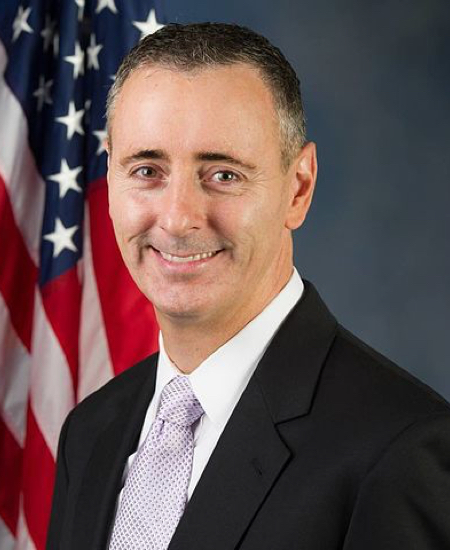
Rep. Brian K. Fitzpatrick
Sponsored bills
Maddy summaryThis bill requires the Secretaries of Defense and Veterans Affairs to evaluate existing and ongoing research on menopause, perimenopause, and mid-life health for women in the military and as veterans. It directs them to identify gaps in knowledge about treatments, the impact of military service (including combat roles and exposure to toxins like burn pits), mental health effects, and healthcare provider training needs. Within 180 days of enactment, the departments must submit a report with findings and a strategic plan to address identified gaps and prioritize future research. The bill ensures this work supplements, rather than duplicates, existing efforts by the Department of Health and Human Services.
Maddy summaryThe Affordable Housing Credit Improvement Act of 2025 would reform the Low-Income Housing Credit program, which provides tax credits to developers of affordable housing. It would increase state allocations based on population with annual cost-of-living adjustments, modify tenant eligibility rules to allow higher income limits for some residents, and add protections for domestic violence victims in housing. The bill would simplify rules for rural and Native American housing projects, clarify credit eligibility requirements, and require greater transparency in program administration. These changes would directly affect developers, property owners, and low-income tenants in housing projects that receive LIHC tax credits.
Maddy summaryHR 2729, the "Carnivals are Real Entertainment Act," creates a new temporary work visa category for carnival and circus workers. It directly affects mobile entertainment providers (like traveling carnivals, circuses, and affiliated food/game concession services) and their workers who perform essential tasks such as transporting, assembling, operating, and maintaining rides and equipment at seasonal fairs and festivals. The bill amends immigration law to define "mobile entertainment workers" as those entering temporarily for functions integral to these operations, subject to labor program requirements similar to other temporary work visas. It requires the Departments of Homeland Security and Labor to issue implementing rules within one year of enactment.
Maddy summaryThe Invest to Protect Act of 2025 establishes a $50 million annual grant program (2027-2031) for local governments employing fewer than 175 law enforcement officers, including counties, municipalities, and Tribal governments. Grants fund de-escalation training, victim-centered domestic violence response training, evidence-based safety training for scenarios like mental health crises or active shooters, recruitment/retention bonuses (capped at 20% of salary), and mental health resources for officers. Recipients must report on program use, disclose bonus amounts publicly, and comply with audits to prevent misuse of funds. The bill aims to improve officer safety and community relations through targeted support for smaller law enforcement agencies.
Maddy summaryHR 2733, the Pell Grant Flexibility Act, amends the Higher Education Act to better support students with disabilities. It allows students with disabilities (as defined by the ADA) who need a reduced course load to have that reduced load counted as full-time enrollment for calculating their Pell Grant amount - specifically, using the greater of their reduced load or 5 credits. This change directly affects eligible students with disabilities who attend college part-time due to their condition. The provision does not impact semester eligibility calculations for Pell Grants under existing rules.
Maddy summaryHR 586, the Vietnam Veterans Liver Fluke Cancer Study Act, directs the Department of Veterans Affairs (VA) to study cholangiocarcinoma (bile duct cancer) rates among veterans who served in the Vietnam theater during the Vietnam era. Using data from the VA Central Cancer Registry and CDC cancer registries, the study will compare cancer incidence rates between these veterans and the general U.S. population, broken down by age, gender, race, ethnicity, and location. The VA must submit an initial report to Congress within one year of the study’s completion, including findings and recommendations for addressing any identified health issues, with ongoing follow-up reports to track trends. This bill specifically affects Vietnam-era veterans who served in Vietnam, focusing on data collection and analysis rather than immediate policy changes.
Maddy summaryHRES 297 is a non-binding resolution expressing the House of Representatives' support for fair compensation, benefits, and working conditions for paraprofessionals (like instructional assistants) and education support staff (including bus drivers, cafeteria workers, and clerical staff) in schools. It specifically calls for livable wages, job security, access to affordable health care, paid leave, and meaningful input in school policies for these workers. As a resolution, it does not create new laws or mandate changes but serves as a symbolic statement highlighting these workers' needs. The resolution directly addresses the concerns of over 3 million school support staff facing issues like underpayment, lack of benefits, and job instability.
Maddy summaryThis bill prohibits new federal oil and gas leasing and drilling in specific offshore areas near Florida. It directly affects federal energy leasing decisions by banning exploration, development, and production in three designated zones: the eastern Gulf of Mexico (per a 2006 law), a portion of the South Atlantic Planning Area south of 30°43'N latitude, and the Straits of Florida. The key mechanism is an amendment to federal law that blocks new leases in these areas, though existing leases remain unaffected. This policy change prevents future offshore drilling in these environmentally sensitive Florida coastal waters.
Maddy summaryHR 2672, the Religious Workforce Protection Act, extends temporary nonimmigrant status for religious workers whose applications for permanent residency (green cards) are delayed due to visa backlogs. It directly affects religious workers (such as pastors or missionaries) who are principal or derivative beneficiaries of pending immigrant petitions under specific visa categories, allowing them to maintain their work status beyond the usual 5-year limit while their green card applications are processed. Key provisions include granting extensions until a final decision is made on their adjustment of status application, modifying rules to allow limited job flexibility for these workers, and exempting them from a 1-year foreign residence requirement if they left the U.S. due to the prior 5-year cap. The bill aims to prevent religious workers from losing their legal status during lengthy immigration processing.