

Maddy summaryThis bill repeals a restriction that previously prevented individuals from rolling over funds directly from their Individual Retirement Accounts (IRAs) to donor-advised funds (DAFs) for charitable giving. It directly affects IRA account holders who wish to make tax-advantaged charitable contributions through DAFs. The key provision amends the Internal Revenue Code to remove the specific language barring such rollovers, allowing these transfers to occur without triggering taxable distributions. The change becomes effective after the bill's enactment, streamlining a pathway for donors to support charities via DAFs using IRA assets.
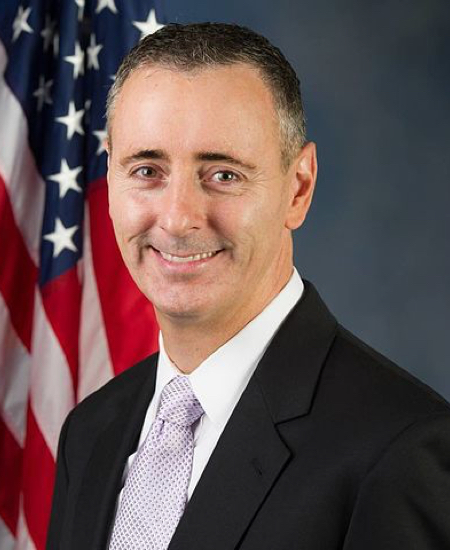
Rep. Brian K. Fitzpatrick
Sponsored bills
Maddy summaryHR 2872 (the RESILIENCE Act of 2025) amends the tax code to change how public utilities can deduct repair and maintenance costs for certain infrastructure. It requires utilities to reduce their taxable income by the same amount they deduct for these repairs on their financial statements, specifically for property owned by the utility and accounted for as depreciation. This applies to utilities owning infrastructure covered under Section 168(i)(10) of the tax code, aligning their tax deductions with financial reporting. The change takes effect for taxable years starting after December 31, 2024.
Maddy summaryHR 2831, the Small Business Energy Loan Enhancement Act, doubles the maximum loan amounts for certain small business energy projects under the Small Business Investment Act of 1958, raising the cap from $5.5 million to $10 million for two specific loan categories. This directly affects small businesses seeking financing for energy-related investments, such as efficiency upgrades or renewable energy installations. The bill requires the Small Business Administration (SBA) to annually report to Congress on which industries and geographic areas receive these loans. These changes aim to increase access to capital for qualifying energy projects without altering eligibility criteria.
Maddy summaryHR 2818, the Early Childhood Nutrition Improvement Act, updates federal child care nutrition program rules to improve administration and reduce burdens. It requires annual eligibility reviews for for-profit child care centers (Section 2), overhauls how "serious deficiency" findings are handled (Section 3), and allows up to 3 meals per day for children in extended care (Section 4), including a study on third-meal reimbursement. The bill also creates an advisory committee (Section 6) to reduce paperwork for providers, parents, and states, focusing on streamlining applications, digital documentation, and eliminating duplicative State requirements. These changes directly affect child care centers, family day care homes, and state agencies administering the program.
Maddy summaryHR 2881, the COAST Anti-Drilling Act of 2025, prohibits the federal government from issuing new oil and gas leases in four specific coastal planning areas: the North Atlantic, Mid-Atlantic, South Atlantic, and Straits of Florida. This directly affects the Department of the Interior (specifically the Secretary) and oil and gas companies seeking to explore or develop resources in these regions. The bill amends the Outer Continental Shelf Lands Act to ban all new leasing authorizations in these areas, as defined by the 2024-2029 leasing program notice. It does not affect existing leases or operations but prevents future development in these designated coastal zones.
Maddy summaryHR 2868, the SAVE Our Poultry Act, directs federal funding toward research on highly pathogenic avian influenza (HPAI) to protect the poultry industry. It authorizes grants to land-grant universities for two key purposes: developing more effective poultry vaccines (including cross-species testing, improved formulations, and delivery methods) and enhancing biosecurity practices for producers (such as evaluating farm-level interventions and new disinfection methods). The bill directly affects poultry producers by aiming to reduce disease risks and market disruptions, and land-grant universities as recipients of the research grants. It does not create new regulations but focuses on scientific research to address HPAI threats.
Maddy summaryThis bill amends the Wild Free-Roaming Horses and Burros Act to change how the Bureau of Land Management manages horse and burro populations. It requires using fertility control vaccines as the first priority method for population management, replacing previous steps. Crucially, it directs the Secretary to prioritize recruiting and training military veterans for these fertility control tasks, including through the PZP applicator certification program, with veterans receiving appropriate compensation. This directly affects wild horse and burro populations through new management methods and military veterans through new training and contracting opportunities under the program.
Maddy summaryHR 2812, the Youth Lead Act, amends an existing agricultural act to allocate $5 million annually for youth organizations from fiscal years 2026 through 2030. This funding is specifically designated for youth organizations under the amended section of the Agricultural Research, Extension, and Education Reform Act of 1998. The bill does not create new eligibility rules or define "youth organizations," but directs existing federal funds toward this purpose. It directly affects qualifying youth organizations that receive these annual grants. The provision is a straightforward funding mechanism with no other substantive policy changes.
Maddy summaryThis bill establishes an Office of Food Loss and Waste within the Department of Agriculture to coordinate national efforts to reduce food loss and waste. It creates a grant program for states, local governments, and tribal entities to collect data on food waste policies and develop model approaches to reduce food loss. The legislation requires federal contractors to report on their food waste reduction efforts and establishes a national education campaign to help consumers understand food waste, food safety, and composting. The bill aims to achieve a 50% reduction in food loss and waste by 2030 compared to 2016 levels through coordinated government action and public education. It authorizes $1.5 million annually for the Office and additional funds for related programs through 2030.
Supplemental Oxygen Access Reform Act of 2025 or the SOAR Act of 2025 This bill establishes certain requirements with respect to the payment and provision of supplemental oxygen and related services under Medicare. For example, the bill provides for separate payments, indexed to inflation, of oxygen and related equipment, supplies, and services under Medicare (rather than under the competitive acquisition program). It also specifically covers services that are provided by respiratory therapists under Medicare and provides for an additional payment adjustment for these services. Additionally, the bill (1) requires the Centers for Medicare & Medicaid Services to develop an electronic template for providers to use when prescribing oxygen and related equipment, supplies, and services; and (2) establishes certain rights for beneficiaries receiving these items and services, such as the right to choose their suppliers and to receive clear communications and be informed about the services provided.