

Maddy summaryThe BUILD Act of 2025 creates two federal grant programs to help small communities improve public safety infrastructure. It provides up to $4 million per project for law enforcement agencies serving communities under 50,000 residents to upgrade facilities focused on emergency services, officer training, recruitment, or community safety. Similarly, it offers grants for fire departments (career, combination, or volunteer) in the same size communities to enhance facilities for firefighting, emergency medical services, personnel training, or community safety. The bill authorizes $250 million annually from 2026 through 2028 for each program and requires annual reports on grant usage and infrastructure needs.
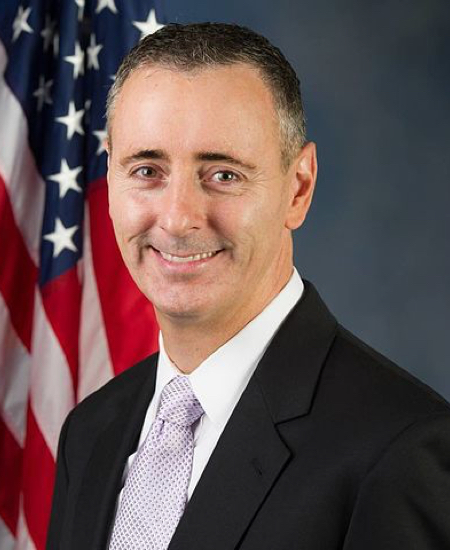
Rep. Brian K. Fitzpatrick
Sponsored bills
Maddy summaryHR 2974 amends the Supplemental Nutrition Assistance Program (SNAP) by adding a specific exclusion for income earned through certain employment and training programs. It directly affects SNAP households where members participate in programs like vocational rehabilitation (under the Rehabilitation Act of 1973), refugee employment initiatives (under immigration law), or other defined training programs. The key change removes the requirement to count income from allowances, earnings, or payments received in these specific programs when determining SNAP eligibility. This adjustment means participants in these programs will have that income excluded from their household's calculation, potentially increasing their SNAP benefits. The bill modifies existing SNAP rules without creating new programs or changing benefit levels.
Maddy summaryThe Women in Agriculture Act establishes a dedicated "Women Farmers and Ranchers Liaison" within the U.S. Department of Agriculture to directly support women farmers and ranchers. The Liaison will provide program information, assist with applications, advocate for women in Department interactions, and submit annual reports tracking funding for women-owned operations. The bill also adds a requirement to prioritize childcare solutions in loan and grant decisions and directs research into ergonomically designed farm equipment for women. These provisions aim to improve access to resources and opportunities for women in agriculture.
Maddy summaryHR 2536, the New Producer Economic Security Act, establishes a new program within the Farm Service Agency to help new and small-scale farmers, ranchers, and forest owners access land, capital, and markets. The program provides grants and capital support to eligible community organizations (like tribal governments, cooperatives, or local nonprofits) to directly assist "qualified beneficiaries" - defined as individuals new to farming, operating on rented land, with low income, or facing economic hardship. Key provisions include funding for land acquisition, down payment assistance, succession planning, technical support (including translation services), and conservation practices. The program aims to strengthen food system security by increasing land access and supporting long-term business viability for underserved agricultural producers.
Hot Foods Act of 2025 This bill expands the Supplemental Nutrition Assistance Program (SNAP) to permit the use of SNAP benefits to purchase hot foods or hot food products ready for immediate consumption.
Maddy summaryHR 2185, the Mink VIRUS Act, prohibits fur farming of mink in the U.S. beginning one year after enactment (Section 2(a)). It requires painless mink termination methods meeting federal euthanasia standards and AVMA guidelines (Section 2(b)), with civil penalties of up to $10,000 per violation. The bill establishes a USDA payment program (Section 3) to compensate fur farm owners for compliance costs and the market value of their mink operations (valued as of the day before enactment), subject to restrictions on fund use and permanent land easements banning future fur farming. The law directly affects mink fur farm owners and operators, ending commercial mink farming while providing financial transition support.
Maddy summaryHRES 337 is a symbolic House resolution honoring linemen for their critical role in maintaining power infrastructure and responding to emergencies. It recognizes them as first responders who work in dangerous conditions 24/7 to keep electricity flowing, supporting schools and businesses during storms. The resolution formally supports designating April 18, 2025, as "National Lineman Appreciation Day" to publicly acknowledge their contributions. As a non-binding resolution, it has no direct policy impact or effect on affected individuals.
Maddy summaryThe Advancing Water Reuse Act creates a 30% tax credit for businesses investing in qualifying water recycling systems. It directly affects industrial, manufacturing, data center, and food processing facilities that replace freshwater use with recycled water from municipal sources, as well as projects building municipal water recycling infrastructure to serve these sectors. The credit covers 30% of the cost for eligible equipment, such as new onsite recycling systems or municipal infrastructure upgrades. This policy is available for projects completed by December 31, 2032, with specific rules allowing businesses to claim the credit even if equipment is later transferred to water utilities.
Maddy summaryHR 2937, the PROTECT 911 Act, creates federal resources and grants to support the mental health of 911 operators (public safety telecommunicators). It requires the Secretary to develop evidence-based best practices for preventing and treating PTSD and related disorders among these workers, and to create educational materials for mental health professionals about their unique workplace stressors. The bill also authorizes grants for states and local emergency communications centers to establish or enhance evidence-based wellness programs, including peer-support initiatives, to address job-related mental health challenges. These programs aim to improve support for 911 operators who handle emergency calls in 911 centers.
Maddy summaryThis bill increases the federal tax credit for rehabilitating historic buildings. It raises the standard credit rate from 20% to 30% for qualifying small projects (with a $3.75 million expenditure cap) and further increases the cap to $5 million for projects in rural areas. The bill also allows taxpayers to transfer all or part of this credit to another taxpayer, creating a new market for the credit. These changes apply to properties placed in service after the bill's enactment date. The bill directly affects developers and owners of historic properties seeking tax incentives for rehabilitation projects.