

Ukrainian Adjustment Act of 2025 This bill provides a streamlined process for certain Ukrainian nationals (including accompanying spouse and children) who are living in the United States to receive lawful permanent resident status. Specifically, the bill permits Ukrainian nationals who have been paroled into the United States after February 20, 2014, to apply for and receive lawful permanent resident status. Additionally, the Department of Homeland Security (DHS) may waive grounds for inadmissibility (excluding certain crimes or security related grounds) for individuals who apply for status adjustment. DHS must establish vetting requirements (including an interview) for applicants that are equivalent to those under the United States Refugee Admissions Program. The bill also preserves eligibility for the status adjustment of certain battered spouses whose eligibility for such status stemmed from a marriage that has terminated. Finally, the bill requires DHS to issue guidance to implement these requirements and establishes a deadline for eligible individuals to apply for adjustment.
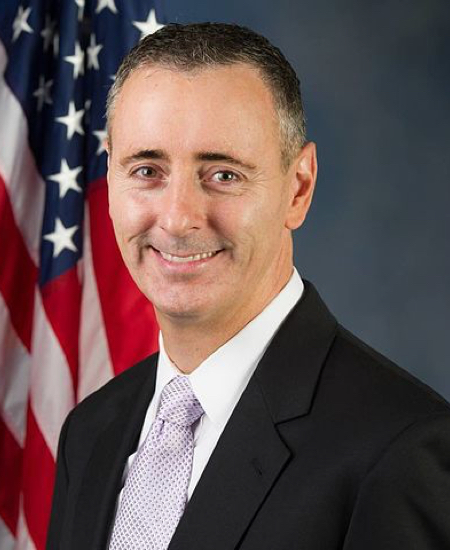
Rep. Brian K. Fitzpatrick
Sponsored bills
Maddy summaryThe SERVE Act (HR 3107) aims to improve military recruitment by increasing access for recruiters in high schools and expanding Junior Reserve Officers' Training Corps (JROTC) opportunities. It requires military recruiters to visit schools at least four times per academic year during peak hours in common areas (like lunch or athletic events), and creates "Cross-town" JROTC units allowing students at schools without their own program to join nearby units. The bill also establishes a two-year pilot program to recognize "HERO schools" (high schools with military enlistment rates above the state average) and gives priority consideration to graduates of these schools when applying to military service academies. These changes directly affect high school students in grades 9-12 and school districts without JROTC programs, focusing on practical access and recognition to support military recruitment efforts.
Maddy summaryThis bill prohibits U.S. federal executive agencies from renewing or entering contracts for specific consumer products containing PFOS or PFOA (types of harmful PFAS chemicals) after its effective date. Covered items include nonstick cookware, cooking utensils, and furniture/carpet treated with stain-resistant coatings. Agencies must prioritize purchasing PFAS-free alternatives when available and practical for these items. The law applies to all contracts entered into six months after enactment.
Maddy summaryHRES 359 is a symbolic House resolution supporting the designation of National Fentanyl Awareness Day in 2025. It aims to increase public awareness about the dangers of fake or counterfeit fentanyl pills, particularly their impact on families and young people. The resolution encourages existing law enforcement efforts to combat counterfeit pill distribution but does not create new laws or funding. It specifically highlights the rising threat of fentanyl-laced pills, which have contributed to over 51,000 fentanyl-related overdose deaths in 2024. This is a ceremonial resolution focused on awareness, not policy change.
Maddy summaryThis bill designates the POW/MIA Memorial and Museum under construction in Jacksonville, Florida, as the official "National POW/MIA Memorial and Museum." It requires the museum to submit a detailed report to Congress within 90 days, including a five-year budget, organizational structure, bylaws, and accreditation details. The designation may be withdrawn if the museum is not operational within five years of the bill's enactment or if the required report is late. The museum honors prisoners of war and those missing in action since World War II through educational exhibits and reflective spaces for the public.
Maddy summaryHR 3067, the Arctic Refuge Protection Act, repeals the existing oil and gas program for the Arctic National Wildlife Refuge (ANWR) and designates approximately 1.56 million acres of the refuge's Coastal Plain as wilderness. This directly affects federal management of the ANWR, halting potential oil drilling in the designated area. The bill requires the Secretary of the Interior to administer the newly designated wilderness area under the Wilderness Act, treating it as part of the existing wilderness within ANWR. The change prevents future oil and gas development on this specific portion of the refuge.
Maddy summaryThis bill directs the SelectUSA program (within the Commerce Department) to collaborate with state economic development organizations to attract foreign investment for U.S. semiconductor manufacturing, focusing on fabrication, advanced packaging, and materials/equipment. It requires SelectUSA to gather state input within 180 days on barriers and opportunities for foreign investment, and to submit a congressional report within two years detailing strategies to boost such investment. The bill does not authorize new funding but leverages existing resources to strengthen domestic semiconductor supply chains and reduce reliance on foreign production. It aims to secure critical supply chains by increasing private investment in vulnerable U.S. manufacturing segments, without creating new government programs.
Maddy summaryHRES 355 is a symbolic House resolution designating April 28-May 2, 2025, as "National Specialized Instructional Support Personnel Appreciation Week." It recognizes over 1 million school support staff - including counselors, psychologists, nurses, therapists, and social workers - who provide critical educational, emotional, and behavioral services to students. The resolution encourages policymakers to raise awareness of their role in creating safe school environments and improving student outcomes, but it does not create new laws or funding. As a procedural resolution, it has no legal effect beyond expressing support for these professionals.
Maddy summaryThe Ocean Regional Opportunity and Innovation Act of 2025 establishes regional "Ocean Innovation Clusters" in seven designated areas (including Great Lakes, Gulf of Mexico, and five National Marine Fisheries Service regions) to advance the Blue Economy. These clusters, led by nonprofit organizations and including businesses, academic institutions, Tribal groups, and government agencies, will develop physical "Ocean Innovation Centers" offering shared workspaces, workforce training, and support for sustainable industries like seafood, ocean energy, and coastal resilience. The bill authorizes $10 million annually in grants (2026-2030) to help clusters become self-sustaining, focusing on equitable growth, small business development, and cross-sector collaboration. It prioritizes projects serving underserved communities and enhancing economic opportunities across coastal regions.
Maddy summaryThis bill requires most private health insurance plans to cover diagnostic and supplemental breast exams with no out-of-pocket costs (like deductibles or copays) for enrolled patients. It specifically covers exams used to evaluate abnormalities found in screenings (diagnostic) or for high-risk screening without abnormalities (supplemental), based on medical guidelines. Plans can still require prior authorization for these exams, and state laws offering stronger protections remain in effect. The rule takes effect for plan years starting January 1, 2026.