

Maddy summaryHR 4979, the Tick Identification Pilot Program Act of 2025, allows the CDC to award grants to state health departments to create programs where residents can submit photos of ticks they encounter online. The programs must provide users with a tick species ID, disease risk estimate, and prevention advice within 72 hours, while tracking location, date, and environmental details of each encounter. States with high Lyme disease rates and strong implementation plans receive priority for funding. The initiative directly affects the public (especially in tick-prone areas) and state health agencies, focusing on improving early detection and public education through a centralized data system. The CDC will report annual data on program participation and outcomes to Congress from 2026-2029.
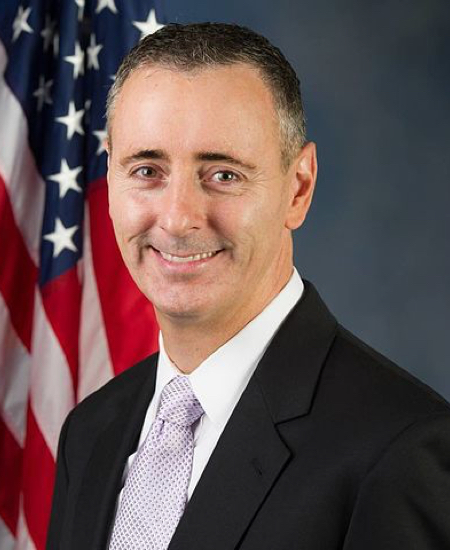
Rep. Brian K. Fitzpatrick
Sponsored bills
Maddy summaryThe BITE Act establishes a national system to prevent diseases spread by ticks, mosquitoes, and fleas. It requires the Health Secretary to create a system with six key parts: a public vector identification service, an AI-powered early warning system using weather and habitat data, insurance claims monitoring for early outbreak detection, emergency room symptom tracking, targeted public education campaigns, and a goal to reduce Lyme disease by 25% by 2035. This system integrates human, animal, and environmental data (One Health approach) and serves both civilians and military medical facilities. The bill directly affects public health agencies, healthcare providers, and communities in areas with vector-borne diseases. Its key mechanism is using real-time data from multiple sources to predict and prevent disease outbreaks before they spread widely.
Maddy summaryHR 4977, the Connected MOM Act, requires the U.S. Department of Health and Human Services (HHS) to study Medicaid coverage of remote health monitoring devices (like blood pressure cuffs and pulse oximeters) for pregnant and postpartum women. Within 18 months of enactment, HHS must report to Congress on current state practices, barriers to coverage, and how these affect maternal and child health outcomes. Six months after the report, HHS must update state Medicaid resources, such as telehealth toolkits, to align with the report's recommendations. The bill directly affects pregnant and postpartum women enrolled in state Medicaid programs by aiming to improve access to these monitoring tools. It does not change Medicaid rules immediately but sets a process for future policy adjustments based on the findings.
Maddy summaryThis bill creates a special postage stamp that allows the public to voluntarily contribute to Lyme disease research. All money from stamp sales will go directly to the National Institute of Allergy and Infectious Diseases (NIAID) at the NIH, with proceeds specifically designated for Lyme disease and tick-borne illness research. The funds cannot be used to offset other NIH research funding, and the stamp would be available for at least six years after the law takes effect. It directly affects the public (through voluntary purchases) and NIAID (as the recipient of dedicated research funding).
Maddy summaryHR 4961, the Public Utility Remediation and Enhancement for Water Act, creates a federal grant program to help municipal water systems address harmful chemicals like PFAS (perfluoroalkyl substances) in drinking water. The bill authorizes $200 million annually (2026-2028) to fund 75% of costs for planning, building, or upgrading treatment systems to prevent or treat these emerging contaminants. It directly affects publicly owned water treatment facilities by providing financial support to comply with federal water pollution standards for these chemicals. The program requires states to manage grants similarly to existing water fund programs, with non-federal funds covering the remaining 25% through local or private sources.
Maddy summaryThis bill creates a new tax credit for small businesses to support workforce training. It allows eligible small businesses to claim a credit equal to 50% of qualified wages paid to employees under 21 or enrolled in approved apprenticeships, community college programs, or career training related to the business, plus qualified workmen’s compensation expenses, capped at $10,000 per year. The credit applies to taxable years beginning after December 31, 2025, and is designed to directly benefit small businesses seeking to train young workers through structured educational programs. It does not change existing labor laws but provides a financial incentive to invest in employee development.
Maddy summaryThis bill requires employers with 50+ call center employees to notify the Labor Secretary 120 days before moving operations overseas or contracting such work abroad. It creates a public list of these employers, barring them from federal grants or loans for 5 years (with limited exceptions for national security or job loss). Businesses must disclose agent locations and AI use at the start of customer service calls, allowing consumers to request transfer to a U.S.-based human agent. The law applies to all major call center employers and takes effect one year after enactment.
Maddy summaryThe PUPP Act of 2025 creates a federal grant program to fund housing for unhoused people who have pets. It authorizes $5 million annually (2026-2030) for grants to local governments, nonprofits, or housing providers to build or retrofit properties that offer both human housing and pet-friendly accommodations. Key requirements include on-site veterinary care for pets (spaying, vaccinations, etc.), supportive services like mental health counseling for residents, and coordination with local animal care providers. This directly affects unhoused individuals with pets - often excluded from standard shelters - and the organizations managing these housing programs.
Maddy summaryHR 4945, the GO Ag Act, creates a $5 million grant program to fund new agricultural education programs in secondary schools. It provides competitive grants (max $100,000 per school) for schools to develop new programs focused on agriculture, including curriculum, equipment, and work-based learning. To qualify, schools must show programs are new, align with regional employer needs, and include sustainable funding beyond the grant. Grantees must track student progress (including special populations) and submit annual reports on program effectiveness through 2028.
Maddy summaryThis bill requires the federal government to assess and address cybersecurity risks from quantum computers that could break current encryption. It mandates a detailed report within one year (and annual updates) evaluating U.S. progress compared to other countries in developing quantum computers and adopting post-quantum cryptography, identifying vulnerable sectors (like finance or critical infrastructure), and creating a mitigation plan. The plan must facilitate government-private sector collaboration, information sharing, and technical assistance to help entities adopt security measures. The bill also directs the creation of guidelines to define "cryptographically-relevant quantum computers" and includes recommendations for implementing the plan through legislation or policy. This directly affects federal agencies, private companies, and public entities handling sensitive data.