

Maddy summaryHR 5529, the Fair Housing for Disabled Veterans Act, changes how veteran disability payments are treated when determining eligibility for low-income housing programs. Specifically, it amends the tax code to exclude disability compensation or pension payments (under 38 U.S.C. chapters 11 or 15) from income calculations for low-income housing tax credits and residential rental project bonds. This means disabled veterans applying for these housing assistance programs will not have their disability benefits counted as income, potentially making them eligible for more housing options they otherwise might have been disqualified from. The bill directly affects disabled veterans seeking affordable housing through these federally supported programs.
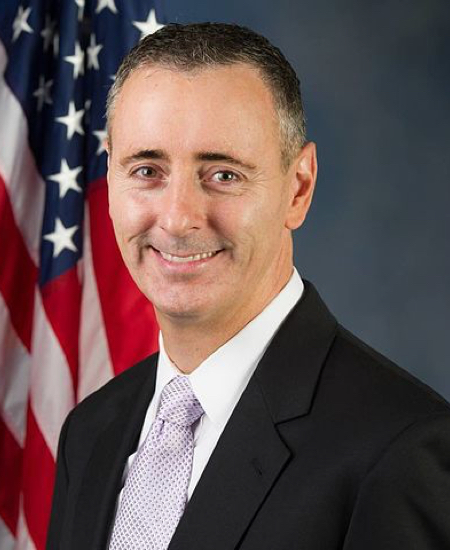
Rep. Brian K. Fitzpatrick
Sponsored bills
Maddy summaryHR 5520, the Portal for Appraisal Licensing Act of 2025, creates a central online portal for appraisers and appraisal management companies (AMCs) to submit and renew licenses, certifications, and registrations. The portal will connect state licensing agencies, handle background checks through the FBI, process fees, and store education records, while allowing states to maintain final authority over licensing decisions. It requires appraisers and AMCs to use the portal for applications, background checks, and payments, with states retaining control over their own licensing standards. The bill also establishes an advisory committee and allows user fees to cover portal costs, ensuring no additional burden on states.
Maddy summaryThe POJA Act of 2025 amends the Age Discrimination in Employment Act to explicitly prohibit age discrimination against job applicants, not just current employees. It directly affects job seekers aged 40 and older who face bias during hiring. The bill requires the Equal Employment Opportunity Commission to conduct a study within one year of enactment, counting age discrimination claims filed since 2015 (including closed cases), and issue a public report with prevention recommendations for employers. This study aims to address gaps in protecting applicants during the hiring process.
Maddy summaryThis bill creates a pathway to permanent residency for certain college graduates who entered the U.S. as children under specific nonimmigrant visa categories (excluding H-1B, L-1, etc.). To qualify, applicants must have been lawfully present for 10 years total (including 8 years as a dependent child), graduated from a U.S. college, and not be inadmissible. It also changes how "child status" is determined for immigration purposes - using specific dates instead of age to prevent "age-outs" for dependents of long-term visa holders - and preserves priority dates for family members. These changes apply to individuals who entered the U.S. before age 21 and maintained lawful status under qualifying visas.
Maddy summaryThe Child Rescue Act establishes a national working group within the Department of Justice to study and address the intersection of online child sexual abuse material (CSAM) and physical child sexual abuse. The Working Group will analyze data on offenders and victims, develop resource recommendations for law enforcement, and create victim-centric strategies to identify and rescue children affected by CSAM. Composed of federal, state, local, tribal law enforcement representatives, child protection experts, and academic researchers, the group must submit a comprehensive report within one year detailing findings and recommendations. This legislation directly affects law enforcement agencies, child protection services, and children who are victims of sexual abuse through both online exploitation and physical contact offenses. The Working Group's work aims to improve coordination and resource allocation for investigations that can rescue children from ongoing abuse.
Maddy summaryThis bill requires health plans and insurers to create a clear, timely process for patients or doctors to request exceptions when step therapy protocols (which force patients to try cheaper drugs first) might harm them. It mandates approval for exceptions in six specific cases, such as when prior treatments failed, delaying care risks severe harm, or the required drug causes adverse reactions. Plans must respond within 72 hours (24 hours for emergencies) and cover the requested drug for at least one year if approved. Additionally, health plans must report annual data on exception requests, approvals, denials, and reasons to the government for transparency.
Maddy summaryThe HEADACHE Act establishes a National Headache Disorders Initiative (NHDI) under the Department of Health and Human Services to address conditions like migraines, cluster headaches, and other headache disorders affecting vulnerable groups including children, pregnant women, and older adults. It creates an Advisory Council with patient advocates, healthcare providers, and federal agency representatives to guide research, improve diagnosis protocols, and reduce disparities in care. The bill requires federal agencies to share headache-related data and mandates an annual congressional report evaluating progress, disparities across demographics, and recommendations for better access to treatment and stigma reduction, with the initiative set to expire after five years.
Maddy summaryHR 5452, the Safe Streets for All Reauthorization and Improvement Act, modifies the existing Safe Streets and Roads for All program under the Infrastructure Investment and Jobs Act. It requires at least 20% of annual program funds starting in fiscal year 2024 to support projects focused on pedestrian and cyclist safety, and extends funding authorization with $5 billion allocated for fiscal years 2027 through 2031. The bill directly affects local governments and communities applying for grants to improve street safety infrastructure. Key changes include mandating specific funding allocations for walkable/bikeable projects and securing long-term financial commitments for the program. This is a procedural funding amendment, not a new policy initiative.
Maddy summaryHR 5455, the Aviation Funding Stability Act of 2025, ensures continued operation of the Federal Aviation Administration (FAA) during government funding gaps. If Congress fails to pass regular appropriations or a continuing resolution before the new fiscal year begins, the bill allows the FAA to use existing funds from the Airport and Airway Trust Fund to maintain essential programs and airport infrastructure at the previous year’s funding level. This prevents shutdowns for FAA operations like air traffic control, airport grants, and safety programs for up to 30 days or until regular funding is enacted. The bill directly affects all FAA programs funded through the trust fund, including airport improvements and aviation safety initiatives, without creating new policies or altering funding levels.
Maddy summaryHRES 744 is a non-binding House resolution supporting the designation of September 21-27, 2025, as "Gold Star Families Remembrance Week." It honors families who lost members in military service (Gold Star Families) and families of veterans, recognizing their sacrifices. The resolution encourages Americans to observe the week through community service and by celebrating the lives of those who died defending the U.S. It does not create new laws or policies but formally recognizes these families annually. This is a commemorative measure, not a legislative change.