

Maddy summaryThis bill requires the Director of National Intelligence to submit a report within 180 days of enactment detailing China's purchases of Iranian oil and financial transactions supporting Iran's ballistic missile program since 2020, including how China uses shell companies and transshipment points to avoid sanctions. The report must cover assessments of these activities and be sent to Congress and the Treasury Department. Six months after the report is submitted, the Treasury Secretary must determine whether China is engaging in sanctionable activities and report that finding to Congress. The bill directly affects U.S. government agencies (National Intelligence Director, Treasury, and Congress) and targets China's circumvention of sanctions on Iran.
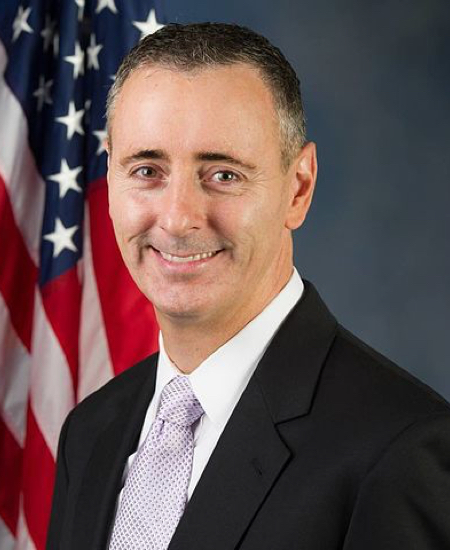
Rep. Brian K. Fitzpatrick
Sponsored bills
Maddy summaryHR 6532, the PATHS to Tutor Act of 2025, creates a federal grant program to fund high-quality tutoring in "hard-to-staff" and "high-need" schools - those with high teacher turnover or significant student disadvantage. The program requires local consortia (combining schools, educator programs, and community partners) to provide tutoring in small groups (max 1:4), aligned with school curriculum, with trained tutors (including students in education programs or recent graduates) who receive fair compensation. It authorizes $500 million, mandating 85% of funds directly support students (via stipends, materials, transportation) while prohibiting use to replace teachers. The bill also coordinates with the Corporation for National and Community Service to approve tutor positions and offer educational awards upon completion.
Maddy summaryThe Bipartisan Health Insurance Affordability Act extends and modifies premium tax credit rules to make health insurance more affordable for people with household incomes up to 700% of the poverty line, with specific provisions for different income tiers. The bill requires pharmacy benefit managers to pass through 100% of rebates to health plans, establishes transparency requirements for drug pricing, and creates mechanisms to prevent fraud in health insurance exchanges. It also extends the annual open enrollment period for 2026 and allows qualified Exchange enrollees to establish health savings accounts, with options to prepay annual premiums or direct part of their premium tax credit into a health savings account.
Maddy summaryThis bill recognizes the service of individuals who were members of the U.S. Cadet Nurse Corps between July 1, 1943, and December 31, 1948, by treating that service as active duty for specific burial-related benefits. It requires the Secretary of Defense to issue an honorable discharge to eligible individuals within one year of the bill's enactment, designating their discharge date. The bill allows for commemorative items like service medals or plaques but clarifies that recipients will not receive most VA benefits (only headstones/markers under specific chapters of law). It directly affects living cadet nurses from that era and their families for burial purposes.
Maddy summaryThis bill directs the American Battle Monuments Commission to correct historical errors by identifying Jewish World War I and II veterans buried overseas under incorrect Christian markers (Latin crosses) and replacing them with appropriate markers. It establishes a 10-year program to contact families of affected veterans, with the Commission funding the effort at $500,000 annually through nonprofit contracts. The program specifically targets veterans buried in foreign U.S. military cemeteries with markers indicating non-Jewish faith, addressing a documented mistake affecting approximately 900 Jewish servicemembers. This directly affects Jewish veterans' families by honoring their heritage and correcting past burial inaccuracies.
Maddy summaryHR 3309, the Autonomy for All Disabled Veterans Act, increases financial assistance for disabled veterans needing home modifications. It raises the maximum benefit amount for home improvements from $6,800 to $10,000 and for structural alterations from $2,000 to $10,000 under Section 1717(a) of Title 38, U.S. Code. The bill also establishes an automatic annual inflation adjustment based on construction cost index changes, starting each fiscal year. These changes directly affect disabled veterans who qualify for home health services through the VA, applying to those who first apply for benefits after the bill's enactment date.
Maddy summaryHRES 933 is a non-binding House resolution expressing support for victim service providers who assist survivors of domestic violence, dating violence, sexual assault, and stalking. It acknowledges these providers - such as shelters, nonprofits, and community organizations - help survivors navigate legal, medical, and emotional challenges, including safety planning and connecting to resources. The resolution highlights their critical but often underfunded role and calls for meaningful investment to sustain their lifesaving work. (Note: As a resolution, it does not create new laws or funding but formally recognizes the need for support.)
Maddy summaryHR 6490 establishes a pilot program (the "Push-Text Initiative") for members of the Marine Corps stationed at installations in Okinawa, Japan, and their adult dependents. The program automatically enrolls eligible participants using their provided contact information (with an opt-out option) to send text messages containing specific, timely information. Key topics covered include military spouse employment resources, childcare services, TRICARE benefits, and updates on DOD policies affecting service members and dependents. The Secretary of Defense must report on the program's implementation, participation, costs, and potential for Department-wide expansion by October 2027.
Maddy summaryThe STOP Scams Against Seniors Act directs federal Byrne funds to create elder justice task forces focused on preventing and investigating financial scams targeting seniors aged 60 and older. These task forces must coordinate with local law enforcement, prosecutors, and federal agencies like the FBI and FTC to address fraud. Grantees must report detailed data on cases opened, resolved, victims supported, scam types, and signs of organized crime, with the Attorney General submitting an annual summary to Congress. The bill directly affects seniors vulnerable to financial exploitation and the agencies implementing these task forces.
Maddy summaryHR 6449, the "DO NOT Call Act," amends the Telephone Consumer Protection Act of 1993 to strengthen penalties for illegal robocalls. It increases criminal penalties for willful violations to up to one year in prison (or three years for aggravated offenses like repeated high-volume calls or calls intended to support felonies), and raises fines for inaccurate caller identification from $10,000 to $20,000 per violation. The bill directly affects businesses and entities making unsolicited calls without consent, including those using auto-dialers or prerecorded messages. Key provisions define "calls" broadly to include unsolicited texts sent via auto-dialers without prior permission.