

Equity in Neuroscience and Alzheimer's Clinical Trials Act of 2021 or the ENACT Act of 2021 This bill sets out activities and requirements to increase the participation of underrepresented populations in research and clinical trials for Alzheimer's disease and related dementias. Specifically, the National Institute on Aging (NIA) must establish and provide technical assistance to Alzheimer's research centers located in areas with higher concentrations of minority groups. These centers must establish diagnostic and treatment clinics designed to serve minority, rural, and other underserved populations; operate clinical trials; and carry out public outreach to encourage members of minority populations to participate in clinical trials and research. Additionally, the NIA must disseminate information to members of minority populations about participating in clinical trials and take other actions to enhance diversity with respect to the Alzheimer's research that it conducts or supports. The bill also directs the NIA to increase diversity among Alzheimer's researchers by encouraging the participation of individuals who are from groups that are underrepresented in clinical, behavioral, and social sciences.
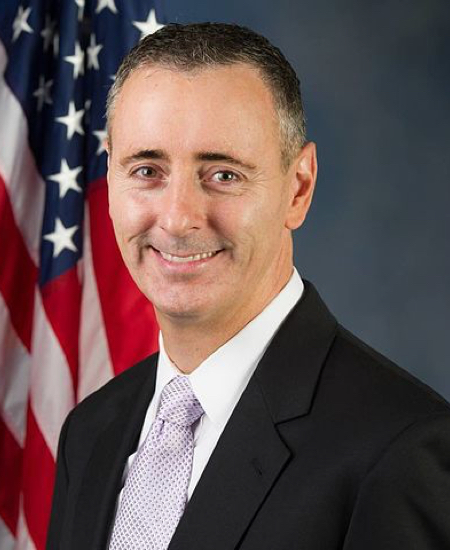
Rep. Brian K. Fitzpatrick
Sponsored bills
This resolution expresses support for the designation of National Foster Care Month.
Save Hotel Jobs Act This bill requires the Department of the Treasury to award grants to hotel owners and operators to assist with payroll costs. Applicants for a grant must provide Treasury with certain assurances, including that (1) the hotel, if in operation, experienced at least a 40% decline in revenue during a three-month period in calendar year 2020 as compared to the corresponding period in 2019; and (2) the hotel owner or operator has a policy to offer employees who have been laid off during the COVID-19 public health emergency any same or similar positions that become available as a result of receiving a grant. All grant funds must be expended during the 270-day period beginning on the date the funds are disbursed. If the hotel owner or operator receives loans through the Paycheck Protection Program, the grant must be reduced by the amount of such loans that are forgiven under the program, including loans received on or before enactment of this bill. For federal tax purposes, the grants are not included as part of the gross income of the hotel owner or operator. The bill also establishes a tax credit equal to 50% of the expenses a hotel owner or operator incurs for qualified personal protective equipment (up to a maximum of $25,000).
Servicemember Parental Leave Equity Act This bill modifies Department of Defense parental leave provisions for members of the Armed Forces. Specifically, the bill increases parental leave for primary caregivers to 18 weeks (currently 12) following the birth of a child and to 12 weeks (currently 6) following the adoption of a child. The bill increases parental leave for a secondary caregiver from 21 days to 12 weeks in connection with the birth or adoption of a child. Primary or secondary caregivers of a long-term foster child are authorized to take up to 12 weeks of leave in connection with such placement. Parental leave for a primary or secondary caregiver for a birth, adoption, or foster child placement may be taken in more than one increment. For primary caregivers, the leave must be utilized within one year of the event. The bill authorizes up to 12 weeks of leave to certain service members who would have been secondary caregivers but for a miscarriage, stillbirth, or infant death. The following activities required of an active-duty member within a 12-month postpartum period must have the approval of a health care provider and be at the election of the member or in the interest of national security: (1) an order of temporary duty overnight travel or to participate in physically demanding field training exercises, (2) meeting of body composition standards, or (3) passing a physical fitness test. The bill also reduces the service commitment required for participation in the Career Intermission Program.
Personal Health Investment Today Act of 2021 or the PHIT Act of 2021 This bill allows a medical care tax deduction for up to $1,000 ($2,000 for a joint return or a head of household) of qualified sports and fitness expenses per year. The bill defines qualified sports and fitness expenses as amounts paid exclusively for participating in a physical activity, including (1) fitness facility memberships, (2) physical exercise or activity programs, or (3) equipment for a physical exercise or activity program.
This resolution supports the designation, and the goals and ideals, of National Bladder Cancer Awareness Month.
Adoption Tax Credit Refundability Act of 2021 This bill makes the tax credit for adoption expenses refundable.
Convening Operations Assistance for Childcare Heroes Act or the COACH Act This bill requires the Small Business Administration to maintain a resource guide for small businesses operating as child care providers that includes guidance on topics such as operations, finances, and compliance with relevant laws.
Putting Our First Responders First Act of 2021 This bill modifies the requirements for calculating taxable income to allow first responders to exclude from gross income certain service-connected disability payments received as part of a pension or annuity after reaching the age of retirement. The bill applies to law enforcement officers, employees in fire protection activities, and individuals who provide out-of-hospital emergency medical care.
This bill modifies the definition of water heater , otherwise revises energy conservation standards, and sets forth labeling requirements for water heaters.