

Maddy summaryHR 7100 establishes a Department of Justice Task Force on Anti-Sikh Hate and Discrimination to address systemic bias against Sikhs. The Task Force must draft a formal definition of anti-Sikh hate for DOJ use, develop educational programs for law enforcement and schools, and produce annual reports on hate crimes and trends. It requires quarterly collaboration with Sikh organizations and translation of materials into Punjabi. The bill directly affects Sikhs in the U.S. (who face disproportionate targeting as noted in FBI data) and mandates federal agencies to improve hate crime data collection and response. This is a policy-focused measure to standardize definitions, enhance reporting, and support community safety through DOJ action.
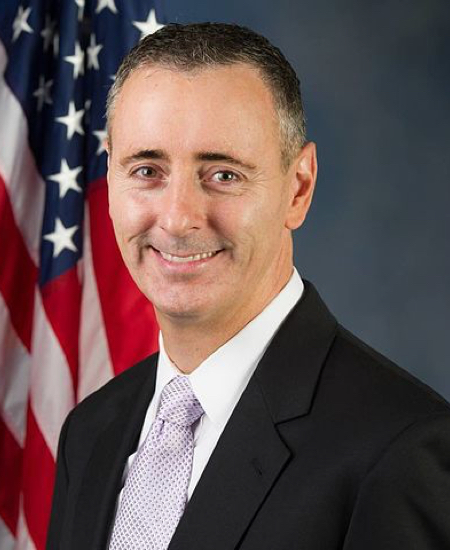
Rep. Brian K. Fitzpatrick
Sponsored bills
Maddy summaryHR 7094 prohibits U.S. exports of petroleum equipment and services to Russia, directly affecting U.S. companies and foreign subsidiaries that supply oil/gas industry tools, software, engineering services, or related technologies to Russian entities. The bill mandates asset freezes and visa bans for violators, including foreign persons involved in such transactions, while exempting medical isotopes (like Carbon-13) and humanitarian aid for food, medicine, or agricultural commodities. Key provisions require the President to block transactions involving U.S. persons or entities, extend sanctions to parent companies for subsidiary violations, and implement regulations within 180 days. This targets energy sector support for Russia without disrupting medical, agricultural, or aid-related operations.
Maddy summaryHR 7118, the Genomic Answers for Children’s Health Act of 2026, requires Medicaid to cover whole genome and whole exome sequencing for Medicaid-eligible children with specific medical needs, including genetic disorders, rare diseases, congenital anomalies, developmental delays, or intellectual disabilities. It mandates that this testing be ordered as a first-tier test by a physician and paid separately, not bundled with other services. The bill also requires the Department of Health and Human Services to convene stakeholders, conduct outreach to raise awareness, and publish a report within two years detailing state payment rates and usage data. Additionally, it directs a Comptroller General report assessing implementation barriers, workforce challenges, and payment alignment with market costs. The changes take effect January 1, 2027.
Maddy summaryHR 6636, "To advance sensible priorities," primarily establishes a carbon tax on greenhouse gas emissions from fossil fuels, starting at $35 per metric ton of carbon dioxide equivalent in 2027 with annual increases tied to inflation. The tax revenue would fund infrastructure projects, climate adaptation programs, and worker assistance programs, while border tax adjustments would apply to imports and exports of greenhouse gas-intensive products. The bill directly affects fossil fuel producers, manufacturers, and importers of greenhouse gas-intensive goods through this tax mechanism. It also includes additional titles addressing cancer research funding, PFAS contamination response, sanctions on Russia, school safety improvements, voting reforms, and veteran benefits.
Maddy summaryThis bill establishes a carbon tax on fossil fuel emissions starting at $35 per metric ton in 2027, with annual increases tied to inflation. It creates the Rebuilding Infrastructure and Solutions for the Environment (RISE) Trust Fund to distribute tax revenues toward infrastructure projects, climate adaptation, energy sector worker retraining, and carbon capture research. The bill also establishes a National Climate Commission to set emissions reduction goals and assess federal climate policies, while implementing border adjustments to prevent carbon leakage for imported goods. Additional sections address cancer research funding, PFAS contamination at defense sites, voting rights for unaffiliated voters, and restrictions on financial transactions for House members.
Maddy summaryThe Find It Early Act requires most health insurance plans, Medicare, Medicaid, TRICARE, and VA benefits to cover certain breast cancer screenings without cost-sharing for specific at-risk groups. It affects individuals at increased breast cancer risk (as determined by medical guidelines), those with dense breast tissue (as defined by the American College of Radiology), and others requiring screening due to factors like age, race, ethnicity, or family history. The bill mandates coverage for various screening methods including mammograms, ultrasounds, MRI, and other technologies at frequencies recommended by the National Comprehensive Cancer Network. This requirement takes effect for plan years beginning January 1, 2026, removing financial barriers to early detection.
Maddy summaryThis bill requires the National Center for Science and Engineering Statistics (NCSES) to create and update a plan for collecting and analyzing data about the skilled technical workforce. Specifically, it amends existing law to mandate that NCSES develop this data collection plan within one year of the bill's enactment, with updates required biennially thereafter. The plan must focus on gathering data through surveys specifically about the skilled technical workforce, replacing previous requirements for general workforce assessments. This change directly affects how federal data on technical workforce needs is systematically collected and analyzed.
Maddy summaryThe REAADI for Disasters Act aims to improve inclusion of individuals with disabilities and older adults in all phases of disaster management. It requires accessible communication (including American Sign Language, captions, and plain language), accessible shelters, and ensures these individuals are included in planning and decision-making processes. The bill establishes a Disaster Human Services Emergency Fund to rapidly respond to human services needs during disasters, and creates training centers to provide disability-inclusive emergency management expertise. It mandates compliance with disability laws and requires centers for independent living to be involved in disaster planning and response.
Maddy summaryThis symbolic House resolution expresses U.S. congressional support for Iranian protesters demanding democracy and human rights. It condemns the Iranian regime's violent suppression of protests, including killings, mass arrests, and internet restrictions, while urging the regime to release political prisoners and restore communication access. The resolution reaffirms the Iranian people's right to self-determination through free elections and echoes a 2023 resolution (HCR 7) that similarly praised protesters. As a non-binding expression of support, it does not impose new policies or alter U.S. government actions.
Maddy summaryThis bill would increase the base pay for Federal Bureau of Prisons correctional officers by 35 percent, replacing their current base rate for all pay calculations (including retirement and locality adjustments). It applies to officers whose duties involve inmate custody, control, or direct custodial contact, including certain supervisory staff and lower-grade Bureau of Prisons employees with similar duties. The pay increase is capped at the Executive Schedule level V rate and would expire after five years unless a Department of Justice Inspector General review finds progress in reducing non-custodial staff use for custodial duties and excessive overtime. The review, required 180 days before expiration, would assess impacts on recruitment, retention, and institutional safety.