

Vanessa Guillén Military Justice Improvement and Increasing Prevention Act This bill modifies the process and policy related to the disposition of charges and convening of courts-martial for certain sexual assault cases and other specified offenses under the Uniform Code of Military Justice (UCMJ). Among other elements, the bill provides that the determinations on the preferral, disposition, and referral of charges for specified offenses under the UCMJ must be made by a commissioned officer of the Armed Forces who is designated as a court-martial convening authority (in grade O-6 or higher) and who is available for detail as trial counsel, has significant trial experience, and is outside the chain of command of the member subject to the charges.
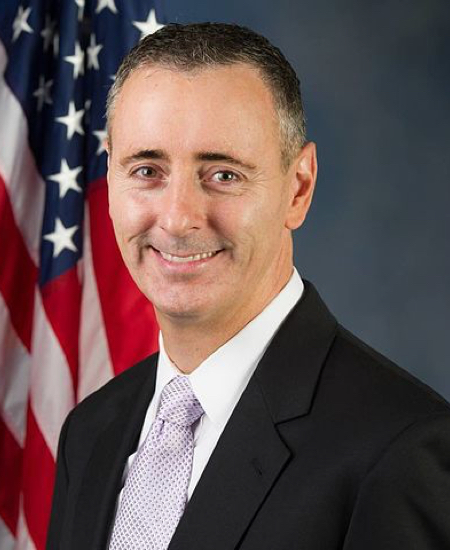
Rep. Brian K. Fitzpatrick
Sponsored bills
Chronic Kidney Disease Improvement in Research and Treatment Act of 2021 This bill modifies provisions relating to Medicare coverage of treatments for chronic kidney disease. Specifically, the bill expands the Medicare annual wellness visit to include chronic kidney disease screening and allows certain Medicare beneficiaries who have End Stage Renal Disease (ESRD) to enroll in Medicare supplemental policies. It also (1) provides for alternative payment methodologies for certain new drugs, biologics, and devices that are renal dialysis services; (2) revises quality measures; (3) establishes an incentive payment methodology; and (4) increases access to kidney disease education services. The bill also extends the coordination period (from 30 months to 42 months) during which private health insurers may serve as the primary payers for Medicare beneficiaries with ESRD.
Foreign Gain-of-Function Research Prevention Act of 2021 This bill prohibits the use of federal funds to conduct or support gain-of-function research involving potential pandemic pathogens by China, Russia, Iran, North Korea, or other foreign adversaries. Gain-of-function research is any research that is anticipated to confer an attribute on a pathogen to enhance its pathogenicity or transmissibility in mammals. If the Department of State finds that an entity has used funds for prohibited research, the entity may not receive any federal funding for a period of five years.
Preventing Crimes Against Veterans Act of 2021 This bill establishes a new criminal offense for knowingly executing, or attempting to execute, a scheme to defraud an individual of veterans' benefits, or in connection with obtaining veteran's benefits for an individual. A violator is subject to criminal penalties—a fine, a prison term of up to five years, or both.
National Adoption and Foster Care Home Study Act This bill requires The Department of Health and Human Services to establish a methodology for researched-based home study and to award grants for demonstration projects for states to adopt such methodology in the evaluation of prospective foster and adoptive parents. Such methodology must incorporate specified data-collection tools including, among others, (1) uniform, closed-ended questions; (2) a rating system to report findings; (3) a guidance document for practitioners; and (4) ongoing training for home-study personnel.
Presumptive Benefits for War Fighters Exposed to Burn Pits and Other Toxins Act of 2021 This bill establishes a presumption of service-connection for specified diseases associated with exposure to burn pits (an area used for burning solid waste in open air without equipment) and other toxins by veterans who were awarded specified medals on or after August 2, 1990. Under a presumption of service-connection, specific conditions diagnosed in certain veterans are presumed to have been caused by the circumstances of their military service. Health care benefits and disability compensation may then be awarded. Under the bill, if the Department of Veterans Affairs (VA) receives a written petition to add a disease to the list, the VA must request a determination by the National Academies of Sciences, Engineering, and Medicine with respect to whether there is a positive association between the exposure of humans to a covered toxin and the occurrence of the disease in humans. The bill makes disability or death of certain employees from specified diseases compensable as a work injury. Specifically, such employees are those who were employees of the Department of State, the Department of Defense, or an element of the intelligence community on or after August 2, 1990, and carried out job responsibilities for at least 30 days during a contingency operation.
Keeping Our Promises Act This bill expands the list of diseases that are provided a presumption of service-connection for veterans who served in the Republic of Vietnam between January 9, 1962, and May 7, 1975. The bill extends through September 30, 2030, the requirement for the Department of Veterans Affairs (VA) to make determinations and submissions related to the connection between herbicide exposure and occurrence of disease. Additionally, the VA is prohibited from taking the costs of compensation into account when determining the association between exposure to an herbicide agent and occurrence of a disease. The bill requires the VA to determine within 120 days (currently 60) whether a presumption of service-connection is warranted for diseases covered by a National Academy of Sciences report.
This bill requires the Department of Veterans Affairs to ensure that, if it creates a presumption of service-connection between the occurrence of a disease and exposure to an herbicide agent while serving in the Armed Forces between January 9, 1962, and June 30, 1976, at a military base in Thailand, such presumption must also apply to exposure at any military base in Thailand, regardless of where on the base the veteran was located or what military job specialty the veteran performed.
Water Quality Protection and Job Creation Act of 2021 This bill addresses water infrastructure and the discharge of pollution (e.g., wastewater or stormwater) into waters of the United States, including by reauthorizing through FY2026 and revising the Clean Water State Revolving Fund (SRF) program. The clean water SRF program provides communities low-cost financing for water quality infrastructure projects.
Zero-Emission Nuclear Power Production Credit Act of 2021 This bill allows a new business-related tax credit through 2030 for the production of electricity from zero-emission nuclear power. It also allows taxpayers to elect direct payments of such credit and requires a recapture of credit amounts for contractors who fail to pay their employees the prevailing wage rate. The bill requires the Government Accountability Office to report on the effectiveness of the credit in ensuring grid reliability and on ratepayer savings. Contractors must ensure that at least 15% of their workforce is composed of qualified apprentices unless there is a lack of availability of qualified apprentices in the applicable geographic area.