

Cancer Drug Parity Act of 20 21 This bill requires group health plans that cover anticancer medications administered by a health care provider to provide no less favorable cost sharing for patient-administered anticancer medications. This requirement applies to medications that are (1) approved by the Food and Drug Administration; (2) medically necessary for the cancer treatment; and (3) clinically appropriate in terms of type, frequency, extent site, and duration. To comply with this requirement, plans may not, with respect to anticancer medications (1) change or replace benefits to increase out-of-pocket costs, (2) reclassify benefits to increase costs, or (3) apply more restrictive limitations to orally administered medications than to intravenously administered or injected medications.
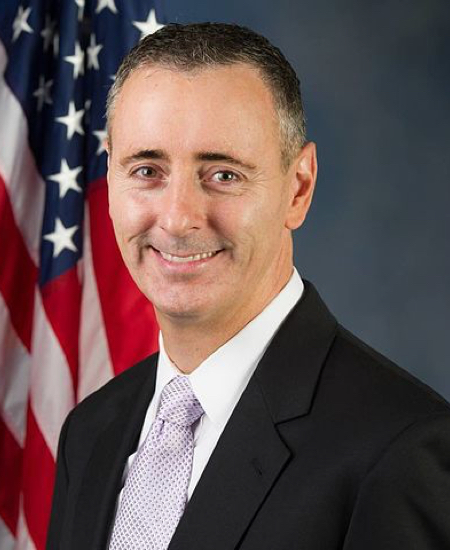
Rep. Brian K. Fitzpatrick
Sponsored bills
Safe Schools Improvement Act of 2021 This bill requires states to direct their local educational agencies (LEAs) to establish policies that prevent and prohibit bullying and harassment of elementary and secondary school students. In particular, these policies must prohibit bullying and harassment based on race, color, national origin, sex, sexual orientation, gender identity, disability, or religion. Further, LEAs must provide (1) students, parents, and educational professionals with annual notice of the conduct prohibited in their disciplinary policies; (2) students and parents with grievance procedures that target such conduct; and (3) the public with annual data on the incidence and frequency of that conduct at the school and LEA level. The Department of Education must conduct and report on an independent biennial evaluation of programs and policies to combat bullying and harassment in elementary and secondary schools. The National Center for Education Statistics must collect state data to determine the incidence and frequency of the conduct prohibited by LEA disciplinary policies.
Providing Resources and Occupational Training for Emotional Crisis and Trauma in 911 Act or the PROTECT 911 Act This bill requires reporting on, and authorizes a grant program to address, suicide and other behavioral health issues among 9-1-1 operators and other public safety personnel who receive and communicate requests for emergency assistance. Specifically, the Centers for Disease Control and Prevention must develop a reporting system to collect data on the suicide rate among and identify best practices to reduce suicides within that profession. In addition, the bill establishes within the Department of Homeland Security grants for emergency communications centers and relevant nonprofits to raise awareness of, prevent, and mitigate job-related mental health issues.
Excellence in Mental Health and Addiction Treatment Act of 2021 This bill increases the number of states that may participate in two-year Medicaid demonstration programs that improve access to community mental health services. It also provides for additional grants to certified community behavioral health clinics.
Crisis Care Enhancement Act This bill requires states to support evidence-based crisis care services, such as crisis call centers, through the Community Mental Health Services Block Grant (MHBG). In addition, for each year in which the appropriations for that grant exceed a specified amount, states must expend a certain percentage of their MHBG allotment on crisis care services. Additionally, the Substance Abuse and Mental Health Services Administration may permit states and territories to use MHBG funding on crisis care services for individuals who are not part of the grant's target population. Currently, the MHBG targets adults with serious mental illnesses and children with serious emotional disturbances.
Foreign Service Families Act of 2021 This bill increases access to career and educational opportunities for eligible family members of foreign service employees. Specifically, the Department of State must use additional hiring preferences and apply appropriate hiring standards to eligible family members seeking employment in certain civil service positions overseas. Additionally, the State Department may take other steps to improve job portability and otherwise support employment of eligible family members who work in the federal civil service or private sector jobs. The State Department must also report on the implementation of the Foreign Service Family Reserve Corps, a program that expedites hiring and onboarding processes for family members who are eligible for appointment to positions overseas. Furthermore, each federal agency must include in its telework policy the circumstances under which an employee may temporarily work from an approved location overseas. The bill also makes foreign service employees (or their spouses and dependent children) who are domiciled or assigned to a duty station in a given state eligible for in-state tuition at public institutions of higher education in that state. Such individuals retain their eligibility for in-state tuition provided they maintain continuous enrollment even if their domicile or duty station changes.
Safe Schools Improvement Act of 2021 This bill requires states to direct their local educational agencies (LEAs) to establish policies that prevent and prohibit bullying and harassment of elementary and secondary school students. In particular, these policies must prohibit bullying and harassment based on race, color, national origin, sex, sexual orientation, gender identity, disability, or religion. Further, LEAs must provide (1) students, parents, and educational professionals with annual notice of the conduct prohibited in their disciplinary policies; (2) students and parents with grievance procedures that target such conduct; and (3) the public with annual data on the incidence and frequency of that conduct at the school and LEA level. The Department of Education must conduct and report on an independent biennial evaluation of programs and policies to combat bullying and harassment in elementary and secondary schools. The National Center for Education Statistics must collect state data to determine the incidence and frequency of the conduct prohibited by LEA disciplinary policies.
COVID-19 and Pandemic Response Centers of Excellence Act This bill establishes and provides funding for the COVID-19 and Pandemic Response Centers of Excellence Program Fund. The Department of Health and Human Services (HHS) must use the funds to set up at least 10 centers of excellence at academic medical centers to address issues associated with COVID-19 and future pandemic preparedness and response efforts. In addition, HHS must establish an advisory committee comprised of representatives from relevant federal agencies, each center of excellence, and national organizations that work with populations disproportionately impacted by COVID-19 and other health disparities. The committee must facilitate collaboration, information-sharing, and dissemination of best practices relating to COVID-19 and future pandemic responses.
Animal Welfare Enforcement Improvement Act This bill revises the licensing process of the Department of Agriculture (USDA) for animal dealers and exhibitors to expand USDA's oversight and enforcement of animal welfare requirements. The bill also authorizes citizen suits to enforce the Animal Welfare Act. Dealers and exhibitors must apply to USDA for licenses or renewal licenses each year. In order to obtain the licenses or renewals, dealers and exhibitors must meet certain standards for the humane treatment of animals and pass inspections as specified by this bill. USDA may not issue or renew such licenses if the dealers or exhibitors have violated laws relating to animals or if the issuance of the licenses would facilitate the circumvention of state or local laws that prohibit the private ownership of certain animals. Further, USDA must suspend the licenses of dealers or exhibitors whose violations present a risk to animal welfare. USDA must revoke the licenses if the violations persist or if the licensees commit multiple violations. Dealers and exhibitors with suspended or revoked licenses may not be (1) granted another license, (2) granted another license through another person or entity, or (3) employed by another licensee to work with animals during the period of the suspension or revocation.
Pet Safety and Protection Act of 2021 This bill revises requirements concerning the sources of dogs and cats used by research facilities. Specifically, the bill revises the list of permissible sources of dogs and cats used by research facilities to include dogs and cats obtained (1) from a licensed dealer, (2) from a publicly owned and operated pound or shelter that meets specified requirements, (3) by donation from a person who bred and raised the dog or cat or owned it for not less than one year, or (4) from a research facility licensed by the Department of Agriculture. The requirements pertaining to sources apply to dogs and cats obtained through sales, donations, or offers. Monetary penalties are established for violations.