Cancer Care Planning and Communications Act of 2021 This bill provides for Medicare coverage and payment of cancer care planning and coordination services for individuals who are diagnosed with or treated for cancer, including the development of treatment plans, follow-up care, and any necessary revisions.
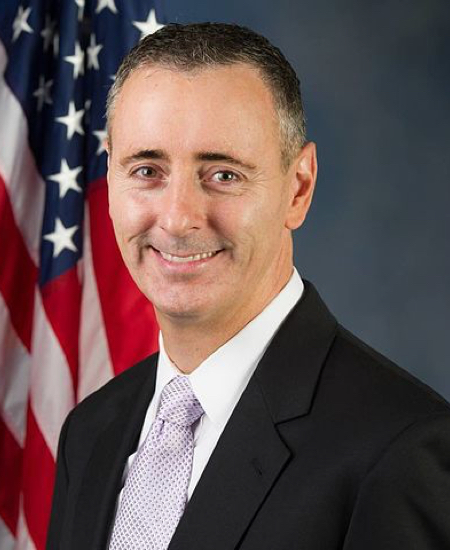
Rep. Brian K. Fitzpatrick
Sponsored bills
This bill reauthorizes through FY2022 and otherwise revises the Centers for Disease Control and Prevention (CDC) national awareness campaign regarding gynecologic cancers. The CDC must target specified populations of women at higher risk for gynecologic cancers in the campaign. Additionally, the CDC may establish a grant program to evaluate different strategies to increase knowledge and awareness of gynecologic cancers among women and health care providers. In awarding these grants, the CDC must give preference to (1) grantees with expertise in gynecologic cancer education or treatment or expertise in working with groups of women at increased risk of such cancers; and (2) projects that will establish links between health care providers, hospitals, insurance companies, and state health departments.
Technical Reset to Advance the Instruction of Nurses Act or the TRAIN Act This bill modifies the methodology and application of Medicare Advantage nursing and allied health education payments for hospitals. Specifically, for 2010-2019, the bill eliminates the annual cap on total payments and excludes any resulting increase from factoring into calculations for graduate medical education payments for such hospitals. (The Centers for Medicare & Medicaid Services recently issued guidance providing for the recalculation and correction of certain payments to account for the annual payment cap.)
Vet Center Support Act This bill requires the Department of Veterans Affairs (VA) to report on the mental health care furnished by the VA to veterans in states and territories of the United States that have a ratio of one Vet Center per 100,000 or more veterans.
Veterans Preventive Health Coverage Fairness Act This bill eliminates veterans' copayments for medication, hospital care, and medical services related to preventive health services provided by the Department of Veterans Affairs. The bill expands the definition of preventive health services to include (1) evidence-based items or services that have an A or B rating in the recommendations of the United States Preventive Services Task Force; (2) immunizations that have a recommendation from the Advisory Committee on Immunization Practices of the Centers for Disease Control and Prevention with respect to the individual involved; and (3) with respect to women, the preventive care and screenings provided for in the Health Resources and Services Administration Preventive Services Guidelines in effect as of January 1, 2017.
This bill requires the Department of Veterans Affairs (VA), the Department of Agriculture (USDA), and the Department of the Interior to jointly establish a pilot program to employ veterans in positions that relate to the conservation and resource management activities of USDA and Interior. The VA, USDA, Interior, and the Department of Defense (DOD) are authorized to enter into a partnership to include the pilot program as part of the Skillbridge program, which is a DOD program to provide training to members who are transitioning out of service in the Armed Forces. The bill also requires the VA to establish guidelines containing best practices for other federal agencies that carry out programs to employ veterans who are transitioning from service in the Armed Forces.
PFAS Registry Act of 2021 This bill directs the Department of Veterans Affairs (VA) to establish a registry for current or past members of the Armed Forces who may have been exposed to per- and polyfluoroalkyl substances due to the environmental release of aqueous film-forming foam at a military installation or other Department of Defense (DOD) location. Additionally, the VA must consult with DOD and the Environmental Protection Agency to make recommendations for additional chemicals that should be included in the registry.
SFC Heath Robinson Burn Pit Transparency Act This bill implements reporting requirements and policies related to the treatment and documentation of veterans who have been exposed to open burn pits. A burn pit is an area used for burning solid waste in open air without equipment. First, the bill requires the Department of Veterans Affairs (VA) to submit quarterly reports on veterans' burn pit exposure The bill also requires the VA to collaborate with the Department of Defense to submit an annual report detailing specified information about veterans who have been exposed to open burn pits, such as the number of claims for disability compensation approved and denied (including the rationale for denials). The bill authorizes the survivor of a deceased veteran to report a veteran's exposure to toxic substances from an open burn pit in the Airborne Hazards and Open Burn Pit Registry, even if the veteran was not included prior to their death. VA medical professionals must inform veterans of the registry if they present at a medical facility for treatment related to exposure to toxic chemicals by open burn pits. Finally, the Government Accountability Office must report on the effectiveness of any memorandum of understanding entered into by the VA with respect to the processing of reported cases of burn pit exposure and the coordination of care and provision of health care related to such cases at VA and non-VA facilities.
Veterans Agent Orange Exposure Equity Act This bill expands the presumption of service-connection for diseases associated with exposure to certain herbicide agents for veterans who served in Vietnam between January 9, 1962, and May 7, 1975. Under a presumption of service-connection, specific conditions diagnosed in certain veterans are presumed to have been caused by the circumstances of their military service. Health care benefits and disability compensation may then be awarded. Specifically, the bill expands the presumption to cover veterans who served in Thailand at a U.S. Army base or Royal Thai Air Force base between January 9, 1962, and May 7, 1975; at the Royal Thai Army Replacement Training Center, Pranburi Military Reservation between January 1, 1964, and April 30, 1964; in Laos between December 1, 1965, and September 30, 1969; or in Cambodia at Mimot or Krek, Kompon Cham Province between April 16, 1969, and April 30, 1969.

Veterans Earned Transportation Act or the Vets ETA This bill permanently reauthorizes the Department of Veterans Affairs (VA) program that provides transportation to and from VA facilities or other places in connection with vocational rehabilitation, for counseling, or for the purpose of examination, treatment, or care.