Scratch Cooked Meals for Students Act This bill establishes a pilot program to award competitive grants to school food authorities and local educational agencies for activities that promote the use of ingredients that are unprocessed or minimally processed (i.e., scratch cooking) in school meals.
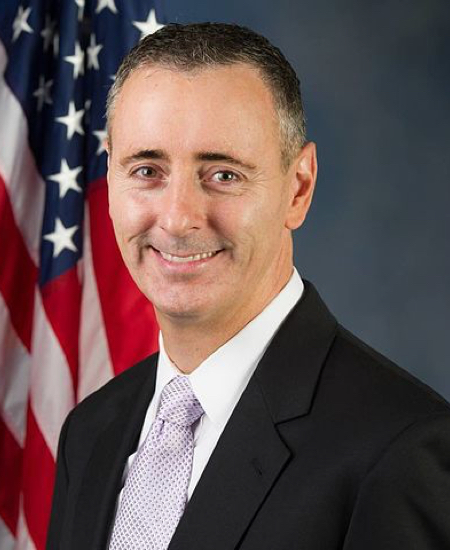
Rep. Brian K. Fitzpatrick
Sponsored bills
Keeping School Meals Flexible Act This bill extends authority through June 30, 2023, for the Department of Agriculture (USDA) to waive certain requirements for the school meal programs to address COVID-19. The bill extends the authority for USDA to issue a single waiver of child nutrition program requirements to all states under the National School Lunch Program for purposes of providing meals and snacks with appropriate safety measures with respect to COVID-19; grant waivers of requirements to allow non-congregate feeding in the Child and Adult Care Food Program for purposes of providing meals and snacks with appropriate safety measures with respect to COVID-19; and grant waivers related to the nutritional content of meals served in child nutrition programs if it determines the waiver is necessary to provide meals and snacks, and there is a food supply chain disruption due to COVID-19.
Stop the Wait Act of 2022 This bill allows individuals with disabilities to begin receiving Social Security Disability Insurance (SSDI) benefits in the month they become eligible for the benefits. It also allows these individuals to immediately enroll in Medicare if they cannot afford minimum essential coverage. (Under current law, an individual must generally wait 5 months after the onset of disability to begin receiving SSDI benefits and an additional 24 months to become eligible for Medicare.)
Diverse and Equitable Participation in Clinical Trials Act or the DEPICT Act This bill requires applications for an investigational use exemption of a new drug or medical device to include information about the demographic diversity of the clinical trial population and addresses related issues. (Generally, a developer of a new drug or device may seek an investigational use exemption to facilitate clinical investigations, as part of the process to obtain approval to sell that drug or device.) Specifically, the Food and Drug Administration (FDA) must issue regulations to require applications for such exemptions to include certain information, including (1) demographic data disaggregated by subgroup, where such data is available, about the expected or potential patient population; (2) the applicant's enrollment targets for the clinical trials involved, disaggregated by age group, sex, race, and ethnicity; (3) a diversity plan for how the applicant will meet these targets; and (4) what is known about the patient population, such as comorbidities. The regulations must also require certain applicant reports to the FDA to address issues related to demographic diversity in clinical trials and product safety and effectiveness for demographic subgroups. The bill also authorizes the FDA to, in certain instances, require additional studies or surveillance after a drug or device has been approved if the clinical trials used in the application process did not meet the demographic enrollment targets.
Cyber Ready Workforce Act This bill directs the Department of Labor to award grants to workforce intermediaries (entities that facilitate the establishment of registered apprenticeship programs and that may partner with a business or community-based organization, or specified other partners) to support the establishment, implementation, and expansion of such programs in cybersecurity.
Senior Citizens Tax Elimination Act This bill repeals the inclusion of any Social Security or tier I railroad retirement benefits in gross income for income tax purposes. The bill also (1) appropriates funds to cover reductions in transfers to the Social Security and Railroad Retirement Trust Funds resulting from the enactment of this bill, and (2) expresses the sense of Congress against using tax increases to provide revenue necessary to carry out this bill.
Native American Child Protection Act This bill reauthorizes through FY2027 and otherwise revises certain programs related to the prevention, investigation, treatment, and prosecution of family violence, child abuse, and child neglect involving Indian children and families. Specifically, the bill revises the Indian Child Abuse Treatment Grant Program to encourage the use of grants for culturally appropriate treatment services and programs. The bill renames the Indian Child Resource and Family Services Centers as the National Indian Child Resource and Family Services Center. It also requires the center to (1) provide advice, technical assistance, and training to urban Indian organizations; (2) develop certain technical assistance materials for Indian tribes, tribal organizations, and urban Indian organizations; and (3) develop model intergovernmental agreements between tribes and states to prevent, investigate, treat, and prosecute incidents of family violence, child abuse, and child neglect involving Indian children and families. Additionally, the bill revises the Indian Child Protection and Family Violence Prevention Program to allow Indian tribes, tribal organizations, and intertribal consortia to use program funds for additional activities, such as operational costs for child protective services.

Funding Early Childhood is the Right IDEA Act This bill authorizes through FY2027 specified provisions of the Individuals with Disabilities Education Act for early childhood education. Specifically, the bill authorizes Part B, Section 619 (grants to states for preschool programs serving children with disabilities ages three to five) and Part C (grants to aid states in implementing early intervention services for infants and toddlers with disabilities and their families).
Access to AEDs Act This bill requires the Department of Health and Human Services to award grants to local educational agencies and private elementary and secondary schools, in partnership with a health care entity, to promote student access to defibrillation in elementary and secondary schools.
Patients' Right to Know Their Medication Act of 2022 This bill requires the Food and Drug Administration (FDA) to issue regulations concerning the patient medication information that is included in the labeling for prescription medications. The regulations must impose various requirements, such as requiring the information to (1) be scientifically accurate and approved by the FDA; (2) include general directions for proper use and warnings that are written in understandable plain language; (3) contain information about known clinically important interactions with drugs, food, and other substances; (4) include a statement of whether there is sufficient data about the drug's use by specified subpopulations, such as children or pregnant women; and (5) be provided in a printed format with each prescription dispensed. The bill prohibits prescription medications that fail to meet this bill's requirements.