Community Services Block Grant Modernization Act of 2022 This bill reauthorizes the Community Services Block Grant program through FY2032 and otherwise modifies the program. The program supports various antipoverty activities, primarily through formula-based allotments to states, Indian tribes, and territories. In particular, the bill makes changes to the program's administration and leadership; performance measurement; and allotments to states and territories. The bill also expands eligibility for services and activities funded by the program to 200% of the federal poverty line (FPL). Under current law, eligibility is generally set at the FPL.
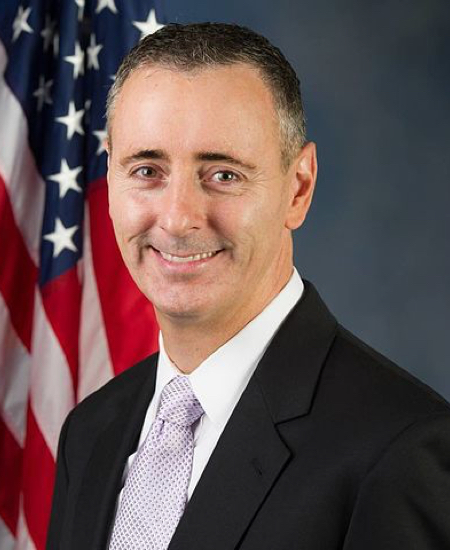
Rep. Brian K. Fitzpatrick
Sponsored bills
Rights for the Transportation Security Administration Workforce Act of 2022 or the Rights for the TSA Workforce Act of 2022 This bill modifies the workplace rights, protections, and benefits applicable to Transportation Security Administration (TSA) personnel. Specifically, the bill by December 31, 2022, eliminates personnel authorities of the Department of Homeland Security (DHS) and the Department of Transportation governing the conditions of employment for TSA employees, thus making TSA employees subject to the personnel management system applicable to other federal employees; sets forth transition rules that protect the pay rates, leave rights, and other rights of TSA employees; and requires DHS to consult with the exclusive representative of TSA screening employees to carry out the conversion of those positions. The bill also permits the TSA to consult with organizations representing federal air marshals to address concerns, including mental health and suicide rates; directs the TSA to ensure its employees are provided proper guidance regarding prevention and protections against COVID-19; requires the TSA to provide a one-time bonus payment of $3,000 to each TSA employee carrying out duties that require substantial contact with the public during the COVID-19 national emergency; and requires the Government Accountability Office to report on implementation of the bill, TSA recruitment efforts, and specified TSA personnel policies.
Life Saving Leave Act This bill expands employee medical leave to provide additional time for bone marrow or blood stem cell donations. Specifically, the bill expands leave under the Family and Medical Leave Act of 1993 (FMLA) to provide up to 40 hours of leave every 12 months for related predonation, donation, and postdonation activities. Under the bill, leave may be taken intermittently or on a reduced leave schedule. An employee has the option to substitute accrued paid vacation, personal, or sick leave for the unpaid FMLA time. The bill requires an employee to make a reasonable effort to schedule treatments for when the treatment would not unduly disrupt the employer's activities. Eligible employees may use this leave regardless of the employee's length of employment or the size of the employer.
Alzheimer's Accountability and Investment Act This bill requires the National Institutes of Health to annually submit, beginning in FY2024, an estimate of its budget and personnel needs for carrying out initiatives pursuant to the National Alzheimer's Project. This project supports coordination of federal planning, research, and other efforts to address Alzheimer's disease and related dementias.
Security Clearance Portability for Departing Servicemembers Act of 2022 This bill addresses the security clearance of former members of the Armed Forces or former civilian employees of the Department of Defense (DOD) after separation or retirement who require security clearance for employment as covered DOD contractors. Specifically, during the one-year period following the separation or retirement, DOD must treat the previously held security clearance as an active clearance for purposes of former members or employees retaining employment with covered DOD contractors. During the two-year period following that year, DOD must ensure the adjudication of any request submitted by such employee for reactivation of a previously held security clearance for purposes of employment is completed not later than 180 days after the date of submission.
Empowering States to Protect Seniors from Bad Actors Act This bill reauthorizes through FY2028 and otherwise revises the Senior Investor Protection Grant Program. The bill moves the program from the Consumer Financial Protection Bureau to the Securities and Exchange Commission, establishes a task force to oversee the program, and eliminates certain grant eligibility requirements.
Federal Firefighters Fairness Act of 2022 This bill makes it easier for federally employed firefighters who contract certain illnesses to qualify for federal workers' compensation. Specifically, the bill provides that chronic obstructive pulmonary disease, mesothelioma, and specified other cancers of those employed in fire protection activities for at least five years are presumed to be proximately caused by such employment for purposes of a disability or death claim under the federal workers' compensation program. This presumption also applies to federal employees employed in fire protection activities for at least five years who experience a sudden cardiac event or stroke within 24 hours of performing a fire protection activity. The bill also requires the Department of Labor to conduct a review to determine whether breast cancer, gynecological cancer, and rhabdomyolysis should be included under the presumption and to conduct periodic reviews to determine whether other diseases should be included. In addition, a person may petition Labor to include another disease under the presumption. An employee in fire protection activities is a firefighter, paramedic, emergency medical technician, rescue worker, ambulance personnel, or hazardous material worker who (1) is trained in fire suppression; (2) has the legal authority and responsibility to engage in fire suppression; (3) is engaged in the prevention, control, and extinguishing of fires or response to emergency situations where life, property, or the environment is at risk, including the prevention, control, suppression, or management of wildland fires; and (4) performs such activities as a primary responsibility.

Formula Act of 2022 This bill requires the Food and Drug Administration to work through established processes to review and update internationally recognized standards for infant formula to ensure that such standards are consistent with standards applied to importing infant formula into the United States.
Reparations for Ukraine through Sovereign nation Support and Integration Act or the RUSSIA Act This bill directs the President to seek to enter into an agreement with other countries that have frozen the assets of Russia's central bank to (1) transfer the frozen assets into a single account at an international financial institution, and (2) distribute such assets to provide for the reconstruction of Ukraine after the cessation of hostilities in Ukraine.
Consumer Protection and Fuel Transparency Act of 2022 This bill requires information to be provided to the public about the risks associated with the improper use of gasoline containing 15% ethanol by volume, commonly known as E 15 fuel, in certain vehicles, engines, and equipment. Specifically, the bill directs the Environmental Protection Agency (EPA) to revise labeling requirements for fuel pumps that dispense E 15 fuel, including by requiring the labels of such fuel pumps to include additional details. The labels must include warning information about vehicles, engines, and equipment (e.g., boats, lawn mowers, chain saws, motorcycles, snowmobiles, and pre-2001 model year vehicles) that are prohibited from using E 15. In addition, the EPA must implement a public education campaign concerning the risks associated with the improper use of E 15 fuel in such vehicles, engines, and equipment. The EPA must also withdraw the proposed rule titled E 15 Fuel Dispenser Labeling and Compatibility With Underground Storage Tanks.