

Maddy summaryThis bill modifies tax rules for vaccines by adding new vaccines to the list of taxable vaccines under federal law. Specifically, it includes any vaccine placed on the Vaccine Injury Table under the Public Health Service Act, which determines eligibility for compensation for vaccine-related injuries. Manufacturers and distributors will need to account for these vaccines under the tax code once HHS adds them to the injury compensation list. The change affects tax reporting for these specific vaccines but does not alter vaccine access, costs, or the injury compensation program itself.
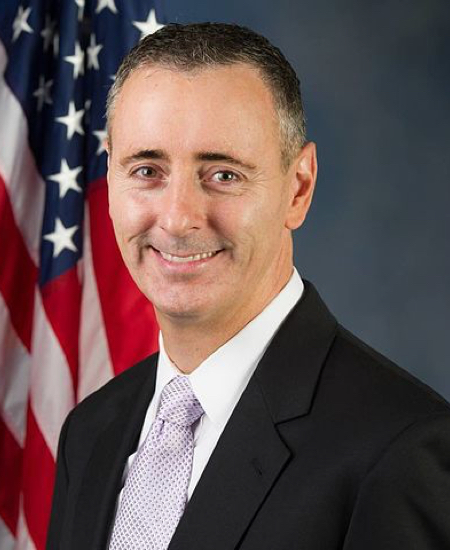
Rep. Brian K. Fitzpatrick
Sponsored bills
Maddy summaryThis bill simplifies participation in Medicare's Accountable Care Organization (ACO) program by removing distinctions between small and large ACOs and eliminating the requirement for new ACOs to assume financial risk for three years before joining shared savings models. It creates a new "100% shared savings" option where ACOs keep all savings from cost reductions but bear full financial responsibility for losses. The bill also mandates clearer, transparent benchmark calculations for ACO performance, establishes appeal processes for disputed benchmarks, and requires technical assistance for rural and underserved providers. These changes directly affect Medicare ACOs, particularly smaller or newer organizations in rural or safety-net settings, aiming to make value-based care participation more accessible.
Maddy summaryThe Auto Reenroll Act of 2023 modifies retirement plan rules to make it easier for employees who previously opted out of automatic contributions to be automatically re-enrolled. It allows employers to automatically re-enroll workers in 401(k) plans after 1-3 years (unless the employee actively chooses to stay out), ending the need for employees to re-opt-in each time. This applies to both "qualified automatic contribution arrangements" (like 401(k) plans) and "eligible automatic contribution arrangements." The bill directly affects employees who had previously elected not to contribute to workplace retirement plans, streamlining their return to savings without requiring new action. The changes apply to plan years starting after the bill's enactment date.
Maddy summaryThis bill adds free PFAS blood testing to Medicare Part B coverage for seniors. It requires Medicare to cover physician-ordered blood tests for perfluoroalkyl and polyfluoroalkyl substances (PFAS) with no out-of-pocket costs starting January 1, 2024. The policy directly affects Medicare beneficiaries (primarily seniors) who receive a doctor's order for PFAS testing. Key provisions amend Medicare rules to include PFAS testing under preventive services with 100% coverage, defining it as a blood test to measure PFAS concentration. This change eliminates cost-sharing for eligible seniors seeking this specific type of screening.
Maddy summaryThe Health Insurance Price Transparency Act of 2023 requires most group health plans and health insurance issuers to provide clear, upfront pricing information to consumers. It mandates that plans make cost-sharing details (like deductibles and copayments) available to individuals through user-friendly online tools that provide real-time responses. The bill also requires plans to publicly post detailed rate and payment information, including in-network rates, maximum allowed amounts, and payment details for drugs and services, in machine-readable formats that can be easily compared. These requirements apply to most group health plans (excluding grandfathered plans) and take effect for plan years beginning two years after the law's enactment.
Maddy summaryThe 9-8-8 Implementation Act of 2023 establishes a national mental health crisis response system centered around the 9-8-8 suicide prevention hotline. It provides $441 million for call center technology, staffing, and operations, and requires Medicare, Medicaid, and private health plans to cover crisis response services including mobile crisis teams and crisis stabilization facilities. The bill also mandates a national suicide prevention media campaign and creates protocols for 9-1-1 dispatchers to better respond to mental health crises. These provisions aim to improve access to mental health crisis care across the United States.
Maddy summaryThe Breast Cancer Patient Equity Act would require Medicare to cover custom-made breast prostheses for women who have undergone mastectomies, directly affecting Medicare beneficiaries and influencing private insurance coverage practices. Currently, Medicare denies coverage for these prostheses as "not medically necessary" while covering surgical breast reconstruction, creating a gap that disproportionately impacts older and minority women. The bill amends Medicare’s coverage rules to explicitly include custom breast prostheses under the same category as other body part prostheses. This change would address the lack of access to a common, less invasive alternative to surgery for over 100,000 women undergoing mastectomies annually.
Maddy summaryHR 4794, the Dietary Supplements Access Act, allows health savings accounts (HSAs), flexible spending accounts (FSAs), and health reimbursement arrangements (HRAs) to cover dietary supplements as qualified medical expenses. The bill amends the Internal Revenue Code to treat payments for dietary supplements - defined under federal law (21 U.S.C. 321(ff)) - as medical care, directly affecting individuals using these accounts to pay for supplements like vitamins or minerals. Key provisions require HSAs, FSAs, and HRAs to reimburse supplement costs under the same rules as other medical expenses. The change applies to taxable years beginning after the bill’s enactment.
Maddy summaryHR 4752 (the CHANGE Act of 2023) requires Medicare to include standardized cognitive impairment screening during annual wellness visits and initial preventive physical exams for beneficiaries starting in 2024. It mandates doctors use National Institute on Aging-approved tools to detect memory issues and document results in medical records. This directly affects Medicare patients aged 65+ and their healthcare providers, aiming to enable earlier Alzheimer’s diagnosis and care planning. The bill focuses on making routine screenings a standard part of Medicare-covered checkups, not on funding or new programs. It does not alter existing Medicare benefits but adds a specific screening requirement to two existing service categories.
Maddy summaryThe BLUE Pacific Act establishes a comprehensive U.S. strategy to deepen engagement with Pacific Island nations through coordinated assistance across multiple policy areas. It authorizes $250 million annually for fiscal years 2023-2033 to support initiatives in climate resilience, economic development, security capacity building, public health, and democratic governance. The act requires the President to develop a Pacific Islands Partnership Strategy by 2027, with regular congressional reporting, and mandates consultation with Pacific Island nations and regional organizations. This legislation formalizes U.S. efforts to support Pacific Island countries in addressing shared challenges like climate change, economic development, and security while strengthening regional partnerships. The strategy will guide U.S. assistance across multiple agencies to support Pacific Island nations' priorities as outlined in regional frameworks like the 2050 Strategy for the Blue Pacific Continent.