

Maddy summaryThe Stop Campus Hazing Act requires colleges and universities to publicly report hazing incidents involving student organizations. It defines hazing as intentional acts causing physical or psychological harm during initiation or membership in student groups, including activities like forced substance consumption, sleep deprivation, or sexual acts. Institutions must include hazing statistics in annual security reports and publish a "Campus Hazing Transparency Report" on their websites by July 1, 2025, detailing findings about organizations violating hazing policies. The reports must include organization names, violation descriptions, and key dates while excluding personally identifiable student information. This applies to all colleges participating in federal student aid programs.
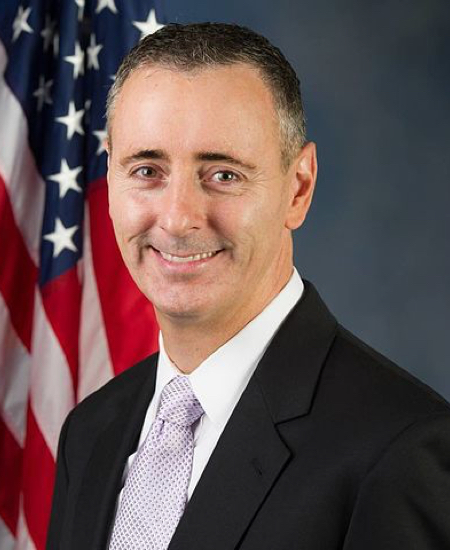
Rep. Brian K. Fitzpatrick
Sponsored bills
Maddy summaryThis bill, HR 1097 (Everett Alvarez, Jr. Congressional Gold Medal Act of 2023), authorizes the award of a Congressional Gold Medal to Everett Alvarez, Jr., in recognition of his service as a U.S. Navy pilot and Vietnam War prisoner of war. It directly honors Alvarez, who was the first U.S. pilot shot down in the Vietnam War, spent over 8.5 years in captivity, and later served in the Peace Corps and Veterans Administration. The bill’s key mechanism is directing the U.S. Mint to strike a gold medal bearing his name and image, with bronze duplicates available for sale to cover costs. It does not create new policies or affect any group beyond the honoree.
Maddy summaryThis bill approves new agreements that amend the Compact of Free Association between the United States and the Federated States of Micronesia, the Republic of the Marshall Islands, and the Republic of Palau. It incorporates related agreements including fiscal procedures and trust fund agreements that govern how U.S. funding is managed and distributed to these nations. The bill provides funding for 2024-2043 to support programs like healthcare, education, veterans' services, and economic development in the Freely Associated States. It establishes reporting requirements and oversight mechanisms for federal agencies implementing these agreements. The bill directly affects U.S. federal agencies, the Freely Associated States, and U.S. funding mechanisms for these Pacific Island nations.
Maddy summaryThis bill requires the Secretary of Agriculture or Interior (depending on land type) to issue federal guidance within 18 months recognizing recreational rock climbing, fixed anchors, and necessary climbing equipment as allowable activities in designated wilderness areas. The guidance must align with the Wilderness Act and other applicable laws, while ensuring public notice and comment for significant management changes (except short-term emergencies). It directly affects climbers and federal land managers overseeing National Forest System lands and Interior Department lands within wilderness areas. The bill does not alter existing wilderness regulations but mandates agencies to formally acknowledge climbing as a permitted activity.
Maddy summaryThe MERIT Act amends Medicare's coverage rules to require individual drug reviews for research purposes. It changes how Medicare determines if a drug is "reasonable and necessary" under Section 1142 research programs, mandating separate evaluations for each drug instead of class-based decisions. This directly affects Medicare beneficiaries and drug manufacturers participating in research under Section 1142. The key provision specifies that coverage determinations must apply to each specific drug or biological involved in the research, not to groups of similar drugs. This policy change alters the Medicare national coverage determination process for research-related treatments.
Maddy summaryThis bill creates a federal grant program allowing state, local, Tribal, and territorial law enforcement agencies to hire retired officers for specific civilian tasks like crime scene analysis, digital evidence review, and financial crime investigations - excluding any duties requiring sworn authority. Agencies must verify retirees have relevant skills or training, conduct background checks using federal databases, and comply with strict accountability measures. Grants require annual audits to prevent misuse, with agencies having unresolved audit findings barred from funding for two years. The program aims to leverage retired officers' expertise while adding safeguards for public funds.
Maddy summaryThis bill allows electrical utilities operating on National Forest System land to clear trees and vegetation near power lines without needing a separate timber sale, as long as the work follows existing land management plans and environmental laws. It directly affects utilities managing power infrastructure on federal forest land by streamlining vegetation management to reduce wildfire risks. Utilities must share any money earned from selling cleared vegetation (minus transportation costs) with the Forest Service, though they aren’t required to sell the material. The law focuses on improving safety through routine maintenance while ensuring revenue from vegetation removal benefits federal land management.
Maddy summaryHR 5401, the 9/11 Memorial and Museum Act, provides a one-time federal grant of $5 million to $10 million to the National September 11 Memorial & Museum (operated by the World Trade Center Foundation). The grant funds the museum's operations, security, and maintenance, with specific requirements including free admission for veterans, first responders, and victims' families, dedicated weekly free public hours, and annual financial audits. The museum must also report annually to Congress on how the funds were used. This bill directly affects the museum's financial operations and access policies, not broader legislative changes.
Maddy summaryHR 3396, the Fire Department Repayment Act of 2023, requires the Secretaries of Agriculture, Interior, Homeland Security, and Defense to establish standard procedures for federal fire suppression cost share agreements within one year. It mandates reviewing existing agreements to align them with local cooperative fire protection agreements and conducting second-level reviews after wildfires, involving state and local fire organizations. The bill directly affects fire departments and agencies participating in these cost-sharing arrangements under the Reciprocal Fire Protection Act. Key changes include standardized procedures for agreement management and post-wildfire reviews to ensure cost-sharing compliance.
Maddy summaryThe CARE for Behavioral Health Act of 2024 establishes a Medicare demonstration program to test crisis response services for eligible beneficiaries. It requires participating providers (like mobile teams, urgent care facilities, and short-term stabilization centers) to offer 24/7 services with medical staff, meet specific quality standards, and avoid terminating care until a patient is stabilized. The program pays providers 100% of the average monthly cost for these services using Medicare funds, aiming to reduce emergency department visits and improve behavioral health outcomes. The Secretary must evaluate the program after three years, reporting on its effectiveness, service quality, and impact on jail incarceration rates.