

Maddy summaryHR 3561, the PATIENT Act of 2023, requires hospitals, health insurance plans, and pharmacy benefit managers to publicly disclose detailed pricing information for healthcare services and drugs. Hospitals must publish standard charges for 300+ shoppable services, including gross charges, payer-specific negotiated rates, and discounted cash prices, with updates required annually. Health plans must provide real-time information on in-network rates, cost sharing, deductibles, and prior authorization requirements for covered services. The bill establishes enforcement mechanisms, including civil monetary penalties for non-compliance, with fines ranging from $300 per day for small hospitals to $5 million for large hospitals that fail to comply with the transparency requirements.
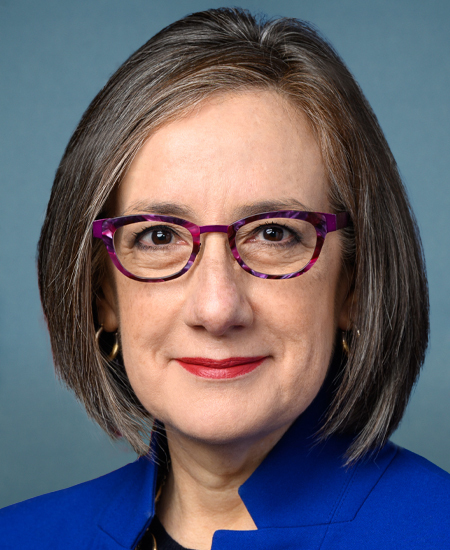
Rep. Andrea Salinas
Sponsored bills
Maddy summaryThe FAMILY Act (HR 3481) would establish a national paid family and medical leave insurance program administered by the Social Security Administration. Eligible workers would receive wage replacement benefits (up to 85% of average earnings, with a maximum of $4,000 monthly) for up to 60 caregiving days per 12-month benefit period for qualifying reasons like caring for a sick family member, personal serious health conditions, or responding to domestic violence. The program would be funded through 0.2% payroll taxes from employees and employers (with self-employed individuals paying 0.4%), with benefits coordinated with existing state programs. The law includes protections against employer retaliation for taking leave and requires employers to maintain health coverage during leave periods.
Maddy summaryHR 3432, the Telemental Health Care Access Act of 2023, expands Medicare coverage for mental and behavioral health services delivered via telehealth. It removes geographic restrictions that previously limited telehealth coverage to rural areas and explicitly adds "behavioral health services" to the list of covered telehealth services under Medicare Part B. The bill requires the Secretary of Health and Human Services to submit a report within one year on utilization of these services, including recommendations on fraud prevention and funding needs for oversight. This change directly affects Medicare beneficiaries seeking remote mental/behavioral health care and the providers who deliver it.
Maddy summaryThe Medicare for All Act would establish a single-payer national health insurance program providing comprehensive coverage to all U.S. residents without cost-sharing. It would replace current private insurance and government programs like Medicare and Medicaid with a unified system covering all medically necessary services including hospital care, prescription drugs, mental health services, reproductive care, long-term care, and preventive services. The bill prohibits private insurers from offering duplicate coverage and requires providers to participate without charging patients for covered services. Implementation would occur over a two-year transition period, with a "Medicare Transition Buy-In" option allowing people to enroll before full implementation.
Maddy summaryHR 3207, the Build Housing with Care Act of 2023, creates a $100 million annual grant program to fund the co-location of affordable housing and childcare facilities. It directly affects housing developers, childcare providers, and low-income residents by requiring grantees to partner with qualified childcare centers (serving low-income families or operating in "child care deserts") and avoid evictions during facility development. Key provisions include prioritizing projects in underserved areas, mandating resident engagement, and requiring grantees to use funds for design, construction, or renovation of shared facilities. The program aims to increase childcare access near housing, with annual reports tracking outcomes like new childcare slots and resident usage.
Maddy summary# Summary of Proposed Immigration Legislation This comprehensive immigration bill proposes sweeping reforms across multiple areas of U.S. immigration policy. The key provisions can be categorized as follows: ## Family Immigration Reforms - Expands eligibility for family-based visas - Creates new pathways for family reunification - Reforms the "child out" rule for H-4 visa holders who age out - Establishes new procedures for sponsors of unaccompanied children ## Employment-Based Immigration - Increases diversity visas from 55,000 to 80,000 - Creates new categories for doctoral STEM graduates - Eliminates per-country limits for employment-based visas - Addresses visa backlogs by creating new categories for beneficiaries with priority dates over 10 years old - Increases visa numbers for certain employment-based categories (e.g., 23.55% instead of 28.6% for certain categories) - Creates a Regional Economic Development Immigrant Visa Pilot Program (10,000 visas annually) ## Diversity and Integration Programs - Creates a United States Citizenship and Integration Foundation to promote citizenship preparation - Establishes pilot programs for immigrant integration at state and local levels - Creates English as a Gateway to Integration grant program ($100 million for 2024-2025) - Creates Workforce Development and Shared Prosperity grant program ($100 million for 2024-2025) - Requires in-state tuition rates for refugees, asylees, and certain special immigrants - Waives English requirements for seniors applying for naturalization ## Immigration Court Reforms - Increases immigration judge numbers by 55 annually through 2028 - Creates a right to counsel for vulnerable individuals (children, victims of abuse, etc.) - Establishes an Immigration Counsel Fund with a $25 surcharge on immigration fees - Requires all noncitizens to receive legal orientation programs - Modernizes court technology for improved efficiency - Creates procedures for ensuring court appearance compliance ## Refugee and Asylum Processing - Expands alternatives to detention for family units - Improves processing for asylum seekers - Creates programs to facilitate safe and efficient repatriation - Establishes reintegration support for repatriated individuals ## Naturalization and Citizenship - Creates citizenship pathways for U.S. high school graduates - Waives English requirements for seniors - Creates a National Citizenship Promotion Program - Establishes naturalization ceremonies at historic locations The bill aims to create a more efficient immigration system, address backlogs in immigration courts, promote immigrant integration, create clearer pathways to citizenship, and reform both family-based and employment-based immigration systems. It represents a comprehensive approach to modernizing U.S. immigration policy.
Maddy summaryThis bill regulates pharmacy benefit managers (PBMs) working with Medicare Part D prescription drug plans. It prohibits PBMs from earning income based on drug prices or rebates (requiring flat fees instead), mandates equal reimbursement for all network pharmacies, and requires PBMs to report how much of drug rebates they pass through to Medicare plans. The law also mandates annual compliance certifications and requires the government to publish aggregated transparency data (without revealing specific plan details) starting in 2024. These changes directly affect Medicare Part D plans and the seniors who rely on them for prescription drug coverage.
Maddy summaryThis bill establishes a new workplace violence prevention standard for healthcare and social service workers. It requires employers in covered facilities - including hospitals, nursing homes, mental health clinics, and social service settings - to develop and implement comprehensive prevention plans with specific requirements. These plans must include risk assessments, hazard prevention measures, employee training on violence prevention, and procedures for reporting and investigating violent incidents. The bill also amends Medicare regulations to require compliance with these standards for hospitals and skilled nursing facilities receiving Medicare funds.
Maddy summaryThe Working Families Task Force Act of 2023 establishes a federal task force led by the Secretary of Labor, including representatives from eight departments (including Health, Education, Housing, and Treasury), to examine challenges facing working families. The task force will identify key issues like affordable childcare, housing access, livable wages, and tax credit effectiveness, then develop policy recommendations to improve their standard of living. It must meet quarterly, submit an initial report within 180 days, and provide annual updates to relevant congressional committees. The bill directly affects working families by creating a coordinated federal effort to address their economic challenges through agency collaboration. It does not create new programs but mandates a review of existing policies to inform future legislative action.
Maddy summaryThis bill establishes minimum nurse-to-patient ratios for registered nurses in hospital units (such as 1:1 in trauma units, 2:1 in critical care units, and 3:1 in emergency rooms), requiring hospitals to develop and maintain staffing plans that meet these standards. It mandates transparency in documenting staffing levels, ensures hospitals verify nurses' competence for specific units, and enforces compliance through Medicare and Medicaid programs with penalties for violations. The bill protects nurses who refuse unsafe assignments due to staffing concerns and includes initiatives to improve nurse retention and address staffing shortages. It directly affects hospitals, nurses, and patients by aiming to improve patient safety and care quality through standardized staffing requirements. The bill applies to all hospitals, with extended implementation timelines for rural facilities.