

Maddy summaryThe "You Earned It, You Keep It Act" (HR 7084) establishes a $250,000 annual income threshold for Social Security taxes. Income above this threshold will no longer be subject to Social Security taxes but will still count toward Social Security benefits. This affects high earners who would have paid Social Security taxes on income above the current wage base. The bill also includes special rules for workers with multiple employers and applies to calendar years after 2024.
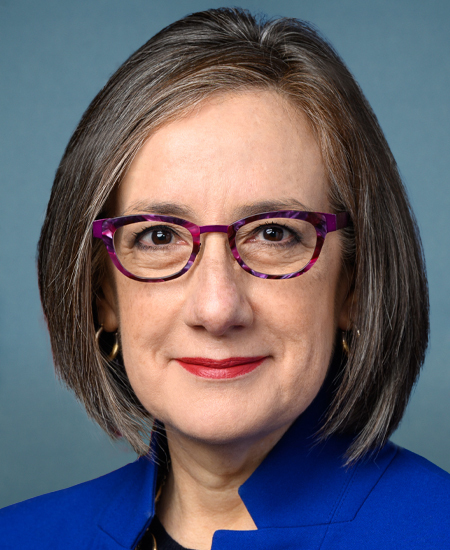
Rep. Andrea Salinas
Sponsored bills
Maddy summaryThe PEERS Act of 2023 (HR 6748) would add Medicare coverage for "peer support services" starting January 1, 2025. These services, provided by certified specialists who have recovered from mental health or substance use conditions, offer emotional, informational, and community support to Medicare beneficiaries diagnosed with mental disorders or substance use disorders. The bill establishes payment rates (80% of a fee schedule) for community mental health centers and certified community behavioral health clinics offering these services and modifies Medicare exclusions to allow coverage. It directly affects Medicare beneficiaries with these diagnoses, certified peer support specialists, and eligible healthcare providers like Federally Qualified Health Centers.
Maddy summaryThe FOREST Act of 2023 prohibits U.S. imports of products made from commodities (palm oil, soybeans, cocoa, cattle, and rubber) produced on land where illegal deforestation occurred after the law's enactment. Importers must file declarations demonstrating they've assessed supply chain risks of illegal deforestation, with stricter requirements for products from countries identified in action plans. The law establishes a process to identify countries without adequate deforestation protections and requires them to develop action plans with specific benchmarks for compliance. It creates a fund using import penalty revenue to provide foreign assistance to help countries eliminate illegal deforestation and includes procurement preferences for federal contracts with suppliers demonstrating deforestation-free supply chains.
Maddy summaryThis bill prohibits health insurance plans from charging healthcare providers fees for electronic payments (EFTs) and payment advice transactions. It directly affects doctors, hospitals, and clinics that receive electronic payments from health plans by banning any charges, including withholdings, for these transactions. The law, effective January 1, 2024, amends the Social Security Act to require health plans to cover these costs themselves, eliminating fees for providers.
Maddy summaryThe ARCC Act provides $100 million in federal funding to help apprentices and pre-apprentices in job training programs cover childcare costs. It authorizes competitive grants to 10 states, which must distribute monthly stipends of at least $500 per dependent child directly to eligible childcare providers on behalf of participants in these programs. The bill prioritizes individuals from historically underrepresented groups (based on race, ethnicity, or gender) and ensures stipends are tax-free while not affecting eligibility for other federal benefits. States must report on participation, program completion rates, and demographic data, with the Secretary later summarizing program impacts for Congress.
Maddy summaryHR 6257, the Emergency Medical Services Reimbursement for On-Scene and Support Act, amends federal law to expand Medicare reimbursement for ambulance services. It specifically allows ambulance providers to receive payment for on-scene medical care (without transportation) starting January 1, 2025, regardless of whether they also provide transport services. This directly affects ambulance providers who offer non-transport emergency medical services, ensuring they can be reimbursed for those specific on-scene treatments. The key provision modifies Section 1861(s)(7) of the Social Security Act to include these services under reimbursement eligibility. The change applies only to services furnished on or after the effective date, not retroactively.
Maddy summaryThis bill creates a framework for states to develop their own universal health care systems by applying for waivers from certain federal health care requirements. States must demonstrate they can provide comprehensive coverage meeting or exceeding current federal standards (like Medicaid, Medicare, and CHIP) for at least 95% of residents within 5 years, with the federal government redirecting funds that would have gone to federal programs to support state systems. States must include specific protections like reproductive health care coverage and submit regular reports on coverage rates, affordability, and quality. The bill includes special provisions to protect Indian health care services and ensure they remain accessible under state plans. States that fail to meet coverage goals may face consequences, including potential termination of their waiver.
Maddy summaryHR 6280, the Smart Border Protection Act, provides $570 million in new funding for U.S. Customs and Border Protection (CBP) operations at ports of entry. It allocates $300 million for hiring personnel (including agents and specialists), $200 million for screening technology to detect threats like fentanyl in cargo, and $70 million for infrastructure improvements such as expanded vehicle lanes and building upgrades. All funds must be spent within one year of enactment and are in addition to existing appropriations. The bill directly supports CBP’s capacity to manage border security operations at designated ports.
Maddy summaryHR 5819, the COMPLETE Care Act, incentivizes Medicare primary care providers to integrate behavioral health services by increasing payments for specific services (like mental health and substance use disorder support) during 2025-2027. Providers using designated HCPCS codes for integrated care would receive 125-175% of standard payment rates, with the percentage declining annually. The bill also requires these providers to report on integration quality measures and mandates technical assistance for practices adopting integrated models, funded through new appropriations for 2024-2027. It directly affects Medicare-participating primary care practices serving beneficiaries needing mental health or substance use services.
Maddy summaryHR 5510, the HOPE and Mental Wellbeing Act of 2023, requires Medicare and Medicaid to cover the first three primary care visits each year at 100% without cost-sharing for beneficiaries. This applies to both Medicare Part B (including Medicare Advantage plans) and Medicaid starting in 2024, directly affecting seniors and low-income individuals seeking mental health or general primary care. The bill defines "primary care visit" to include outpatient behavioral health services, nonspecialty medical care, and care coordination for prevention, diagnosis, or treatment of physical or mental health conditions. This policy change removes financial barriers for initial mental health or primary care appointments under these government health programs.