

Maddy summaryThis bill prevents the Forest Service from initiating or implementing layoffs until after full-year funding for fiscal year 2026 is secured. It specifically stops reductions in force and involuntary separations for most Forest Service employees (including competitive service, excepted service, and senior executive roles), except for misconduct, poor performance, or delinquency. The moratorium applies to all personnel actions under the Secretary of Agriculture’s authority until FY2026 appropriations are enacted. This directly affects Forest Service workers and ensures their job stability during the budget process.
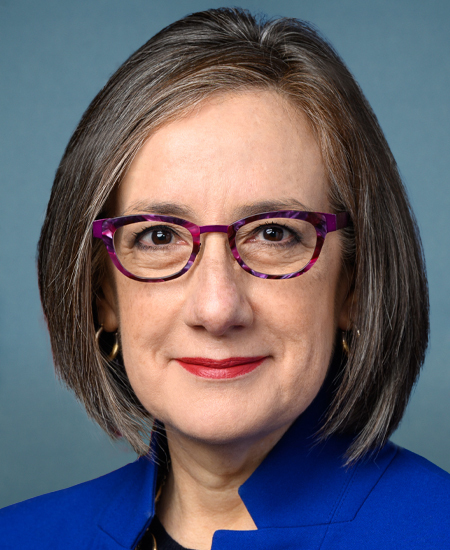
Rep. Andrea Salinas
Sponsored bills
Maddy summaryHRES 619 is a non-binding resolution recognizing the disproportionate mental health challenges faced by minority communities in the U.S. and supporting "Minority Mental Health Awareness Month." It highlights specific disparities, such as higher rates of untreated mental health conditions among Black, Indigenous, Asian American, and Pacific Islander populations due to barriers like stigma, lack of culturally competent care, and systemic inequities. The resolution calls on the President to improve mental health care access that addresses racial, cultural, and social differences in minority communities. It does not create new laws or allocate funds but serves as a symbolic acknowledgment of these health disparities.
Maddy summaryThe Protect Our Hospitals Act (HR 4807) repeals a specific provision (Section 71115 of Public Law 119-21) that altered Medicaid provider tax rules. This bill restores the prior tax structure for Medicaid providers, including hospitals and clinics that accept Medicaid, returning them to the tax treatment that existed before the change. As a result, these providers will no longer be subject to the modified tax rules enacted by the repealed provision. The bill does not affect Medicaid eligibility, benefits, or coverage - it solely reverts a tax policy change without introducing new requirements.
Maddy summaryHR 4819, the Click to Cancel Act of 2025, makes the Federal Trade Commission's November 2024 "Negative Option Rule" permanent law. This rule directly affects businesses that use automatic renewal subscriptions (like streaming services or software) and their consumers, requiring clear, easy cancellation options. The bill codifies the FTC's existing rule, treating violations as unfair or deceptive practices under the FTC Act, and grants the FTC full authority to enforce it using existing powers and penalties. The key change is that businesses must now explicitly obtain consumer consent for recurring charges and provide straightforward cancellation methods, moving beyond the previous rule-based guidance.
Maddy summaryThis bill removes a barrier preventing most low-income students from accessing SNAP benefits. It amends the Food and Nutrition Act to explicitly allow students enrolled at least half-time in recognized higher education programs to qualify for SNAP, reversing a prior exclusion. The key change eliminates the previous requirement that students meet specific exceptions (now deleted) and adds a new eligibility category under Section 3(m)(5). This directly affects low-income undergraduate and graduate students at colleges and training programs who were previously ineligible. The changes take effect January 2, 2026.
Maddy summaryThis bill authorizes $50 million annually for the Centers for Disease Control and Prevention (CDC) to conduct research on firearms safety and gun violence prevention, beginning in fiscal year 2026 through 2031. The funding is in addition to existing CDC appropriations and would support studies under the Public Health Service Act. It does not create new regulations or directly affect individuals, but aims to expand research into causes and prevention strategies for gun violence. The bill focuses solely on enabling CDC research, without proposing policy changes or restrictions.
Maddy summaryThe Immigrant Witness and Victim Protection Act of 2025 helps immigrant survivors of domestic violence, sexual assault, human trafficking, and other crimes who qualify for protections under the Violence Against Women Act (VAWA) and Trafficking Victims Protection Act (TVPA). It eliminates annual limits on U visas and special immigrant juvenile visas, grants work authorization within 180 days of filing an application, and prohibits deportation or detention while cases are pending. The bill requires victims to be released from detention unless the government proves they pose a specific threat or may skip court, with clear evidence needed to override this presumption. This directly affects immigrant victims seeking legal relief in the U.S. as they navigate their cases without fear of immediate removal.
Maddy summaryHR 4796, the Restoring Essential Healthcare Act, repeals a provision that blocked Medicaid payments to certain healthcare providers during a specific period. It directly affects Medicaid beneficiaries who received care from these providers between the enactment of the prior law (Public Law 119-21) and this bill's enactment. The key provision retroactively restores Medicaid payments for services already provided during that blocked period, treating the payment restriction as if it never existed. This change ensures eligible individuals and providers receive reimbursement for covered care delivered during the prohibited timeframe.
Maddy summaryHR 4763, the PTO Act, requires most employers to provide employees with at least 1 hour of paid annual leave for every 25 hours worked, with a maximum of 80 hours per year. It applies to private-sector workers and certain government employees, protecting their right to use paid leave for any purpose without disclosing the reason. The bill mandates employers to maintain health benefits during leave, allow carryover of up to 40 hours of unused leave, and pay out unused leave upon separation. It also prohibits employers from discriminating against employees for using paid leave or requiring them to find replacements while on leave. The law includes enforcement mechanisms, allowing employees to file complaints with the Department of Labor or pursue private lawsuits.
Maddy summaryThis bill updates the TRICARE Young Adult Program to make healthcare coverage more accessible for military dependents. It directly affects young adults (ages 21-26) who are children of active-duty service members, by eliminating a separate premium they previously paid for coverage. Key changes include removing an extra cost for young adults and adjusting eligibility rules to simplify enrollment. These amendments aim to reduce out-of-pocket expenses and streamline access to health insurance under the program.