

Maddy summaryThis bill removes separate disciplinary processes for certain Department of Veterans Affairs (VA) employees related to removal, demotion, or suspension. It directly affects VA staff, particularly whistleblowers who might face retaliation through these disciplinary actions. The key change repeals redundant procedures in Title 38 and restores pre-2017 disciplinary rules for sections 7461, 7462, and 7463 of the VA code. This aligns disciplinary actions with existing whistleblower protections, simplifying the process without creating new rights or obligations.
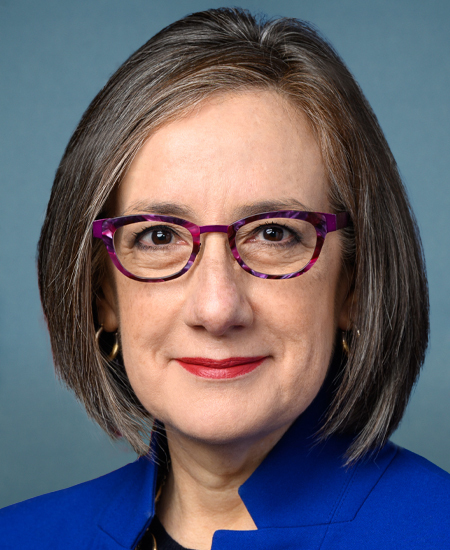
Rep. Andrea Salinas
Sponsored bills
Maddy summaryThis bill modifies how crop insurance agents are paid through "A&O subsidies" under federal crop insurance programs. It sets fixed minimum and maximum subsidy amounts per policyholder (with the max no more than 400% above the min) and ties payments to policy complexity (e.g., number of crops insured, policy types), not premium size. It adds 10% bonuses for policies covering farms under 180 acres, specialty crops not eligible for local insurance, or first-time buyers. The bill requires annual public reporting of subsidy data by state, crop, and policy type to increase transparency, while ensuring changes remain budget-neutral. It directly affects crop insurance agents (who receive payments) and farmers (especially small, specialty crop, or first-time buyers).
Investing in Rural America Act This bill allows Farm Credit System (FCS) institutions to provide financing and technical assistance for essential community facility projects as part of the Department of Agriculture's Community Facilities Direct Loan & Grant Program. (This program provides funding to develop essential community facilities in rural areas.) The FCS financing and technical assistance may be provided in order to make capital available to develop, build, maintain, improve, or provide other support for essential community facilities in rural communities (e.g., certain facilities that provide healthcare, community support, public safety, educational, or utility services). Under the bill, the financing provided by an FCS institution may not exceed 15% of the institution’s total assets unless the FCS institution offers at least one non-FCS lending institution an interest in the financing under reasonable terms and conditions acceptable to the borrower. The FCS institution must also report the offer to the Farm Credit Administration (FCA). The FCA must submit an annual report to Congress on the activities undertaken by FCS institutions under this bill, including through the partnerships between FCS institutions and other lending institutions. The FCA must post the report on the agency's website.
Maddy summaryHR 4745, the Delivering for Rural Seniors Act of 2023, creates a pilot program to expand home delivery of food packages under the Commodity Supplemental Food Program (CSFP) for low-income seniors in rural areas. The bill authorizes $10 million annually (2024-2026) for competitive grants to state agencies, which must prioritize rural service providers to cover costs like transportation, staffing, and outreach for home delivery. It requires grantees to report on delivery metrics, costs, and effectiveness annually. The program directly affects rural CSFP participants facing transportation barriers to accessing food assistance.
Rural Wellness Act This bill prioritizes behavioral and mental health treatment services under certain rural development grant and loan programs. The bill also reauthorizes through FY2028 the set-asides and prioritizations for substance use disorder treatment services under the Department of Agriculture's (1) Community Facilities Direct Loan and Grant Program, (2) Rural Health and Safety Education Competitive Grants Program, and (3) Distance Learning and Telemedicine Grant Program. Under the community facilities program, the bill prioritizes direct loans and grants for the development of behavioral and mental health services facilities, including facilities that provide treatment services. Further, loans and grants provided under the program may be used to develop facilities and systems to provide telehealth services for behavioral and mental health treatment. Under the Rural Health and Safety Education Competitive Grants Program, the bill prioritizes grants for behavioral and mental health education and treatment. Under the Distance Learning and Telemedicine Grants Program, the bill includes a 17% set-aside for telemedicine projects that provide substance use disorder treatment services (currently a 20% set-aside).
Maddy summaryThe ReConnecting Rural America Act of 2023 provides federal funding through grants, loans, and combinations of both to build broadband infrastructure in rural areas. It requires projects to provide at least 100 Mbps downstream and 100 Mbps upstream service, with priority given to areas where at least 90% of households lack such service. The bill authorizes $650 million annually from 2024-2028 for this program, targeting rural communities that currently lack adequate broadband access, while requiring cost-sharing of up to 25% and technical assistance for applicants. Eligible entities include state/local governments, tribes, cooperatives, and corporations, but not individuals or general partnerships. The program will expire on September 30, 2028.
Maddy summaryThis bill reauthorizes the Collaborative Forest Landscape Restoration Program through 2032, increasing annual funding from $4 million to $8 million. It expands the program's scope to include wildfire risk reduction across public, Tribal, private, and State lands - especially in the wildland-urban interface - and prioritizes watershed health and drinking water protection. The bill requires standardized monitoring for projects and allows new implementation tools like conservation finance agreements. It directly affects collaborative groups working on forest restoration across multiple land ownerships.
Advancing Automation Research and Development in Agriculture Act This bill directs the Department of Agriculture (USDA) to establish within USDA a stand-alone competitive research and extension grant program to increase the competitiveness of specialty crops in the United States through the advancement and acceleration of mechanization and automation. Specialty crops are fruits and vegetables, tree nuts, dried fruits, and horticulture and nursery crops (including floriculture). The bill provides specified funds for FY2024 and each succeeding year to carry out the program. The grant program includes projects that create or improve cost-effective technologies to reduce a specialty crop grower's manual labor requirements and increase the efficiency of crop production, resource management, harvesting, processing, post-harvest technologies, and packaging; increase adoption of mechanization and automation technologies; and accelerate automation and mechanization through prototype development, in-field trial testing, ongoing industry engagement, and rapid commercialization. Entities eligible for the grant program are federal agencies, national laboratories, colleges and universities, research institutions and organizations, private organizations and corporations, state agricultural experiment stations, individuals, and organizations representing specialty crop growers.
Maddy summaryHRES 645 is a non-binding House resolution recognizing August as "Chicano Heritage Month" to celebrate the contributions of Mexican Americans to U.S. history. It highlights historical figures like labor leaders Cesar Chavez and Dolores Huerta, landmark court cases (e.g., *Mendez v. Westminster* ending school segregation), and cultural impacts such as Selena's influence on music. The resolution does not create new laws or policies but serves as a symbolic acknowledgment by the House to honor this heritage. It encourages the public and institutions to observe the month with events celebrating Mexican American contributions.
Providing Essential Temporary Shelter Assistance For Emergencies Act of 2023 or the PETSAFE Act of 2023 This bill directs the Federal Emergency Management Agency (FEMA) to establish a pilot program to provide grants for mobile pet shelters during emergencies and major disasters. FEMA may provide funds to state, local, and tribal governments to establish a new pet shelter site that is a mobile unit, which may be a companion animal mobile equipment trailer, to be used in case of evacuation due to emergencies and major disasters. FEMA's authority to approve projects under this bill shall cease on January 1, 2029.