

Maddy summaryHR 683 (PASS Act of 2023) expands the Committee on Foreign Investment in the United States (CFIUS) review process to cover foreign investments in U.S. agriculture businesses, agricultural biotechnology, and private farmland. It mandates that the President block transactions involving foreign entities from China, Russia, Iran, or North Korea that would give them control over U.S. agricultural operations or land used for farming. The bill allows limited presidential waivers for national security reasons but requires a 30-day review period before any waiver. Additionally, it requires the Secretary of Agriculture to submit biannual reports to Congress on risks posed by foreign ownership in U.S. agriculture.
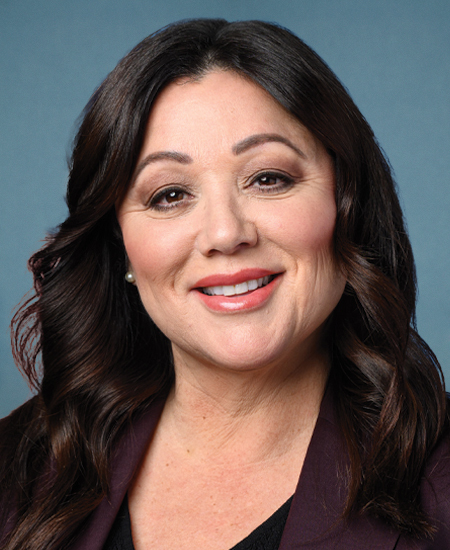
Rep. Lori Chavez-DeRemer
Sponsored bills
Disaster Reforestation Act This bill sets forth a special rule for the tax deduction for casualty losses of uncut timber (including pre-merchantable timber). It provides that in losses of any uncut timber from fire, storm, insects, invasive species, drought, or other casualty, or from theft, the basis for determining the amount of the deduction for such loss shall not be less than the excess of the value of such timber determined immediately before such loss was sustained, over the salvage value of such timber. To be eligible for the casualty loss deduction, the uncut timber subject to the loss must be reforested not later than the close of the five-year period beginning on the date of the loss.
Recognizing Victims of Illicit Fentanyl Poisoning Act This bill authorizes states and territories that receive victim compensation grant funds to use the grant funds to compensate an additional category of individuals. Specifically, current law requires states and territories to use formula grant funds to compensate victims and survivors for expenses attributable to a physical injury or death resulting from a compensable crime. This bill broadens the meaning of the term compensable crime to include illicit fentanyl poisoning resulting in death.
Maddy summaryThe Strategic Production Response Act (HR 21) requires the Secretary of Energy to develop a plan increasing oil and gas leasing on federal lands (managed by Interior, Agriculture, Energy, and Defense) by the same percentage as any initial drawdown of petroleum from the Strategic Petroleum Reserve. This plan must be created before the first sale, exchange, or loan of reserve oil, and cannot increase leasing on federal lands by more than 10% overall. The bill mandates consultation with the Secretaries of Agriculture, Interior, and Defense during plan development. It directly affects federal land management agencies and future oil/gas leasing decisions on public lands.
This resolution recognizes and appreciates the dedication and devotion demonstrated by the men and women of law enforcement. It also condemns calls to defund, disband, dismantle, or abolish the police.
Maddy summaryThe HEAL Act (HR 603) requires the U.S. Holocaust Memorial Museum Director to study how public elementary and secondary schools teach about the Holocaust and related antisemitism. The study will examine curriculum requirements, teaching methods (like project-based learning), instructional materials, and assessment approaches across states and school districts. It specifically analyzes whether Holocaust education is mandatory, optional, or integrated across subjects, and how schools address antisemitism and genocide prevention. The resulting report, due within 180 days of the study or three years after enactment, will inform Congress but does not change current school policies. This is a data-gathering measure, not a policy mandate.
Maddy summaryThe Educational Choice for Children Act creates tax credits for individuals and corporations that contribute to scholarship granting organizations providing education scholarships. Individuals can claim a credit up to $5,000 or 10% of their income, while corporations can claim up to 5% of taxable income. The scholarships are available to students from households with income up to 300% of the area median income, and can be used for private school tuition, tutoring, and other educational expenses at elementary and secondary schools. The bill includes strict requirements for scholarship organizations to verify income, conduct audits, and prevent misuse of funds, while also prohibiting government control over these organizations and protecting private and religious schools from discrimination in the program. It establishes a $10 billion annual cap on the total tax credits available.
This concurrent resolution calls on the President to abandon the One China policy in favor of one that recognizes Taiwan as an independent country that is not a part of China. The resolution also urges the President to bolster diplomatic and economic relations between the United States and Taiwan through specified means.
Maddy summaryHR 496, the PELL Act, creates "Workforce Pell Grants" to support short-term workforce training programs instead of traditional college degrees. It directly affects students enrolled in qualifying short programs (150-600 hours, 8-15 weeks) that align with in-demand jobs. To qualify, programs must meet strict standards: 70%+ completion rates, 70%+ job placement rates, and demonstrate graduates earn at least 150% above the poverty line within three years. The bill also requires annual public reporting of program outcomes like completion rates, job placement, and graduate earnings to ensure accountability.
Maddy summaryHR 472, the Fighting Post-Traumatic Stress Disorder Act of 2023, requires the Attorney General to develop a report within 150 days of enactment on programs to provide specialized mental health services for public safety officers (including police, firefighters, EMTs, and 911 dispatchers) and telecommunicators. The report must propose evidence-based trauma care, peer support, and family services to address job-related PTSD and acute stress disorder, while ensuring confidentiality for those seeking help. It will also outline efficient implementation plans using in-person and telehealth options across state, tribal, territorial, and local levels, plus draft legislative language and funding estimates. The bill directly targets public safety workers facing significantly higher PTSD rates (30% vs. 20% general population) and elevated suicide risks, including an estimated 125-300 annual police suicides.