

Maddy summaryThe EQUAL Act (HR 1062) eliminates the unequal sentencing disparity between crack cocaine (cocaine base) and powder cocaine offenses under federal law. It repeals specific provisions in the Controlled Substances Act and Import/Export Act that previously imposed harsher penalties for cocaine base, directly affecting individuals convicted of federal cocaine offenses involving cocaine base. The bill applies to all future cases and allows courts to reduce sentences for people already convicted of such offenses before the law's enactment. This change removes a key legal distinction that historically led to significantly longer sentences for crack cocaine offenses compared to powder cocaine.
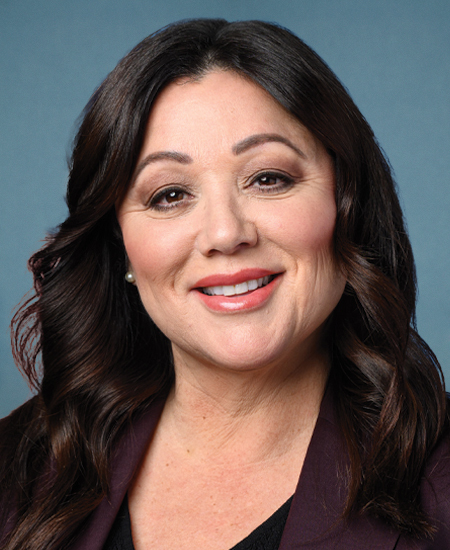
Rep. Lori Chavez-DeRemer
Sponsored bills
Maddy summaryHR 1088, the Shirley Chisholm Congressional Gold Medal Act, authorizes a posthumous Congressional Gold Medal to honor Congresswoman Shirley Chisholm, the first African-American woman elected to Congress (1968) and the first Black candidate for a major party's presidential nomination (1972). The bill directs the Treasury Secretary to design and strike a gold medal featuring Chisholm's image, which will be presented by Congress and then permanently displayed at the Smithsonian Institution. Duplicate bronze medals may be sold to the public to cover production costs, with proceeds deposited into the U.S. Mint fund. This bill commemorates Chisholm's legacy and achievements without creating new laws or affecting any current policies.
Maddy summaryThe HELP Copays Act (HR 830) changes how health insurance plans calculate patient cost-sharing. It requires that payments made by third parties (like pharmacies, charities, or discount programs) toward medical costs count toward a patient's deductible, copay, or out-of-pocket limit. This directly affects insured individuals who receive financial assistance, discounts, or product vouchers for healthcare expenses. The law ensures these external payments reduce the patient's actual out-of-pocket costs more quickly, aligning with existing Affordable Care Act and Public Health Service Act requirements.
Maddy summaryThis bill expands health care coverage under TRICARE for military dependents. It eliminates a separate premium for young adults aged 21-26 enrolled in the TRICARE Young Adult Program, meaning they will no longer pay an extra fee for coverage. The bill also removes an eligibility restriction that previously limited coverage for some dependents in this age group. These changes directly affect military service members' adult children and spouses who rely on TRICARE Young Adult coverage. The policy update simplifies enrollment and reduces out-of-pocket costs for these beneficiaries.
Maddy summaryThis bill authorizes a single Congressional Gold Medal to honor all U.S. Army Dustoff crews who served during the Vietnam War (1962-1973). It recognizes their critical role in evacuating nearly 900,000 wounded personnel, including U.S., South Vietnamese, and allied forces, under extreme combat conditions. The medal, designed with input from the Secretary of Defense, will be presented to the U.S. Army Medical Department Museum for permanent display. Duplicate bronze medals may be sold to cover costs, but the primary action is the commemorative recognition of these crews' service.
Maddy summaryThe EAGLES Act of 2023 reauthorizes and expands the U.S. Secret Service’s National Threat Assessment Center (NTAC) to prevent targeted violence, particularly in schools. It directs the NTAC to provide training, research, and consultation on threat assessment to schools, law enforcement, and mental health professionals, with a focus on early intervention for concerning behaviors. The bill allocates $10 million annually (2024-2028) for these efforts, requiring the Center to develop state-specific training plans and report on outcomes like the number of schools trained. It directly affects school districts, educators, and community safety agencies by standardizing evidence-based prevention programs, avoiding criminal justice involvement for at-risk youth.
Beginning Agriculturalist Lifetime Employment Act of 2023 or the BALE Act of 20 2 3 This bill revises the limits for the Department of Agriculture (USDA) conservation loan guarantee program. The bill replaces the existing 80% limit on the portion of a loan that USDA may guarantee with limits that range from 80%-90%, depending on the principal amount of the loan. For socially disadvantaged or beginning farmers or ranchers, the bill replaces the existing 90% limit with limits that range from 85%-95%, depending on the principal amount of the loan. The bill also (1) prohibits USDA from guaranteeing a loan under the program that exceeds $4 million, and (2) requires USDA to adjust the limits annually for inflation.
Maddy summaryHR 987 authorizes the U.S. Mint to produce commemorative coins honoring Golda Meir, Israel's first female Prime Minister, and the 75th anniversary of U.S.-Israel relations. It specifies three coin types: $5 gold coins (max 50,000), $1 silver coins (max 400,000), and half-dollar clad coins (max 750,000), with detailed weight and composition requirements. All coins will include Golda Meir's image, her name, and commemorative inscriptions, and will be sold during 2026. A surcharge ($35 for $5 coins, $10 for $1 coins, $5 for half-dollars) will be paid to the American Friends of Kiryat Sanz Laniado Hospital Inc. to support its hospital operations.
Maddy summaryThis bill directs federal agencies to improve mental health support for educators and school staff, including teachers, administrators, and support personnel. It requires the Department of Health and Human Services to share evidence-based practices for preventing suicide and promoting mental wellness, and to run a national awareness campaign reducing stigma around seeking care. The bill creates new grant programs for schools and colleges to fund mental health initiatives and training, with $35 million annually for 2024-2026. Additionally, it mandates a federal review of mental health challenges in the education workforce and a GAO report on existing federal grant programs addressing these issues.
Maddy summaryHR 914, the Simplifying Grants Act of 2023, requires federal agencies to simplify grant application processes for small local governments (defined as those in areas with fewer than 50,000 people, per Census standards). Within 180 days of enactment, agencies must review and simplify complex grant requirements for existing programs and ensure new programs are designed with simplicity from the start. Agencies must also publish public checklists for each grant step and report annually to Congress on implementation progress, including how much technical assistance was provided and how many grants were awarded to small communities versus larger ones. This bill directly affects counties, towns, and other small local governments that receive federal grants but face bureaucratic hurdles.