

Maddy summaryHR 1623 amends the Homeland Security Act to exclude specific propane storage facilities from certain Department of Homeland Security chemical security standards. It directly affects facilities storing propane for residential use (as defined in the Fair Housing Act), agricultural production (per CFR), or small rural businesses (per the Small Business Act). The bill adds a new exclusion criterion for these facilities and requires the DHS Secretary to report to Congress and notify owners if a facility doesn't qualify for the exclusion. This changes the current security requirements for these specific propane storage locations without altering broader DHS chemical security rules.
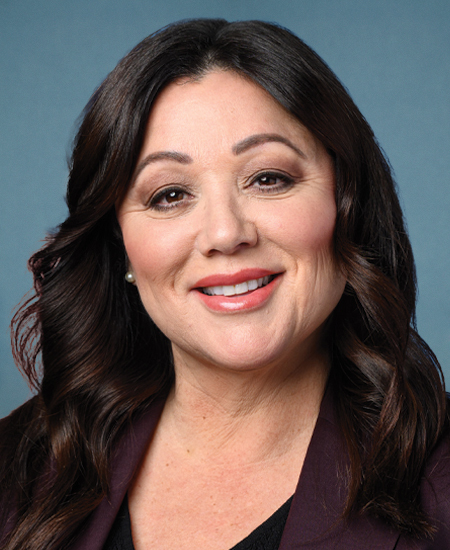
Rep. Lori Chavez-DeRemer
Sponsored bills
Maddy summaryHCONRES 28 is a symbolic resolution expressing Congress's view that tax-exempt fraternal benefit societies - organizations providing life, health, and accident benefits to members - have long delivered critical community support. It states these societies, with about 7 million members nationwide, generate significant annual value through charitable work and volunteer activities (estimated at over $3.8 billion yearly). The resolution affirms that their tax-exempt status under Section 501(c)(8) of the tax code is essential for sustaining their volunteer-driven model and relieving pressure on government safety programs. As a non-binding expression of congressional sentiment, it does not alter existing laws or create new obligations.
Maddy summaryHR 1716, the Global Aircraft Maintenance Safety Improvement Act, requires U.S. airlines to annually report detailed information about heavy maintenance work performed outside the U.S. on their aircraft, including locations, work descriptions, and any safety issues identified after maintenance. It prohibits U.S. airlines from entering new contracts for such maintenance with repair stations in countries classified by the FAA as "Category 2" due to safety deficiencies. The bill also mandates that mechanics and supervisors at foreign repair stations performing heavy maintenance on U.S. aircraft must hold appropriate FAA certifications. Additionally, it establishes a working group with international aviation authorities to review and recommend improvements for overseeing foreign repair stations.
Maddy summaryThe Railway Safety Act of 2023 establishes new safety requirements for trains transporting hazardous materials, including advance notification to emergency response agencies and restrictions on blocked crossings. It mandates minimum 2-person crews for most freight trains (with specific exceptions for low-risk operations), requires rail carriers to install and maintain wayside defect detectors on tracks carrying hazardous materials, and increases civil penalties for violations based on a percentage of annual income rather than fixed amounts. The bill also sets a phase-out schedule for older DOT-111 tank cars by May 2025 and authorizes research into safer tank car designs. These provisions directly affect rail carriers, shippers of hazardous materials, and emergency response agencies responsible for planning and response.
Maddy summaryThis bill establishes new health and identification requirements for importing live dogs into the U.S. Importers must provide veterinary certification proving dogs are healthy, vaccinated, treated for parasites, and permanently identified (e.g., microchipped), with documentation from accredited veterinarians. Dogs imported for transfer (sale, adoption, etc.) must be at least 6 months old and accompanied by a Secretary-issued permit. Limited exceptions exist for research, veterinary treatment (with quarantine), and Hawaii-specific puppy imports under state regulations, with regulations to be finalized within 18 months. The bill repeals a prior section of the Animal Welfare Act and strengthens enforcement through penalties for noncompliance.
Maddy summaryThis resolution expresses congressional support for designating March 21, 2023, as "National Agriculture Day." It symbolically recognizes agriculture's economic importance as a major U.S. industry, celebrating its impact on jobs and communities. The bill does not create new laws, funding, or regulations - it is a non-binding statement of support. It directly affects the agricultural sector by highlighting its contributions through a formal congressional acknowledgment.
Maddy summaryThis bill adds a new section to federal law making murder of law enforcement officers a capital offense. It mandates death or life imprisonment for individuals who murder federal officers during official duties, or state/local officers when the crime involves interstate activity (like using a weapon that crossed state lines). Key provisions include specific aggravating factors considered for sentencing, such as ambush tactics, prior violent advocacy, or ties to extremist groups. The bill explicitly states it does not affect state court jurisdiction over such cases.
Maddy summaryThis bill authorizes a Congressional Gold Medal to honor the "Hello Girls" - female telephone operators who served in the Army Signal Corps during World War I. They provided critical battlefield communications in France (connecting 26 million calls), wore military uniforms, and faced combat risks, but were denied veteran benefits for 60 years due to being classified as civilian contractors. The medal recognizes their pioneering service, devotion, and the decades-long struggle to gain military recognition. The award follows similar recognition for other WWII women veterans and aims to correct the historical injustice they faced.
Maddy summaryThe PHIT Act of 2023 allows individuals and families to deduct certain fitness expenses as medical costs on their federal taxes. It covers gym memberships, fitness classes, and specific equipment used exclusively for exercise (like home workout gear), with a yearly limit of $1,000 ($2,000 for joint returns). Expenses for activities like golf, hunting, or non-exercise-focused facilities (e.g., private clubs) are excluded, and equipment must be used solely for physical activity. This directly affects taxpayers who pay for qualifying fitness programs, making these costs partially tax-deductible under revised IRS rules.
Stopping Overdoses of Fentanyl Analogues Act This bill permanently adds fentanyl-related substances to schedule I of the Controlled Substances Act. (A schedule I controlled substance is a drug, substance, or chemical that has a high potential for abuse; has no currently accepted medical value; and is subject to regulatory controls and administrative, civil, and criminal penalties under the Controlled Substances Act.) Fentanyl-related substances are currently regulated under schedule I through a temporary order issued by the Drug Enforcement Administration. The temporary order expires December 31, 2024.