

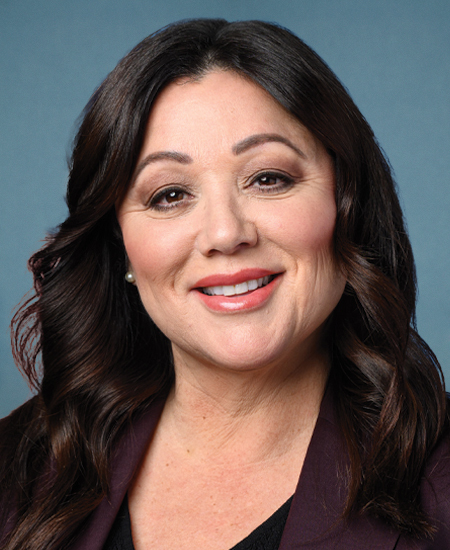
Photo of Lori Chavez-DeRemer
R United States House · District 5 · Oregon

Rep. Lori Chavez-DeRemer

Compare
Total votes
1,210
all sessions
Attendance
98%
24 missed
Near the chamber average
With party
79%
of cast votes
Lower than 99% of chamber peers
Bipartisan score
11%
some cross-party votes
Higher than 98% of chamber peers
Sponsored
417
bills & resolutions
Near the chamber average
Committees
0
assignments
417 bills and resolutions

Sponsored bills

Total
417
Primary
25
Co-sponsor
392
This page
417
matching current filters
Co-sponsor HR 3396
Passed · United States House · Co-sponsor
Fire Department Repayment Act of 2023

Maddy summaryHR 3396, the Fire Department Repayment Act of 2023, requires the Secretaries of Agriculture, Interior, Homeland Security, and Defense to establish standard procedures for federal fire suppression cost share agreements within one year. It mandates reviewing existing agreements to align them with local cooperative fire protection agreements and conducting second-level reviews after wildfires, involving state and local fire organizations. The bill directly affects fire departments and agencies participating in these cost-sharing arrangements under the Reciprocal Fire Protection Act. Key changes include standardized procedures for agreement management and post-wildfire reviews to ensure cost-sharing compliance.

Passed Dec 18, 2024 1 co-sponsor
Co-sponsor HR 1319
In committee · United States House · Co-sponsor
Biking on Long-Distance Trails Act

Maddy summaryThis bill directs the Secretaries of the Interior and Agriculture to identify at least 10 existing long-distance bike trails (80+ miles, natural surfaces) and 10 new development areas for such trails on federal lands within 18 months. It requires public comment on trail identification, ensures new trails don’t conflict with existing uses like hiking or wilderness designations, and mandates maps, signage, and a public report within two years. The law specifically applies to mountain biking on federal recreational lands managed by these departments. It focuses on facilitating existing and planned trails without altering current land use rules or funding new construction.

In committee Dec 18, 2024 1 co-sponsor
Co-sponsor HR 9141
In committee · United States House · Co-sponsor
IVF with HSAs Act of 2024

Maddy summaryThe IVF with HSAs Act of 2024 would amend federal tax law to allow individuals with any health insurance coverage (not just high deductible health plans) to contribute to a Health Savings Account (HSA). This change would expand access to HSAs, enabling more people to use these accounts for qualified medical expenses like in vitro fertilization (IVF) treatments. The bill also increases annual HSA contribution limits to $8,600 for individuals and $17,100 for families. These provisions would take effect for tax years beginning after December 31, 2024.

In committee Dec 17, 2024 1 co-sponsor
Co-sponsor HR 8957
In committee · United States House · Co-sponsor
PROVE IT Act of 2024

Maddy summaryThe PROVE IT Act of 2024 directs the U.S. Energy Secretary to study and publicly report on the greenhouse gas emissions intensity of key U.S. manufactured products (like steel, aluminum, lithium batteries, and critical minerals) compared to those produced in "covered countries" (including the EU, China, and major trading partners). It requires a transparent methodology for calculating emissions data, identifies gaps in existing data, and establishes a public online database showing U.S. emissions advantages for these products. The bill also mandates an annual report on foreign countries using forced labor or human rights abuses in the production of critical minerals or rare earths. Importantly, it clarifies the study does not create new taxes, fees, or mandatory reporting requirements.

In committee Dec 17, 2024 1 co-sponsor
Co-sponsor HR 8702
In committee · United States House · Co-sponsor
Improving Seniors’ Timely Access to Care Act of 2024

Maddy summaryThis bill requires Medicare Advantage plans to implement electronic prior authorization systems by 2027 and publish detailed data on their approval and denial rates for medical services by 2026. It directly affects Medicare Advantage plans (private insurers offering Medicare coverage) and their enrollees (seniors 65+), mandating transparency about prior authorization decisions, processing times, and appeal outcomes. Key provisions include requiring plans to report annual statistics on request approvals/denials, average processing times, and use of technology, with this data published publicly by the Centers for Medicare & Medicaid Services. The bill also sets timelines for plan responses to prior authorization requests and mandates reports to Congress on implementation and impacts.

In committee Dec 17, 2024 1 co-sponsor
Co-sponsor HR 7829
In committee · United States House · Co-sponsor
SOAR Act of 2024

Maddy summaryThe SOAR Act of 2024 removes supplemental oxygen and related equipment, supplies, and services from Medicare's competitive bidding program, ensuring direct Medicare payment for these items starting in 2025. It establishes new payment rates for oxygen services, including specific rates for rural areas and liquid oxygen with annual inflation adjustments, and requires oxygen suppliers to provide specific services like initial evaluations, safety education, and 24-hour coverage. The bill also adds respiratory therapist services to Medicare coverage with a new payment add-on, requires electronic templates for documenting medical necessity for oxygen services, and establishes new beneficiary rights including the right to choose suppliers and receive timely equipment repairs. This legislation directly affects Medicare beneficiaries requiring oxygen therapy, oxygen suppliers, and respiratory therapists by changing how these services are paid for and delivered.

In committee Dec 17, 2024 1 co-sponsor
Co-sponsor HR 7222
In committee · United States House · Co-sponsor
Lowering Costs for Caregivers Act of 2023

Maddy summaryThis bill expands eligibility for certain tax-advantaged health accounts to cover medical expenses for parents. It amends the tax code to allow individuals to use funds from Health Savings Accounts (HSAs), Flexible Spending Accounts (FSAs), and Health Reimbursement Arrangements (HRAs) for qualified medical care of their parents or their spouse's parents - previously limited to immediate family members. The changes apply to expenses incurred after December 31, 2023, directly benefiting adult caregivers (like children supporting elderly parents) who use these accounts for parental healthcare costs. The bill makes no new funding commitments but adjusts existing account rules to reduce out-of-pocket costs for caregivers.

In committee Dec 17, 2024 1 co-sponsor
Co-sponsor HR 7149
In committee · United States House · Co-sponsor
EASE Act of 2024

Maddy summaryThe EASE Act of 2024 requires the Centers for Medicare & Medicaid Services (CMS) to test a new model improving access to specialty health care for Medicare and Medicaid beneficiaries in rural or underserved areas. It mandates CMS to partner with selected provider networks - comprising at least 50 community health clinics, nonprofits with proven community health work, and commitment to research - to deliver specialty care via telehealth and remote technology, coordinated with patients’ primary care providers. This model directly affects Medicare Part A/B beneficiaries and Medicaid enrollees living in designated underserved regions. The bill establishes specific criteria for network selection and defines "eligible individuals" based on coverage type and geographic location.

In committee Dec 17, 2024 1 co-sponsor
Co-sponsor HR 6283
In committee · United States House · Co-sponsor
DRUG Act

Maddy summaryHR 6283, the DRUG Act, regulates pharmacy benefit managers (PBMs) to prevent practices that may increase prescription drug costs for consumers. The bill prohibits PBMs from earning revenue based on drug prices or discounts, requiring them to charge flat dollar service fees instead of fees tied to drug costs. It bans PBMs from steering patients to pharmacies they own or control, mandates equal reimbursement for affiliated and non-affiliated pharmacies, and prohibits charging different fees for the same drug. These provisions apply to group health plans, health insurance issuers, and PBMs, with enforcement beginning for plan years starting January 1, 2026. Violations would result in $10,000 daily penalties and require disgorgement of improperly received payments.

In committee Dec 17, 2024 1 co-sponsor
Co-sponsor HR 5672
In committee · United States House · Co-sponsor
Bipartisan Keep America Open Act

Maddy summaryThis bill provides continuing appropriations for federal government operations through January 11, 2024, ensuring funding for ongoing programs and activities. It includes $16 billion for disaster relief and over $21 billion in supplemental funding for Ukraine assistance, covering military aid, economic support, and humanitarian programs. The bill also extends funding for community health centers, Federal Aviation Administration programs, and the Temporary Assistance for Needy Families program through the same date. These funding measures maintain government operations and support critical domestic and international programs during the fiscal year.

In committee Dec 17, 2024 1 co-sponsor
Showing 11 to 20 of 417 bills