

Maddy summaryHR 5403, the CBDC Anti-Surveillance State Act, prohibits the Federal Reserve from issuing or facilitating central bank digital currency (CBDC) directly or indirectly to individuals through financial institutions. It specifically bans Federal Reserve banks from offering digital products to individuals, maintaining individual accounts, or using CBDC for monetary policy implementation. The bill also clarifies that its restrictions do not apply to existing physical cash or private, permissionless digital payment systems. This bill directly affects the Federal Reserve's ability to develop or deploy a government-run digital dollar. The law aims to prevent the Federal Reserve from creating a digital currency that could enable transaction tracking or government oversight of personal financial activity.
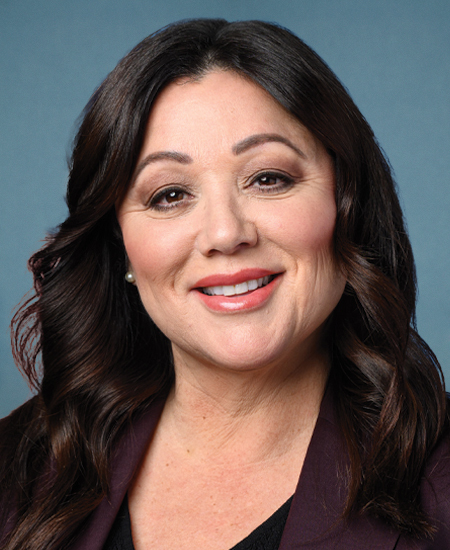
Rep. Lori Chavez-DeRemer
Sponsored bills
Maddy summaryThis resolution (HRES 1252) honors emergency medical services (EMS) personnel across the United States for their critical work. It recognizes their 24/7 service in rural and underserved areas, their role in stabilizing and transporting patients during emergencies, and their dedication to public health care. The resolution specifically expresses appreciation for EMS workers during Emergency Medical Services Week (May 19-25, 2024). As a ceremonial resolution, it contains no new policies, funding, or legal requirements - only symbolic recognition of their contributions.
Maddy summaryHR 8466 extends the Affordable Connectivity Program (ACP) through 2024 with $6 billion in funding, directly affecting low-income households receiving subsidized broadband internet. It strengthens eligibility verification by requiring use of the National Verifier, limiting eligibility to households with school meal program participation (not just provider programs), and mandating collection of partial Social Security numbers for verification. The bill adds new antifraud controls and performance measures for the FCC, requiring a report on program effectiveness within a year. It also allows households switching providers to maintain benefits only if they've used the current service for at least 180 days.
Maddy summaryHRES 1255 is a non-binding House resolution introduced on May 23, 2024, that calls on all Americans to observe Memorial Day 2024 as a day of remembrance for military personnel who died in service. The resolution specifically honors "the men and women of the Armed Forces who have died in the pursuit of freedom and peace" and urges the public to demonstrate appreciation for their sacrifices. It does not create new laws or policies but serves as a symbolic expression of national gratitude, emphasizing respect for those who died while defending democratic values. The resolution was co-sponsored by multiple House members and aligns with the traditional observance of Memorial Day.
Maddy summaryHR 8533, the Safe Air on Airplanes Act, requires the Federal Aviation Administration to update aircraft safety regulations to address bleed air systems. It prohibits new jet and turboprop aircraft designs from using these systems, mandates filters to remove oil fumes in new aircraft within 7 years, and sets a 30-year phase-out schedule for existing aircraft designs (25% by year 10, 50% by year 20, 100% by year 30). The bill directly affects aircraft manufacturers and airlines by changing requirements for new aircraft production and fleet modifications. It focuses on technical air quality standards for cabin air, not health outcomes or costs.
Maddy summaryHR 895, the Combating Organized Retail Crime Act of 2023, expands federal law to better prosecute organized retail theft by amending sections 2314 and 2315 of Title 18. It clarifies that crimes involving stolen goods valued at $5,000 or more over 12 months - including retail theft - can be prosecuted under existing federal statutes, and broadens definitions to include goods taken via "any facility of interstate or foreign commerce." The bill also creates a new Organized Retail Crime Coordination Center within Homeland Security, requiring it to coordinate federal, state, and local law enforcement efforts, share threat information with retailers, and produce annual public reports on trends. This directly affects law enforcement agencies, retailers, and criminal justice systems by standardizing prosecution thresholds and enhancing interagency collaboration.
Maddy summaryThis bill requires the U.S. Department of Defense and State Department to immediately deliver all previously approved military equipment and services to Israel within 15 days, reversing any pauses on arms transfers. It prohibits using federal funds to withhold, halt, or cancel defense article deliveries to Israel and mandates that unobligated security assistance funds for Israel must be spent by the end of 30 days. The bill also requires monthly reports to Congress detailing all security assistance provided to Israel since October 7, 2023, including specific items delivered and funding sources. The law directly affects U.S. agencies responsible for military aid and Israel as the recipient of the security assistance.
Maddy summaryHR 8400, the Early Detection of Vision Impairments for Children Act of 2024, provides federal funding to states and tribal entities to establish statewide programs for early vision screening and intervention in children. It directly affects children - especially those in rural or underserved communities - by requiring states to implement vision screenings in medical, home, and educational settings, develop data systems to track outcomes, and reduce disparities in access to eye care. The bill authorizes $5 million annually (2025-2029) for grants covering activities like evidence-based screening, public awareness campaigns, and coordination with Medicaid and school programs. States must submit annual reports on program outcomes, ensuring transparency and accountability in improving children’s vision health.
Maddy summaryHR 8360, the "No Toxic Chemicals in Cosmetics Act," bans the sale of sunscreens and cosmetics containing specific parabens (like methylparaben and propylparaben) after a two-year implementation period. It directly affects cosmetic manufacturers and retailers who would need to reformulate or remove products containing these preservatives from interstate commerce. The bill amends the Federal Food, Drug, and Cosmetic Act to define such products as "adulterated," making them illegal to sell. This creates a clear regulatory change for the cosmetics industry, requiring compliance with the new restrictions by the two-year deadline.
Maddy summaryThis bill extends federal funding for poison control centers through fiscal years 2024-2028, replacing previous funding periods (2020-2024). It directly affects all 55 poison control centers nationwide by ensuring continued operation of the national toll-free number (1-800-222-1222), ongoing public education efforts, and the grant program that supports center infrastructure. The key change is simply extending the authorization period for these existing programs without altering their structure or requirements. This provides stability for centers that handle millions of annual poison exposures and emergency calls.